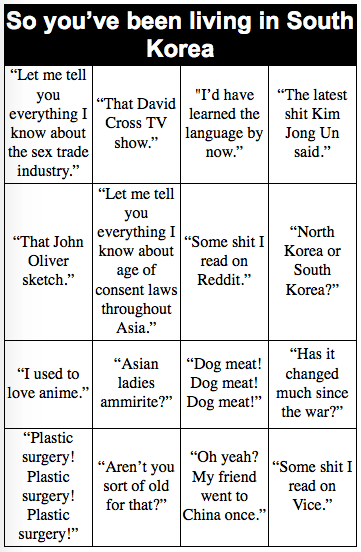
So You’ve Been Living In South Korea Bingo Card
I leave tomorrow for a month long trip to the USA. As is always the case I’m stressed out and anxious, and one of the things that stresses me out the most is having the identical bullshit conversations with people about living in South Korea and Asia in general.
So, as one does, I made a bingo card of all my anxieties. This way even if I have a panic attack while listening to someone drone on I can still feel like a winner!
Why I Stopped Reading That Book
It’s rare that a book I’m reading flat out and out sucks. So what makes me quit reading a book? Read on and find out!
- It’s Not You. It’s Me: That thing your book does is a fine and good thing, it just doesn’t happen to be my thing. So you do you. I’ll do me, and move on without any ill feelings.
- That Window of Opportunity Has Closed: I subscribe to the view that we have a finite number of slots for certain stories, and once you fill up those slots you’re less likely to respond to new stories drawing from the same well. This is a normal thing and not something to be lamented, as long as you’re not a shitheel about it and crap on other people’s books for not being those same books you’re crazy about.
- The Ham Sandwich Problem: While that plot thing your characters are tracking down might be vitally important to them, I, the reader, am not quite convinced why it is. It may as well be a ham sandwich for all it matters to me.
- Your Plot Only Works Because You Have Shitheels in It: This is akin to that frustration you feel when you watch a movie where the plot centers around miscommunication, and you want to scream, “Holy Hell, people! Can you all stop and just call each other for two seconds and clear up this mess?!?” It’s a fine line, because some shitheels in a book might be necessary, but not so many that they strain plausibility.
- Your Book Actually Sucks: Somehow it happened. A book with all the thrills and charisma of a plank of particle board got published and ended up in my hands. Meanwhile, someone somewhere said it’s not so bad, so I gave it a shot. AND IT WAS AWFUL. But even now I’m less angry at the book, than at all the folks that said it was good. What were they thinking those awful wrong people?
Favorite Reads: May 2016
Here we are already into June and I haven’t told you what my favorite reads were for May. How can any of us possibly go on?

The Argonauts by Maggie Nelson: A family memoir from an iconoclastic writer about having a baby with her transgender husband – it’s quite funny and brutal but also a bit up its own ass in that PhD sort of way where a conversation (or butt sex) isn’t satisfying unless you deconstruct the post-structural nature of Lacan’s concept of the Other while you do it. Fun fact: in the myth of Jason and the Argonauts, the ship, the Argo, was slowly repaired and rebuilt piece by piece, so the ship that returned home entirely different ship, despite bearing the same name.
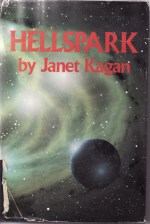
Hellspark by Janet Kagan: First contact story. I loved it. I loved the worlds and all their cultures. I loved the science of “proxemics” (body language) and the nature of the protagonist’s abilities. If you think a book pitched somewhere between China Mieville’s Embassytown and CJ Cherryh’s Foreigner series might be a neat thing, then, yeah, track this down.
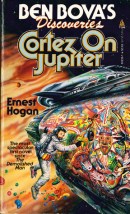
Cortez on Jupiter by Ernest Hogan: Loved this too. As much as I loved the world building of Hellspark, I suspect the future will be more like this with shitty fast food, everyone making micro-documentaries of their lives, and a reality TV show built around the high fatality rate of astronauts trying to contact the aliens that live inside the red spot of Jupiter.
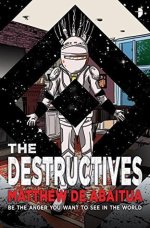
The Destructives by Matthew De Abaitua: Theodore Drown is a recovering weirdcore addict and former accelerator currently lecturing on intangibles at the University of the Moon in the year 2060, forty years after The Seizure, the world-shattering event that saw the emergence of AIs. Someone’s been reading their PKD and M. John Harrison. Great cover by RAID71. I’m all for book covers looking like covers to weird comics. Great stuff.
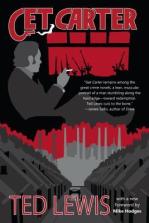
Get Carter by Ted Lewis: A dudely, dude tough guy novel about a gangster coming home to bury his not a gangster brother and solving the mystery of the brother’s death. Even if you’ve seen the Michael Caine movie (or live in the horrid reality where there was a remake made starring some mumbler), the book still has a lot going for it. Very clipped. Very tense.
7 Books For Your Numenera Game
The bibliography in the back of the Numenera core rule book is pretty decent, but like most book lists, it could always use some expansion. Gene Wolfe, Michael Moorcock, and Jack Vance are only one way to look at the future a billion years from now. Here are seven more books to inspire your Numenera campaigns.

Dancing With Bears by Michael Swanwick: Darger and Surplus are a pair of conmen traveling across a “post-utopian” future. Here they are escorting gifts from the Caliph of Baghdad to the Duke of Muscovy. One is a young man. The other is a mutant dog. Sorta steampunk. Sorta cyberpunk. Picaresque through and through.
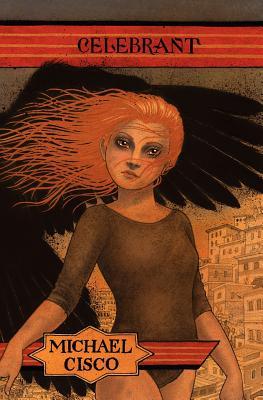
Celebrant by Michael Cisco: DeKlend is trying to reach the city of Votu where time runs backwards and gangs of pigeon girls battle rabbit girls in the streets. Not an adventure novel, so much as a travelogue to an utterly strange land populated by organic machines and the strange societies that worship them.

The Fifth Season by NK Jemisin: Mixes the personal with the epic as Essun hunts her murderous husband across a landscape torn apart by cataclysmic forces. This is a world dotted with the ruins of countless previous civilizations, all of which have been destroyed by their own cataclysms to make a landscape alternately elegant, strange, and brutal.

Fain the Sorcerer by Steven Aylett: Fain’s your Cugel-esque rogue caught up in adventures, except Aylett’s imagination is weirder and stranger. You can open this short book to any page and encounter some wonderful insanity you’ll want to steal: “Fain walked among trees which bore fruit like resinous organic gems, until he reached a chasm of steam… the Bridgekeeper had an espaliered head, a bone lattice through which veins and tendons were woven like vines.”
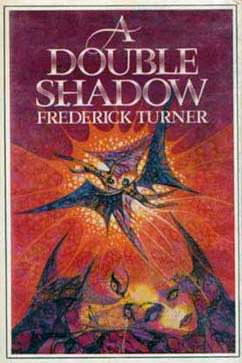
A Double Shadow by Frederick Turner: the book with the lowest rating on Goodreads of all those listed here, it seems to generate the most ire against it, but I love it. A disgruntled terraformer on a future Mars writes a novel about an even further future Mars lampooning the vanities and psychosis of his current co-workers. The resultant novel depicts a society centered on a status economy and the status war that breaks out between the scions of two noble houses (the “top cocks”) when one insults the other.

Memory by Linda Nagata: Your teen on a quest to save a loved one through an alien landscape novel. Jubilee’s world is threatened by clouds of “silver” that alter the landscape and consume those unfortunate to be caught in it. When a stranger steps out from the silver searching for Jubilee’s missing brother, she sets out to find him and solve the mystery of her world.

Gilgamesh translated by Stephen Mitchell: As someone once said the remote past would be as strange to us as the far future. Or, as someone else once said, “A long time ago, in a galaxy far, far away…” Gilgamesh is one of the oldest texts we have, and this translation by Stephen Mitchell is a great one that makes it read like it could sit side by side with Jack Kirby illustrations. The other great thing about Gilgamesh is it’s really short. The book on tape is only two hours long. Give it a listen here on youtube.
And feel free to add your own bits of far future weirdness in the comments.
Favorite Reads: April 2016

The Winged Histories by Sofia Samatar: Epic fantasy that doesn’t read like Epic Fantasy is my favorite Epic Fantasy (unless we’re talking about novellas, in which case I have more patience for 400 page “world building” tom foolery). The Winged Histories is that kind of Epic Fantasy. Less a sequel to A Stranger in Olondria than a continued journey into the same world of, in The Winged Histories we follow four women as each tells their stories and is caught in the turmoil of the Olondrian civil war. Some of them are archetypal Epic Fantasy characters such as the Warrior Woman, but Samatar manages to subvert and comment on these characters, as she delves deeper into her setting. I loved this book.
Hard Light by Elizabeth Hand: This is Hand’s third novel featuring the fascinatingly horrible person Cassandra Neary, who’s less an amateur detective than a destructive bystander. If you haven’t read any of these before this one is a decent one to start with, as Cass ends up in London and collides with various counter-culture victims and survivors, and a mystery straight off the Graham Hancock web page. There’s sort of this preposterousness to the novels, like who knew such attention to rock fandom from the 1970s would prove to be so important in 2015, but yeah, if you can swallow that and stomach Cass’s general awfulness the novels are great fun.
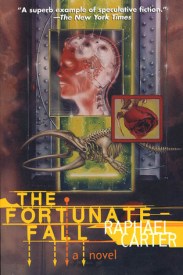
The Fortunate Fall by Raphael Carter: A latter stage cyberpunk novel from the late 1990s, The Fortunate Fall tells about a 24th century journalist on the trail of the truth concerning some 23rd century atrocities. It’s weird, smart, and fun while it gets at concerns regarding free will in a world of manufactured personalities. If you’ve read and liked Pat Cadigan’s stuff, you’d likely enjoy this. Unfortunately, it appears to have been Carter’s only novel (to date) and it’d be fascinating to see what they would publish now twenty-years on deeper into The Matrix. Are we still on schedule for the Unanimous Army to free us from conscious thought with their drill-bits? Or was that a best case scenario?
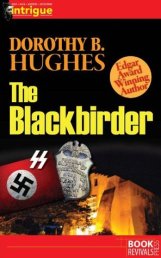
The Blackbirder by Dorothy B. Hughes: The other covers for this are a lot cooler, but this one was the one I read. The Blackbirder is a 1940s crime novel about a refugee woman from France in the USA illegally on the run from the Gestapo and the FBI when an old acquaintance gets murdered on her doorstep. The chase is fast and rich with paranoia as Julie Guilles flees across country from New York City to Santa Fe in the hopes of finding the mysterious “Blackbirder” who smuggles people across the US border. This is a good thriller, along the lines of Graham Greene’s The Third Man or The Ministry of Fear. This kindle edition was kind of shitty, but if you see a copy or anything else by Hughes, you’d be wise to pick it up.
Favorite Reads: March 2016
 Clade By James Bradley: Eco-collapse as viewed by four generations of one family. Young couple Adam and Ellie have a daughter. That daughter grows up and has a son. Along the way the family picks up other members – a more or less foster child – and a second husband when Adam and Ellie’s marriage falls apart. Some folks don’t like the whole linked short stories as novel schtick, but I love it, especially when done well as it is here. And it’s that broadness that makes the book ultimately optimistic. Terrible things happen, but people survive. The world’s never ending. It’s always beginning.
 The Ballad of Black Tom by Victor LaValle: This is an update on HP Lovecraft’s story “The Horror at Red Hook” with LaValle adding an ersatz Harlem jazz musician and small-time conman, Thomas Tester, into the mix. But don’t feel like you have to be to up on your Lovecraft to know what’s going on, Lavalle’s focus is more on depicting how the dreaded cosmic indifference of the Elder Gods likely paled beside human evil, prejudice, and injustice.
 The Sorcerer of the Wildeeps by Kai Ashante Wilson: I’m calling this post-Oscar Wao sword & sorcery. At it’s base this is the story of a wizard traveling with a merchant caravan through a science fantasy setting. It’s focused on the day to day interactions mora than any larger plot, although the larger plot is there it just arises almost as an after though to this story of men on the road. Also, can I just say secondary world fantasy that’s less than 250 pages long? Yes. More please.
 The Last Weekend by Nick Mamatas: An antisocial alcoholic know-it-all survives the zombie apocalypse and lives out his days drilling the recently dead (though more often they’re the currently dying…) while getting drunk in what remains of San Francisco. It’s a genre mash-up that takes genre A (horror: zombie apocalypse) with genre B (American Lit: alcoholic slob) and crafts something that’s funny, abrasive, and awkward at the right times often enough to be enjoyable.
 The History of White People by Nell Irvin Painter: An utterly fascinating read that looks at the fluid concept of race as it’s evolved in Europe and North America from ancient times up to the 20th century. Much of the focus does settle on the United States of America in the 19th and 20th centuries looking not only at the concepts of race, but also at immigration and eugenics. Like I said, a fascinating read because of the subject matter and because Painter writes in a casual and often wry style.
And I read some other stuff that ranged from the goodish to the meh to the Beetle.
The Beetle by Richard Marsh

The Victorian Thriller that out sold Dracula!
And which time then subsequently, and rightfully, forgot!
This is an awful book, written in the Victorian era’s worst style, although this last bit isn’t what makes it awful. It’s awful parts come from its Victorian preoccupations and assumptions (and its habit of dipping into aspirated dialect to provide local color). I read it hoping it would be better than it was, a bit of a lost gem, but really it’s your bog standard Victorian racism and obsessions set down on the page: evil gender ambiguous foreigners and their diabolical rites to ancient gods that sacrifice white English women and sap the vitality from virile young men by loathsome ways.
In it’s day The Beetle was a best-seller and its preoccupations obviously touched upon something warm and throbbing within the Victorian psyche (“gender ambiguity and foreigners are bad”), but reading it now it’s all one long, badly written tease to a hysterical denouement populated by wooden characters, the liveliest of which can’t seem to meet an invalid or a woman without wanting to thrash and shake them.
Lovecraft has rightly earned his epitaph as a racist. There’s no arguing that, but I’ve seen it argued that he unconsciously freed the English horror story from being solely obsessed with racial degradation (scare quotes all over that shit), and gave it something else to be horrified by with stories about humanity’s insignificance on the cosmic scale. If The Beetle is any indication of what the English language horror genre looked like at its widest reaching before Lovecraft, then there’s a debt owed to him for unwittingly shaking it free from its tiresome preoccupations.
Willow Flower Daydream: A Korean Folk Song
Willow Flower Daydream (1940)
Once a two-times-eight youth cried for me
And once I cried for foolish first love
This rouge and powder makes my face
But the shattered bloom makes the blossoms fall
My heart a parasite, my name a foe
Once I was beloved of gentle men
And once I loved men much younger
Late night rickshaw carried me liquor-soaked
And I soaked my kerchief countless times
My name a parasite, is my heart so
Once I lusted for shiny diamonds
And once I purred at scary might
No comfort no love pleases me
Just the fallen blossoms trampled on
Is this blackened heart, the duty of a parasite?
Favorite Reads: February 2016
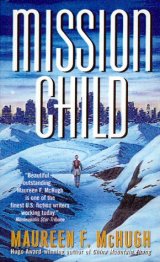 Mission Child by Maureen McHugh: What a book! I’m not sure how to describe it except to say it’s in the Ursula K. LeGuin corner of social science fiction, except it’s not really pushing any kind of utopian vision. Janna is a young woman growing up as a hunter-gatherer in a remote area of her lost colony world that’s only recently regained contact with Earth. When her village is destroyed by raiders Janna forced on an odyssey that last decades and carries her over the entire breadth of her world, transforming her in unexpected ways. This is the second novel I’ve read by McHugh and like in China Mountain Zhang, which you should absolutely read, the focus isn’t on the movers and shakers of the world, but on a single “mundane” individual and how they navigate their SFnal world. I LOVE THAT STUFF and it seems to have been a 80s and 90s trend that has fallen somewhat out of favor (although if you disagree and want to recommend some books feel free). I’ve heard someone say McHugh called this a trilogy in one book, and that it is. If you can find a copy, read it!
 Mr. Fox by Helen Oyeyemi: St. John Fox is your average mildly misogynistic 1930s mystery writer with a tendency for murdering off his heroines. One day his muse Mary Foxe shows up and calls him a serial killer. The two then engage in a game of cat and mouse across a number of St. John’s stories. However St. John’s wife, Daphne, is not so keen on her husband spending all his time with an imaginary woman he made up to combat his PTSD after World War 1, so she decides to push her way into the narrative. What happens then is a weird, slightly po-mo love triangle as the three start struggling against and allying with each other. Or a love story for Angela Carter fans who sometimes secretly wish Bluebeard could have been rehabilitated.
 Maze by JM McDermott: Men and women from various times and places disappear and find themselves trapped in a strange maze full of monsters. A weird science fiction book from Apex Book Company that sort of makes sense if you squint at it or look at it side ways, just don’t ask me to explain it. Nothing gets explained, and it reads a bit like an early 20th century fantasy novel (think William Morris or David Lindsay) on 21st century drugs more than it does Philip Jose Farmer’s Dungeon series. I liked it a lot more than I have most recent fantasy novels from bigger presses.
 The Liminal War by Ayize Jamal-Everett: This is gonzo-pulp of the best kind with super powered humans not quite allied with a sentient fungus god time-traveling to hang out with Bob Marley and play guitar with Robert Johnson while fighting kinda-sorta-not-quite-vampires and an evil drug dealing Professor X type guy. Halfway through the book there’s a scene where the protagonists are on a ghost ship traveling through time and the villains attack them with prehistoric sharks while the messiah of the fungus god brands himself with the souls of dead Africans lost in the middle passage, and I have no idea what’s going on or why, but SUPER POWERED FIST-FIGHTS WITH PREHISTORIC SHARKS! Think Octavia Butler meets Andrew Vachss with a healthy dose of gonzo thrown in and if that sounds ind of great read all of Jamal-Everett’s books.
Did I Mention…

Pohang, South Korea – 02/23/2016
Did I mention I more or less quit my job?
“More or less” because when the time came to renew my teaching contract for another year, I chose not to so now I’m just wiling away the days until my last one, which will be Friday.
I’ve been at my main school since 2011. It was great teaching these kids. I even liked most of them, in particular the current crop who will be starting 6th grade next week. But I also need a break. Which I realize is such a luxurious, privileged thing to say. And I feel both those things and not necessarily in a bad way, but in a fortunate and thankful way. It’s been a privilege to work with and know everyone I met students and teachers. I worked for years. I saved money. Now I can take a few months off to do as I please. Savings along with my wife’s income should hold us and once my visa gets sorted out I’ll be able to freelance and teach private students. We’ll see what happens.
I’d be lying if I didn’t say I’m a little stressed out. Having no schedule, no time when I need to be up, no place I need to be, that’s spooky. I fear I’m either going to become completely indolent, or worse, and this is actually more likely, I’ll become so utterly fussy that I’ll be vacuuming the ceiling every day at 3 o’clock sharp and other somewhat OCD compulsions and more or less driving people crazy.
Did I mention I graduated grad school and am now a “Master of Education”?
A Master.
I’m glad it’s done. Now I can read all the books. All the books. But the degree might prove useful later on, especially when it comes time to find a new job. You’d think right?
One thing that always got me was when folks would say how they wanted to take a grad course while in Korea, but when I told them the time to enroll for my program they’d give me some long blahblahblah about how my school was a bad school and there are online programs and yaddayadda – and yes, fine, my school isn’t the greatest. It’s basically a local community college, but it really bugs me when I see people want to do a thing, talk about doing it, then when you point them to an opportunity to do it, they tell you how the opportunity is somehow wrong, and so they won’t do it. Meanwhile I got my degree and they’re still talking about getting theirs.
In other facets of my life I should apply that insight, instead of waiting for right conditions.
Did I mention our cat died?
Yeah, that sucked. But it was months ago. She was a big annoying cat who had like four owners by the time she was 4 years old – and I loved every fat ounce of her, but it turned out she had a heart problem. I like to think she had a decent three years with us. We still have another cat. Her name is Mona Lisa Overdrive. She’s also annoying. And I love her to pieces.
 Yesterweird