BWBC 06: The Good Bit
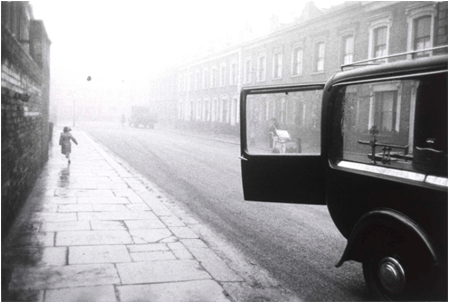
Two short ones this week: LP Hartley’s “A Visit from Down Under” and Saki’s “Laura”. They’re good, but also both very much the kind of story you see in anthologies of the Classic British Ghost Story sort.
Hartley is probably most famous as the guy who said a thing, which in this case is the quote “The past is a foreign country; they do things differently there.” See? You have heard of him before! “A Visit From Down Under” starts on a rainy London bus with a strange man all bundled up and sitting on the upper deck in the rain. He’s very peculiar. In particular he is cold to the touch. The ticket collector wants nothing to do with him and only reluctantly goes to tell him when they have reached his stop. Only when he goes to tell the man, the ticket collector discovers that the man has disappeared. FLASHBACK to five hours earlier and a Mr. Rumbold has arrived at his hotel (which is on the street where the strange passenger wanted to stop) after being away so long in Australia. He sets about drinking and making himself comfortable, exchanging some bantering talk with one of the hotel servants about murder. Then he dozes off while listening to a children’s show on the radio. The show takes on ominous overtones becoming increasingly more creepy the longer it goes on, until finally it triggers a panic attack in Rumbold who flees to his room. Later the strange passenger from the opening scene arrives and soon enough Mr. Rumbold is murdered with no trace left but for an icicle melting on the mantle piece.
All told this story exists entirely on the surface with inference made to Rumbold’s crimes. but nothing explicit is revealed. While the end is pretty basic with some wronged ghost coming back to have revenge on the person responsible for their death, the execution is quite good. The bit with the children’s radio show is great, genuinely creepy, as Rumbold can’t keep himself from getting caught up and eventually menaced by its whimsy. Kids’ shows are creepy! Track this story down and read it for that scene alone.
If Hartley’s story was all exteriority without much in the way of introspection, Saki’s “Laura” goes even further. Here the scenes are nearly all dialogue with people saying things that push the story along. We have Laura, a dying woman, Amanda, her friend, and Egbert, Amanda’s husband. Laura jokes about how after her death she’ll return as an otter or some creature, and to be frank she’d looking forward to it, especially if she can be an otter that kills all of Egbert’s chickens. When this comes to pass, Amanda tries to save the otter, but Egbert hunts it down. This results in Amanda having an episode, so Egbert takes her to Egypt to recover, where he is plagued again by another of Laura’s incarnations, and now Amanda is seriously ill. The End.
It’s light all the way through, maybe too much so, as I doubt I’ll remember it a month from now. Yet… well, I have to admire a story that’s all polished surface and light as cotton candy. The skill and craftsmanship on display in such a story are appealing no matter how light they seem. And it’s PG Wodehouse and Oscar Wilde territory, except with higher polish. So don’t be surprised if someday I own one of his story collections.
Next week… Anonymous and Graham Greene!
BWBC 05: A Thousand Words Tell a Picture
Welcome to portrait country.
Not physical portraits as in the Dorian Gray sense (although one does show up in our second story “Enoch Soames”), but the prose sort. First in the short ghost story “Importance” by Manuel Mujica Lainez, about a Mrs. Hermosilla Del Fresno, a self-important woman whose soul after her death lingers on for eternity among her possessions, and second in Max Beerbohm’s longer story about time travel, deals with the devil, and “Enoch Soames”, its titular self-important writer of dubious quality.
I’ve little to say about “Importance”. It’s a good story, concisely told and with a barb to it. Mrs. Hermosilla Del Fresno is a very important widow, nearly the most important widow in her city. The one blemish in her pedigree is that she comes from a less than spectacular family. All of whom she cut out of her life as she rose in society. Then, as these things happen, she woke up one morning only to find herself dead. At first she assumed it was only a matter of time before the angels appeared to take her on to her celestial reward, but as time goes by, and her dreaded relations reappear, she realizes that no angels are coming for her, and this is to be her eternity, her soul trapped in her bedroom, ever aware of how her family degrades her memory.
It’s a good solid shot of smugness followed by impotent rage towards God and man.
What’s not to like?
I hadn’t heard of Lainez until now and it appears his books were never much translated into English. The two that were, Bomarzo about an immortal Renaissance duke and The Wandering Unicorn a tale about the fairy Melusine set against the back drop of the Crusades, sound right up my alley and will likely warrant some tracking down or interlibrary loan next time I’m in the USA.
Now back to the Black Water and “Enoch Soames”…
I don’t know if Max Beerbohm is much remembered these days. He’s certainly someone that shows up a lot in any book about early 20th century English Literature, but more as a scenester than an actual writer. The sort who draws funny pictures of literati and has those pictures and his bon mots published in the smart set papers. Beerbohm’s funny, and perceptive, but a bit arch and smugly long winded in that British high society sort of way. If he were alive today, he’d very likely have a very popular podcast or even late night talk show.
“Enoch Soames” starts as a cutting satire of a certain type of wannabe writer. Soames is the arrogant dabbler who lurks at the margins of the literary scene whose overwhelming sense of self-importance is so distant from his actual ability and output to make him a farcical character. He apes the decadent style while also dismissing it and everything else that crosses his field of vision while working intently on some niche work he proclaims to be nothing shor of groundbreaking. When it’s published it has the title “Fungoids” and no more than three people buy it.
Beerbohm recounts meeting Soames on multiple occasions and finds him morbidly fascinating. As things progress, Soames worries more and more about his legacy and whether people will realize his genius after his death. He’s nearing a fever pitch when the devil steps in (or speaks up since he’s sitting next to Soames and Beerbohm in a crowded café) and offers to transport Soames exactly one hundred years into the future in exchange for his soul. Soames makes the deal and from that point on things go very badly for Enoch Soames.
First he’s not remembered as a significant writer at all. Second, he’s not even real but an imaginary character most famous as the subject of Max Beerbohm’s short story “Enoch Soames”. This leaves him crushed and deflated, so that when he returns to his own present day he’s unable to resist when the devil comes calling for him. The devil here is the theatrical sort dressed in pure Mephistopheles. Beerbohm describes him as looking like the sort of criminal that lingers around train stations in the hopes of stealing some high-class lady’s jewelry case.
As a rather Soamesian sort myself, the story did make me cringe. Beerbohm’s best remembered as a caricaturist after all. The portrait is perfect and Soames has a vividness despite his being described as “dim”. Trust me, if you have ever at all been near any sort of scene then you have met guys like Enoch Soames with their unwarranted high opinions of themselves. That Beerbohm paints his picture and then erases it in the same story is a clever act.
Next week. . . more writers I’ve only heard about but never read!
January 2020 Books
And so here we are, another year of book tracking. My goal for this year is to read at least one book a month written in the past ten years, something which I failed to do this January. Here are some things I read that you might like to track down.

Goldfinger by Ian Fleming: I am not a big James Bond fan and find the character’s continued existence to be puzzling. I can never get around how they keep changing actors without there being an explanation. At least with Doctor Who there’s an explanation behind their regenerations! Still, I find myself fascinated with the Bond novels and the power fantasy they portray. We think about the movies with all their gear and supermodels, but the books are much more about indulging in the ear marks of the jet-setting lifestyle and are full to the brim with lavish descriptions of food and local customs where Bond is never simply a tourist spectator. Bond’s also really good at card games your grandmother plays. Like a whole subplot might revolve around a high stakes Rummikub tournament. Anyways, Goldfinger has Bond attempting to foil the plot of the villainous Auric Goldfinger who plans on robbing Fort Knox. Pussy Galore shows up as does Odd Job and a lot of anti-semitism, misogyny, and anti-Asian racism.
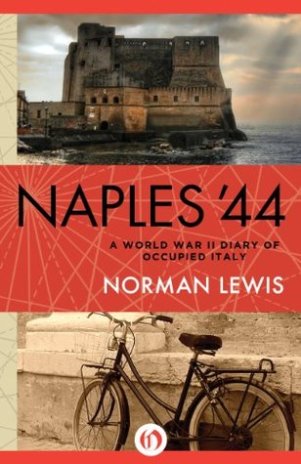
Naples ’44 by Norman Lewis: Nothing shatters your national heroic narrative about an event like books written during that event. Lewis served in British Field Intelligence during World War II and his book on the occupation of Naples gives a sobering account of life during wartime. Did you know the US mafia managed to get in good with Allied Command and profit from a flourishing black market? Did you know US soldiers had orders to kill all German soldiers taken prisoner in the war (even being told to beat their heads in with their rifle butts if necessary to save ammunition)? Did you know food was scarce in Italy after the war, but candy was plentiful? The details are often heart-breaking and anger-making, but they’re just as often blackly comic and absurd. Whether displaying one face or the other, Naples ’44 will shatter any sort of rosy view you might have held about the US’s actions during World War II.

Hospital Station by James White: This is the first book in White’s Sector General series about an intergalactic hospital and the problems doctors face treating alien patients there. It’s a collection of short stories that tend to follow a certain pattern: mysterious alien shows up at the hospital, alien wreaks havoc or does very strange things, doctors try to figure out why the alien is doing what it does, finally the heroic Doctor Conway follows his instincts and discovers the right way to treat the alien. There’s clever stuff here: empathic spider aliens (who work in the children’s ward naturally…), a shapeshifter having a nervous breakdown and wanting to return to the primordial ooze womb of its species, and a surgeon made from pure energy that wants to develop a brontosaurus’s telepathic abilities. White was a self-professed pacifist and these stories make a nice counter to the militarism in a lot of the SF of his peers. That said, and for all the wonderful imagination White exhibits in depicting weird alien physiology, he can’t imagine a human doctor with a non-Anglo name or a woman he doesn’t then go on to describe as “curvy”.
BWBC 04: Mundane Miracles, Mundane Horrors

In an English cottage two old women sit and drink tea. Outside, the modernizing world makes its noisome rumbles and smoke. Inside, the women eat small sandwiches, sip tea, and gossip about the lives they’ve led. One, the sick one, begins to tell a story. It is not a love story but it is a story about love and devotion and a deserted house where something called a “token” lives. If you go to the house and stand outside the door the token will listen and let you take on someone else’s troubles for your own. The woman went there for love, so she might take on all the pain destined to come to her man. It didn’t matter that she could never be with that man. She was his and that was all that mattered. Now, the cancer on her leg grows, and the story ends when the nurse arrives and complains about old ladies and their gossip.
That’s the outline of Rudyard Kipling’s “The Wish House”. A story I like more as an idea than in its written form. It’s all told in a very roundabout way, and by the time the actual Wish House appears it’s easy to have gotten distracted by the why’s why and who’s who in the story. But retelling the story above, the idea becomes visible again and I’m once more interested in the “token”.
Other sites will go into the Christian symbolism Kipling employs in the story. The sick woman’s name is Grace. GRACE! Get it? But all that’s pretty scant sauce on an idea I wish had more exploration.
Now on to a story about a suburban father who fears for his son and what he’ll learn about life down at “The Playground.” This is a Ray Bradbury story, so it’s ripe with what now reads as corny Twilight Zone weirdness, but that’s only because Ray Bradbury was as good as he was and made his legacy ubiquitous.
This is an anti-nostalgia story with an adult remembering their childhood as an era of brutality and powerlessness. The father views the playground in question as a demonic place where children are introduced to the world’s cruelties and it’s now his responsibility to protect his child from those same cruelties. That the playground has the supernatural power to spare the son by sacrificing the father (Get it!?!) pushes this into the fantastic.
“The Playground” has some great descriptive passages in it as Bradbury renders hop-scotch outlines, slides, and swing-sets through a lens that would do Hieronymus Bosch proud. Also when set right after the Kipling story the whole notion of taking on another’s troubles as one’s own becomes much more sinister. Kipling’s a believer in his story, while Bradbury is an agnostic at best. Sure, the playground has a manager and the light is on all the time in their office, but no one’s ever in there and the manager’s never been seen.
I feel like I should read more Ray Bradbury. At the same time I feel like I’ve already read too much Ray Bradbury. Yet, I haven’t really read all that much Ray Bradbury. It’s just that decades of entertainment have absorbed so much Ray Bradbury that we’ve all read Ray Bradbury without having read Ray Bradbury at all.
Next week some more spooky shit!
BWBC 03: Jealous Again

Today on Black Water Book Club dead lovers once more appear and jealousy rears its ugly head.
First, Edith Wharton’s “Pomegranate Seed” about Charlotte, a newly married woman trying to uncover the truth about the mysterious letters her husband keeps receiving. That the husband’s first wife died tragically lets you know right away where this story is going, and while it delivers few surprises it is a deep dive into an individual’s emotional landscape as they oscillate between jealousy, curiosity, and fear. Wharton’s one of those writers that can have a character walk up the steps to their house then go on for three paragraphs of internal monologue as the character pauses before their door with key in hand. That Charlotte becomes obsessed with finding out the identity of the letter writer leads her to lay a trap for her husband that ultimately has tragic results. Overall, the story’s a bit disappointing. The touch is very light and the haunting raises more questions than it answers. But if you like introspective stories that focus on a character’s emotional landscape, this might be something you enjoy.
Also, a last note about Wharton: I had always associated her with the late 19th century, but she died in the 1930s and was publishing right up until the end of her life. All that’s to say that when the narrator talks about automobiles I did a bit of a double take.
Next we have “Venetian Masks” by Adolfo Bioy Casares, another story about being haunted by the specters of obsession and jealousy, only this time the explanation is scientific as opposed to supernatural. An unnamed narrator describes his love affair to Daniela, a brilliant biologist. As time goes by the affair grows increasingly strained until it ultimately ends, and the narrator tries to move on with his life but fails. Years later he learns his friend married Daniela, and by chance the three encounter each other in Venice during Carnival. Only now it appears that there are at least two Danielas, because of cloning technology and the fact that Daniela’s a brilliant biologist. What she’s done is custom designed cloned versions of herself to give to her former lovers. That’s the reveal, and the narrator’s reaction to this information slams the story shut.
This is the kind of SF story you either love or hate. It’s more interested in the scientific idea of cloning than in how that science would work. And the story plays out in a strange setting that’s ambiguous and confused. It’s Carnival! Everyone’s wearing masks of archetypal characters. Is the narrator only playing a part in some timeless farcical love story? Is Daniela the model for a new Columbina? What sort of future will her technology usher in? How creepy is it that she sells off her clones to her former lovers when she has outgrown those lovers? Who cares! The narrator’s an obsessive hypochondriac prone to psychosomatic illnesses and that condition matters more to the story than any exploration of technology or future world distorted by cloning technology. I am absolutely fine with that and so far alongside “The Mysteries of the Joy Rio” this has been one of my favorite stories in the anthology so far.
Next week, Kipling and Bradbury!
BWBC 02: Climax Joy!

Welcome back to the Black Water Book Club. Today we’ll enjoy a very short one and a somewhat longer one.
IA Ireland’s “Climax For a Ghost Story” is an example of what would today be called flash fiction. It’s very much the kind of story places like Daily Science Fiction publishes regularly. That’s not a quality critique on flash fiction (I quite enjoy writing it myself!), Daily Science Fiction (who do what they do very well), or the story itself, just that its brevity no longer makes an intriguing curiosity but places it in a stylistic tradition. Read it for yourself:
“How eerie!” said the girl, advancing cautiously. “—And what a heavy door!” She touched it as she spoke, and it suddenly swung to with a click.
“Good Lord!” said the man. “I don’t think there’s a handle inside. Why, you’ve locked us both in.”
“Not both of us. Only one of us,” said the girl, and before his eyes she passed straight through the door, and vanished.
… spooky…
What actually makes this story notable is not the story itself but the likelihood that its author never existed and the whole thing’s a fabrication. The story’s said to come from Ireland’s 1919 book Visitations, which there seems to be no record of. Nor is there any record of the existence of Ireland’s 1899 book A Brief History of Nightmares. What is mentioned is that Ireland claims descent from William Henry Ireland, an infamous eighteenth-century forger who tried to pass his plays off as lost works by William Shakespeare. So for now, I’ll believe I.A. Ireland’s a hoax until some librarian tells me otherwise.
Here’s a little bit more on “Climax For a Ghost Story” and the mystery surrounding its author.
On to the next story, a tale of remembrance and loss. . . and getting a hand-job from your dead lover’s ghost until you die. The story’s called “The Mysteries of the Joy Rio”, and it’s written by Tennessee Williams. And here we are going straight into Ick Country of the sort you’ll find in Samuel R. Delany’s writings on New York City’s Times Square.
But first, up front, I’ll just admit that I really, really liked this story. It’s all atmosphere. Yes, squalid, dilapidated, and sordid atmosphere, but that’s a feature not a bug. It’s also kind of a tender love story.
Pablo Gonzales is an aging watch repairman in Texas who is so much surrounded by time as to have become indifferent to its passage, and one day he decides to go to the movies. That’s the story, except more so.
Mr. Gonzales inherited his watch repair business from his long dead lover, Emiel Kroger. That this story is set in 1950s USA means their relationship does not at all look healthy. Kroger’s described as a grotesque (“very fat, very strange”) who picks up a teen-age (possibly underage) Gonzalez for sex one night. That Gonzalez returns Kroger’s affection, surprises the older man, and the two form a relationship that’s both master and apprentice and romantic partner. In time Kroger dies leaving everything he owns to Gonzalez. Meanwhile the local movie palace the Joy Rio descends into decrepitude, becoming the center of an illicit world of sexual practices on its upper floors. Mr. Gonzales is a regular visitor to the upper floors. That this is 1950s USA means all these assignations have to be done subtly or one risks bringing the wrath of society at large down on oneself, no matter how ugly and sordid that greater society might be. There’s a nice anxious paranoia in this story as Mr. Gonzalez navigates the risks and rules of the sorts of seductions carried on in the Joy Rio. When a misstep throws his life in sudden danger, it’s too the upper floors Mr. Gonzalez flees and where the ghost of Emiel Kroger waits.
There’s a companion piece to this story called “Hard Candy” that I hope to read some day, and the Ick Factor here is definitely drawn from Williams’s own life. There’s tenderness within the grotesque on display, and both serve to make this a very unsettling story, perfect for the sort of book the Black Water Anthology hoped to be.
Next week … faint hand-writing and Venetian masks!
BWBC 01: Enter… the Ambiguity
Welcome back to the Back Water Book Club or the BWBC as I’m going to call it from now on. This week we hit the stories!
To start off is Julio Cortazar’s “House Taken Over”.
It’s a ghost story. Sort of.
It’s more a metaphor story, but for what I don’t know. This story has ambiguity dripping all over it. A middle-aged brother and sister living in an old house find themselves at odds with a nameless unseen “they” that shows up one they and starts taking over their home. At first it’s only part of the house, and the brother and sister flee behind a sturdy oak door into another part of the house, but before long the unseen “they” take over even this part, and the brother and sister are forced to flee the house entirely.
But who are “they”? It’s uncertain. They simply appear and instead of confronting them, the brother and sister let them take over the house. Is it scary? Are the brother and sister actually ghosts haunting their ancestral home? Is the haunting actually an indictment of the brother and sister, as the intruders appear to have much more life than either of the pair? The story offers no answers. My reading’s that the “they” are metaphorical, a symbol of the unseen majority that will push the marginalized into the streets unless confronted.
Scary? No. Strange? Kinda. Ambiguous? Oh yeah.
Following that, we have a more traditional story in Robert S. Hichens’s “How Love Came to Professor Guildea”. This one features the recognizable Victorian trope of two old educated bachelors of opposing personalties who manage to be great friends despite their differences. Instead of Holmes and Watson, it’s a Father Murchison and a Professor Guildea. Murchison’s the sentimental idealist, while Guildea’s the man of pure intellect and reason. The two meet and get into debates about the human condition. Then Professor Guildea finds himself haunted.
And it’s here where we encounter the “ick factor” I talked about back in the introduction, because whatever the entity is that attaches itself to the Professor, its main characteristic is that it’s mentally disabled and the chill of the story comes from that fact. The entity that haunts the Professor is described as an imbecile (and not so flattering as such), and this makes both men shudder. While the entity seems to mean no harm, the very affection that it shows the Professor is deemed unnatural and a thing to be feared. And so the men set out to rid themselves of the thing with mixed results.
So, is this scary? Sort of. From the entity’s initial appearance as a ragged form on a park bench to the Professor’s slow discovery of its nature, and the dawning realization of what it wants, the story manages to get under one’s skin and linger. But that it relies on ableism to do so can’t be denied.
Next week… a possible hoax and some more ick factor from Tennessee Williams!
Black Water Book Club

Hello, folks. Welcome to the Black Water Book Club.
Today we’re taking a quick look at the book’s forward before next week when we’ll start looking at the stories proper. Fortunately, the forward’s brief and it gets to the point quickly. Manguel gives a good working definition of what he thinks fantastic literature is:
“Unlike tales of fantasy (those chronicles of mundane life in mythical surroundings such as Narnia or Middle Earth) fantastic literature can best be defined as the impossible seeping into the possible, what Wallace Stevens calls “black water breaking into reality”. Fantastic literature never really explains everything.”
He then outlines the main themes common to all the stories selected for the anthology:
– Time warps
– Hauntings
– Dreams
– Unreal creatures, transformations
– Mimesis (seemingly unrelated acts which secretly dramatize each other)
– Dealings with God and the Devil
“The truly good fantastic story will echo that which escapes explanation in life; it will prove _in fact_ that life is fantastic. It will point to that which lies beyond our dreams and fears and delights; it will deal with the invisible, with the unspoken, it will not shirk from the uncanny, the absurd, the impossible; in short, it has the courage of total freedom.”
One thing I’ll note is that while no story has been steeped in the complete bigotry of, say, an HP Lovecraft story, a few so far have relied on certain prejudices to achieve their impact. That this would be the case in stories that rely on dreams, fears, the absurd, and the uncanny should surprise no one. But this “ick factor” when it occurs can leave a bad taste behind it. The fantastic as Manguel approaches it is not to be mistaken for a clean place at all.
If you want to read more about Alberto Manguel, here’s the link to his wikipedia page. His Dictionary of Imaginary Places is a fun book to spend a few hours with.
Black Water Book Club
Alberto Manguel’s Black Water: The Book of the Fantastic is an anthology of world literature from 1983 that’s considered a pioneering book for the weird genre. It’s cited as influential by others, in particular Ann and Jeff VanderMeer who put together their own anthology of weird literature. While Black Water‘s still leans Eurocentric, Manguel succeeded in pulling heavily from outside the English language, paying particular attention to the South American writers who formed his own background. At close to a thousand pages long Black Water does an admirable job at providing an overview of the fantastic as written around the world. Certainly its seventy-two stories excel in scope beyond other omnibus anthologies of weird stories from earlier eras. Used copies go for around ten dollars on Amazon, but I found my copy for half that back in 2017 at a used bookstore in Provincetown, Massachusetts. I bring all this up because one project I will work on this 2020 is a read through of the book over the course of the entire year, writing capsule reviews of the stories here at a rate of six stories per month.
I hope you’ll join me, or at least follow along.
Favorite Reads for October and November 2019
Not writing an October post nagged me all November, but I was traveling and that’s my excuse and I’m sticking with it.
Here are the books I liked from the last two months.

The Compleat Guth Bandar by Matthew Hughes: Set during Earth’s penultimate age, Guth Bandar is a noonaut who voyages into humanity’s collective unconscious while traveling around the galaxy. Boyish and wry like Jack Vance, which it nods at heavily, but it lacks Vance’s cynicism and cruelty. Also spelling “complete” as “compleat”? That’s hot!
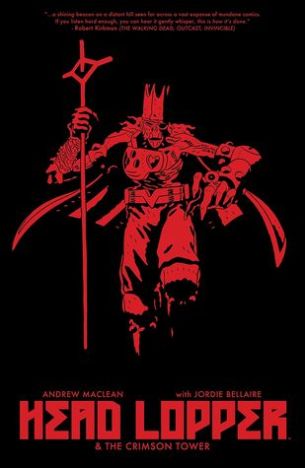
Headlopper Vol. 2 by Andrew Maclean and Jordie Bellaire: I didn’t like this one as much as Volume 1, but I liked it more than Volume 3. Heads get lopped as do limbs.
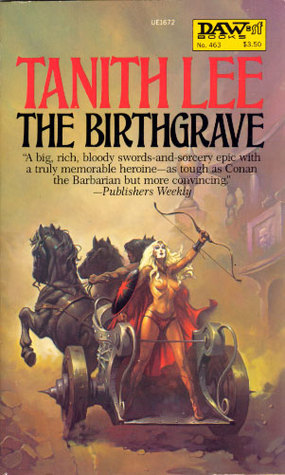
The Birthgrave by Tanith Lee: The book cover that needs to be airbrushed on the side of a van. I wrote about this one on the Patreon. For 1USD you can read about it and a bunch of other old weird books. This one is a cringy mess of 1970s fantasy tropes, but if you’re susceptible to that Conan itch like I am, and enjoy Tanith Lee, this is a must-read.

The Castle of Otranto by Horace Walpole: Another one from the Patreon. And for 1USD yadda yadda… This one lays out the template for the Gothic novel but isn’t nearly as bat-shit loopy as The Monk. Although, that’s not to say it isn’t bat-shit loopy in its own special way.
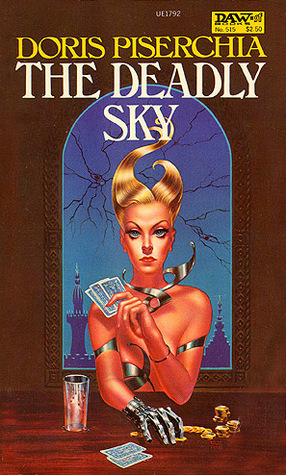
The Deadly Sky by Doris Piserchia: This one is set on a far future Earth where a young scientist becomes obsessed with the sudden appearance of a hole in the sky. This was Piserchia’s last published book and it falls a bit flat at the end, leading me to think it was rushed to publication. Piserchia can be a ton of fun, but if you’ve never read her I don’t recommend you start here. Instead check out Star Rider.

Galactic Sibyl Sue Blue by Rosel George Brown: A very 1960s SF novel about a hip, swinging space detective named Sibyl Sue Blue. She’s a mom, a cigar smoker, and always down for a good time. Not only do we have warp drives by the year 1990, but women regularly rouge their knees to keep up with fashion.
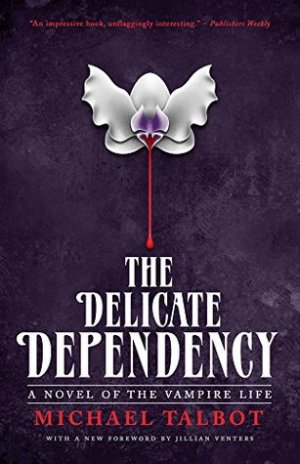
The Delicate Dependency: A Story of the Vampire Life by Michael Talbot: Of all the books here this is the one to read NOW! Even if you don’t like vampire books, this one is a great ride full of twists and turns. When Dr. Gladstone’s carriage strikes down a hauntingly beautiful young man on the streets of London, the event sparks an obsession in the doctor that brings him and his entire family into contact with a shadow world beneath the everyday one he believes he knows.
 Yesterweird