Not the Best but the Stuck With
It’s the end of the year and everyone is posting their best-of-the-year list and I thought I would do mine a little bit different. These aren’t so much my favorite reads but books that for one reason or another have stuck with me and I’m still thinking about days/weeks/months after I read them. And as always these aren’t books published this year, but read this year.
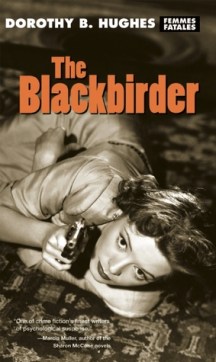
The Blackbirder by Dorothy B. Hughes: A pulp novel written in the early 1940s about a European refugee on the run in wartime USA. Julie Guilles the daughter of American expatriates in France flees to the USA where she’s not a legal citizen and hopes to keep a low profile fearing both the FBI and the Gestapo. Things don’t go as planned and when a former associate gets murdered on her door step, Julie takes off across country because she can’t trust anyone and has learned of the existence of a human trafficker in New Mexico that may know the whereabouts of her cousin. It’s pretty simple hard-boiled stuff, but it’s the wartime details that stuck with me because they were fresh and a bit startling. Like right now when we talk about WW2 it’s over and done, it can be reduced to a narrative, and it’s talked about in certain ways. This book was written while the end was yet to be determined, and Julie’s as afraid of ending up in a US concentration camp as a German one. There’s likely an education to be had in reading hard-boiled pulp written during and set in WW2.
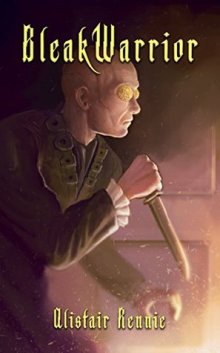
Bleak Warrior by Alistair Rennie: Hey did you know I like to write fiction and sometimes it even gets published? Did you also know that Bleak Warrior has a guy in it with a dick-shaped club who ejaculates semen cold enough to kill the people he rapes by frostbite and another guy that eats pickled intestines like they’re spaghetti? What do these things have to do with each other? Well, let’s just say that sometimes when I’m working on a thing and tying myself up in knots to make it all make sense knowing there’s a book like Bleak Warrior out there fills me with hope, kind of the same way reading The Blackbirder gets me over the hump when it comes to thinking about “plot”. Both books are pulpy and trashy, but smart about it, and what they riff on is other prose not just some TV show, which is a bit of a pet peeve of mine. Rennie’s internalized Michael Moorcock here, twisted all the dials to 11, and then smashed the control board just to see what would happen. Bleak Warrior’s a weird awful book, and while that doesn’t mean more ice-dick, it’s liberating in its embrace of all that it is.
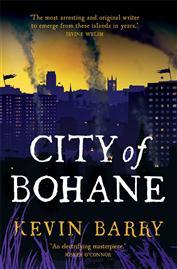
City of Bohane by Kevin Barry: I described this to friends as a post-apocalyptic version of The Wire. Set sometime in the latter half of the 21st century after various calamities have brought much of the world to its knees and thrown technology back nearly two centuries, City of Bohane deals with the gang war between factions attempting to control the titular Irish city. It’s a jargon-rich slangy violent book (which is why it’s on this list) that took a while for me to get into but when I did I found myself caught up in all the squalid dealing, back-stabbing, and betrayals set amid the occasional weirdness and flourishes. And all at half the length of a Song of Fire & Ice novel...
Definitely not for everyone, maybe even less so than Bleak Warrior, but if you think it might be up your alley, hell friend, you’re already doomed.

The History of White People by Nell Irvin Painter: I hold with the notion that society is a sea of often unexamined ideas and we’re all swimming in it largely unaware of the historical context of a lot of the mental landscape around us. Painter picks apart more than a few of those ideas in this book. Whether it’s addressing the institution of white slavery and the abuses rendered upon the Irish, or the weird fascination much of Europe had with Nordic purity and skull shape, or the way German nationalism is based on a chapter from Tacitus’s Histories, or really dozens of other things, Painter dives right in and writes about them all in an engaging and accessible style. This is a history of ideas and concepts that are largely accepted without question, and by shining a light on them and showing their seams and connections shows how much they’re a creation and not some universal truth.
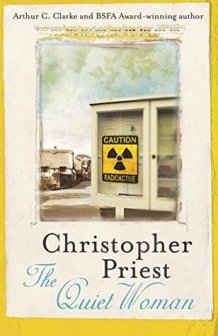
The Quiet Woman by Christopher Priest: This book is a mess, but a fascinating mess. Imagine a mash-up between JG Ballard, Phillip K Dick, and Patricia Highsmith and you might get an idea of the mood of this book. Alice Stockton is a recently divorced writer who’s moved to the south of England to start her life over, only to have a nuclear reactor in France meltdown and start dropping radioactive fall out all over her region. While officials say everything is fine, Alice’s latest manuscript has been confiscated by the government and her one friend in town has been murdered by persons unknown. As she adjusts to her friend’s death, the woman’s son appears and starts taking an interest in Alice’s life.
The overall mood of this book is paranoid and sitting right on the edge of something awful, that ends up being not quite the apocalypse you thought you’d get. Yet… yet… even if it doesn’t all fit together and make sense, there’s a lot of bits of this that get under your skin, or at least my skin, as it’s a snapshot of the emergent surveillance state and maybe a commentary on 80s excess.
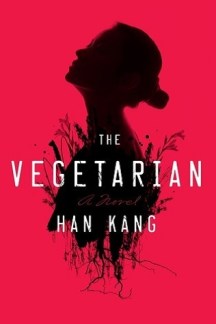
The Vegetarian by Han Kang: I’ve only read one other contemporary Korean novel, Kim Young-Ha’s I Have the Right to Destroy Myself, and based on that book and this one I’m starting to suspect Milan Kundera was something of a huge deal in contemporary Korean Lit. HUGE. With Han Kang’s The Vegetarian I didn’t much like it on initial read, especially the early two-thirds of the book as I could only feel contempt for all the characters, but the last third remedied that and now after a few months I’m thinking back on the earlier two-thirds and seeing them in possibly a better light. The plot of The Vegetarian is a young Korean woman decides to become a vegetarian and by doing so she throws her whole world into turmoil. The first two-thirds of the book are narrated largely from the POV of her husband and brother-in-law, and they’re both awful people, but awful in different ways (that I’ll call Right Wing/Left Wing South Korean male styles). The last third is narrated from the woman’s sister, and that’s where the heart of the book was for me and its most damning elements. Ultimately at the end the moral is South Korean culture, especially for women, is so awful that the living envy the dead and the sane envy the insane.
But, the more fascinating thing was how I heard this book talked about, because no one in Korea talked about the message of the book or what it might be saying. All the commentary was on how beautiful the writing was. It was one of the weirdest silencing techniques I’d ever witnessed, like praising a N.K. Jemisin novel for the quality of its prose while centering all discussion on “prose quality” and adamantly ignoring any discussion of race suggested by her books. And this wasn’t simply that I couldn’t follow discussions on this book. My wife said the same: all public commentary on the book praised the quality of the writing and ignored anything it might have been saying. Weird.
And there you go.
Here’s a link to my month to month favorites and another to my highlights from years past.
Favorite Reads: November Books 2016

Clay’s Ark by Octavia E. Butler: This was the first book I read by Butler years ago. I remember finding this exact edition at the library and reading it over the course of one summer afternoon. This is a weird book. A sort of cyberpunk Hills Have Eyes except the cannibals are the good guys. At some point five years in the future, the USA is a hellscape of misery and violence – and somewhere in the desert something from another world is breeding, reshaping humanity in an isolated settlement. A lone doctor and his two daughters get captured by the settlement’s altered inhabitants and violence ensues. This is part of Butler’s Patternmaster series but can easily be read as a stand alone novel.

Fifty Shades of Louisa May by L.M. Anonymous: This is a porn novel purporting to be a recently discovered manuscript by Louisa May Alcott, author of Little Women and other such books you probably should have read but didn’t. It’s funny, silly, and treats its subjects with appropriate irreverence whether it’s Emerson’s morphine habit, Thoreau’s BO, or Herman Melville playing Peeping Tom to Nathaniel Hawthorne and his wife.

A Taste of Honey by Kai Ashante Wilson: Wilson’s A Sorcerer of the Wilddeeps was likely my favorite fantasy novel in recent years and A Taste of Honey is a decent follow-up. Again we have a love story between two gifted men, only here that love story is in the foreground as the story centers the struggle of one of the men to choose a life that fulfills himself or that satisfies his family’s expectations for him. And it does that while still kind of being a Sword & Sorcery story.
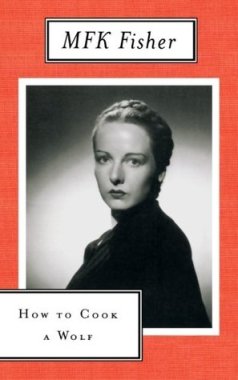
How to Cook A Wolf by MFK Fisher: I first heard of this book from the Apocalypse World RPG’s suggested reading list. It’s a cookbook written during World War Two, a time of shortages and rationing, and as such it’s a fascinating peek into that era. Fisher’s intention is to provide a means to confront hunger, the wolf of the title, head on without losing one’s dignity or enjoyment for food. Lots of soup and stew recipes and tips on how to stretch a meal, and lots of weird asides like how hard it is to get fish now that a) the coast is mined, and b) the population that fished, Japanese-Americans, have been interred. Worth tracking down. (Fisher updated the book nine years later and these bits are in parenthesis and at times this is distracting like you’re invited over to watch her argue with herself.)
Favorite Reads: October Books 2016
This was a great month for books. I read a ton of fun stuff. Here are some highlights:
 The English Civil War: Papists, Gentlewomen, Soldiers, and Witchfinders in the Birth of Modern Britain by Diane Purkiss: I’ve been slogging through this for months, reading a chapter here and there and then putting it aside for weeks on end, but you shouldn’t take my slow progress as a judgment. It’s a thick history book and I can’t be blamed for wanting some occasional zap/pow/boom along the way. The weirdness of the time comes through, but I’m sure it could be even more deeply explored (if you know of a book that does, I’d love to hear of it). But yeah, this is one of those people’s histories so draws on a lot of first hand accounts from various outsider sources such as kitchen servants, pamphleteers, and soldier-preachers.
 Ride the Pink Horse by Dorothy Hughes: Weird pulp crime novel that reminded me of Nightmare Alley while managing to be even pulpier. Sailor is a Chicago gangster who works as the personal secretary to a corrupt senator. When a deal goes bad and the senator cuts ties with Sailor, Sailor tracks him to New Mexico where they play cat and mouse in the midst of a fiesta. Meanwhile McIntyre, a Chicago cop, is trying to get the goods on the senator and hopes he can convince Sailor to do something good with his life for once. I will probably do a “One Book Four Covers” for this book, but I absolutely loved it.
 Silently and Very Fast by Catherynne M. Valente: An AI/human hybrid teaching itself how to love by listening to stories? Maybe. I was along for the gorgeous prose and imagery. The story unfolds at its own pace, so you need to give this time as it puzzles itself apart and reveals its workings to you. I’d say the journey is worth it.
 Bleakwarrior by Alistair Rennie: This is a bad book for bad people and as good as they say. It’s the grim dark genre pushed to absurd lengths and a long form riff on Elric and his like. Imagine Elric by way of GWAR by way of the WWF if Jodorowsky were in charge of the script. If you can imagine it and can stomach copious amount of violence, more violence, and genital violence, then get your hands on this book. It’s something.
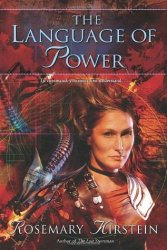 The Language of Power by Rosemary Kirstein: This is the fourth book in Kirstein’s Steerswoman series, and the most recent. I plowed through all four this month and will do a longer post on the series some time this month. Safe to say I adored them and they did so much right that most speculative fiction gets wrong in regards to pace and plotting. This book has Rowan the Steerswoman still on the trail of the wizard Slado and the mystery of “routine bioform clearance”, but has her staying in a small town as she tries to uncover more of Slado’s history. The thing I loved was how the entire book stayed focus on one locale and situation, and didn’t do the standard spec-fiction thing of sending people running all over the world to discover plot tokens. The downside is that there are still two more books to go in the series.
 I Am Providence by Nick Mamatas: An enjoyable book that satirizes fandom or at least the areas of it I’m partially familiar with. The Summer Tentacular is an annual HP Lovecraft convention that draws a host of weirdos to Providence, RI. Only this year a notoriously disliked author has been murdered in the hotel and his room mate decides to play detective and tries to find out why no one cares that a murder has happened among their members. A fun read that at its worst becomes a Lovecraft sitcom or riff on Bimbos of the Death Sun, but at its best is funny, sad, and a little bit terrifying.
And there we go…
Favorite Reads: September Books 2016
I made slow progress on a few books but didn’t finish them, put down others, read some short fiction, and so here we are.

I went on a binge of old school space opera. “A Planet Named Shayol” by Cordwainer Smith is some seriously gross, bizarre stuff about a man convicted to live on a horrifying prison planet. It’s a crazy ride and well worth reading if you like weird, SF, or weird SF. The picture above is the Virgil Finlay illustration for it. Smith has some notoriety for being an early CIA agent and writing a manual on Psychological Warfare. An interesting guy and his stories are always interesting.
 Second short fiction binge: James H. Schmitz. Have I blathered about the Witches of Karres? That’s a fun space opera and Schmitz by and large delivers fun space opera. Agent of Vega offers more of the same. Intergalactic secret agents foil various threats from hostile alien invasions to crimelords that are nothing more than the puppets of telepathic alien parasites. Stuff like that. I’m have a fun time working my way through Agent of Vega and Other Stories. One thing I really like is Schmitz’s a much more compassionate and a lot less hard-edged than his peers without coming across as being naive or sentimental.
 Third short fiction binge: Elmore Leonard’s When the Women Come Out To Dance. Mostly crime short stories with some more literary and a few westerns pitched in. This book made me understand why people love Leonard’s stuff. His range from short and clipped to long and dense is amazing. I plan on getting a copy of his collection of Western stories, cause the ones in here were pretty great.
On to a novel:
 The Continuous Katherine Mortenhoe by DG Compton: A 70s SF novel about a world where most illnesses have been cured and people mostly only die from old age. This has led to a sort of despair in the society that’s being countered by reality TV shows centered on the rare young and middle-aged individuals who suffer from terminal diseases. Katherine Mortenhoe is one such individual, and the novel centers on her coming to terms with her mortality while a media empire tries to maximize her suffering to their profit. And I would probably go on about that and mention how much I love NYRB’s stuff… except over the weekend NYRB doxxed an author who has gone to great lengths to maintain their anonymity and even said they’d likely quit writing if their identity was revealed. So I don’t know what to think except fuck NYRB.
Favorite Reads: August 2016
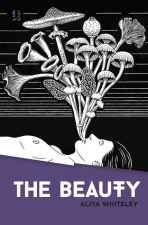 The Beauty by Aliya Whiteley: In a world where all women have died, a group of men live out their last lonely days in The Valley of Rocks, listening to young Nate tell stories that weave their past and remaining years into a cohesive whole – then the strange mushrooms start growing in the cemetery and everything changes. At times gory, at other times sublime, and definitely weird The Beauty’s a creepy read.
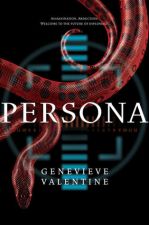 Persona by Genevieve Valentine: SF novel about a world where celebrity “Faces” represent countries and perform international politics while all actual politics are hashed out behind closed doors, except one Face is starting to take her job seriously and actually aid her constituency. Persona’s light on world building and heavy at times on breathless melodrama, but it’s even heavier on the speedy pulp paranoia that I enjoy.
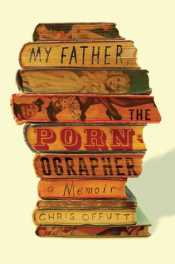 My Father, The Pornographer by Chris Offutt: Book about Andrew J. Offutt, science fiction and fantasy writer (he created Shadowspawn for you Thieves’ World fans) who had a longer and more lucrative career as a writer of paperback porn. Meanwhile his son, Chris Offutt, grows to be a well-regarded lit writer and screenwriter who’s trying make sense out of his father’s output while also coming to terms with his dysfunctional relationship with his dad. This book crawled under my skin, because the portrait it crafts of Offutt the Elder’s petty, hair-trigger temper. The fandom bits are particularly chilling.
 Lady Sings the Blues by Billie Holiday (with William Dufty): Harrowing but great autobiography of Billie Holiday. There are a lot of sad and bitter details here. Not only in regards to the racism she had to bear, but the harassment she encountered while trying to seek treatment for her heroin addiction. But all that was what I expected. The bit I didn’t expect and left me shocked was that she smoked a carton of cigarettes a day. A CARTON!?!
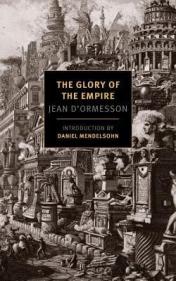 The Glory of the Empire by Jean D’Ormesson: Fake history full of fake metaphysics and fake conflicts that purportedly shaped the ancient and early modern worlds. I LOVE BOOKS LIKE THIS! It starts back in the ancient era with a legendary feud between brothers, tumbles forward through the ages, detailing wars, uprisings, and eras that never happened, speaking of kings and queens and personages who never existed – but might have, making something of a shadow history of the world. It’s a wee bit stodgy at times, but take it slow and it’s worthwhile.
Favorite Reads: July 2016
Books took a backseat to graphic novel trade paperbacks this past month. Most of this stuff has been out at least a year or so – but I’m only catching up with them now since I’ve been back in the USA and am still in the Stone Age because I like to read my comics on paper.

Low: The Delirium of Hope by Rick Remender and Greg Tochini. I’ve been delighted by the recent trend for more science fiction and fantasy style comics. And while I’ve slipped behind on Saga and wasn’t so impressed by Empress (Saga vs. Immortan Joe), I quite liked Low. Maybe even more than I expected. The art’s great. The story’s pretty neat (a bit like Henry Kuttner’s Fury, which is pulpy madness), full of sea monsters, weaponry, and dysfunctional family dynamics.
 DMZ: On the Ground by Brian Wood and Riccardo Burchelli. I’m very late to this party, but I’m here. A buddy of mine in Korea had a stack of assorted issues that I devoured, but it was all scattered throughout, so finding the beginning was my prime objective when I came here. Second US civil war. Manhattan as a demilitarized zone with factions competing for power within it. This book’s great, and I’m looking forward to the eventual TV series.
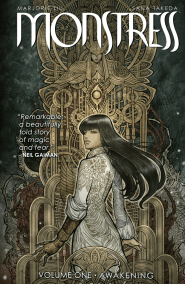
Monstress by Marjorie Liu and Sana Takeda. Weird science-fantasy with weird monsters and weird soldiers fighting among themselves and a main character trying to solve the mystery of her origin while cats lecture on philosophy and natural science, yes, I’m on board and looking forward to where this goes and don’t need the lecture from some nerdio about how this is totally derivative of their precious favorite manga series.
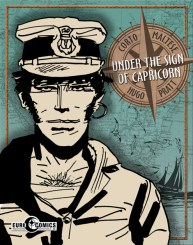
Corto Maltese: Under the Sign of Capricorn by Hugo Pratt. HOLY SHIT NEW HUGO PRATT CORTO MALTESE REPRINTS!!! WHY ISN’T THIS HUGE NEWS!?! WHY DO I HAVE TO HEAR ABOUT SHITTY SUPER HERO MOVIES WHEN THIS EXISTS!?! WTF PEOPLE WHY ISN’T EVERY ENGLISH LANGUAGE COMIC READER IN THE WORLD PROCLAIMING THEIR THANKS TO THE UNIVERSE THAT WE MAY LIVE IN SUCH TIMES!?! Umm, if you’ve never read Corto Maltese, you totally should.
Favorite Reads: June 2016
Favorite reads for June. I put down more books than I finished… or am still stuck in the middle of them. Of the few I finished here are the highlights:

A Burglar’s Guide to the City by Geoff Manaugh: Probably the book I liked the least here. That’s not to say it’s bad, but it’s a mix of neat/cool facts and un-neat/un-cool rhapsodically waxing architectural that had not enough of one and too much of the other. But as a quick read, skimming to the neat bits such as monastic book thieves, tunneling bank robbers, and the guy they dubbed Spiderman who lived in a secret apartment he built in a Toys R Us, it’s a lot of fun. Added bonus feature! If you read it before bed it might give you home invasion nightmares!

The Looking Glass War by John LeCarre: A sad spy novel that the former CIA head Allen Dulles believed depicted what spy work actually was like. If you’ve read the George Smiley/Circus books you might like this one, because here they’re the villains standing aside as another British intelligence agency attempts to field a mission a bit too far beyond their capabilities.
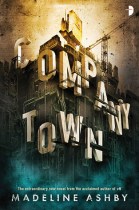
Company Town by Madeline Ashby: A cyberpunk novel set on a city-sized oil rig about a body guard and her new assignment looking after the heir apparent to the corporation that bought the rig. It’s cyberpunk in the good way, focusing on those undermined or otherwise on the bad side of progress. I’ll warn you that I don’t think Ashby quite sticks the landing, but she’s close enough that I can appreciate the ride and the ambition she had attempting to pull it off.

Black Wine by Candas Jane Dorsey: I grew up reading a lot of fantasy, but have come around to not standing it in 99% of its modern forms (Epic, Grim, Sword & Sorcery, it’s all *blerg*). But when I find a book that sits in that 1%? Holy shit! I’m in love. This is one of those books. It’s brutal, but from the first sentence I was hooked.
There is a scarred, twisted old madwoman in a cage in the court yard.
Favorite Reads: May 2016
Here we are already into June and I haven’t told you what my favorite reads were for May. How can any of us possibly go on?

The Argonauts by Maggie Nelson: A family memoir from an iconoclastic writer about having a baby with her transgender husband – it’s quite funny and brutal but also a bit up its own ass in that PhD sort of way where a conversation (or butt sex) isn’t satisfying unless you deconstruct the post-structural nature of Lacan’s concept of the Other while you do it. Fun fact: in the myth of Jason and the Argonauts, the ship, the Argo, was slowly repaired and rebuilt piece by piece, so the ship that returned home entirely different ship, despite bearing the same name.
Hellspark by Janet Kagan: First contact story. I loved it. I loved the worlds and all their cultures. I loved the science of “proxemics” (body language) and the nature of the protagonist’s abilities. If you think a book pitched somewhere between China Mieville’s Embassytown and CJ Cherryh’s Foreigner series might be a neat thing, then, yeah, track this down.
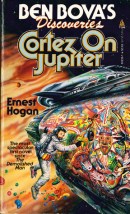
Cortez on Jupiter by Ernest Hogan: Loved this too. As much as I loved the world building of Hellspark, I suspect the future will be more like this with shitty fast food, everyone making micro-documentaries of their lives, and a reality TV show built around the high fatality rate of astronauts trying to contact the aliens that live inside the red spot of Jupiter.
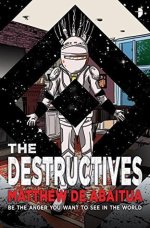
The Destructives by Matthew De Abaitua: Theodore Drown is a recovering weirdcore addict and former accelerator currently lecturing on intangibles at the University of the Moon in the year 2060, forty years after The Seizure, the world-shattering event that saw the emergence of AIs. Someone’s been reading their PKD and M. John Harrison. Great cover by RAID71. I’m all for book covers looking like covers to weird comics. Great stuff.
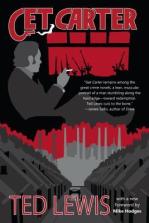
Get Carter by Ted Lewis: A dudely, dude tough guy novel about a gangster coming home to bury his not a gangster brother and solving the mystery of the brother’s death. Even if you’ve seen the Michael Caine movie (or live in the horrid reality where there was a remake made starring some mumbler), the book still has a lot going for it. Very clipped. Very tense.
Favorite Reads: April 2016

The Winged Histories by Sofia Samatar: Epic fantasy that doesn’t read like Epic Fantasy is my favorite Epic Fantasy (unless we’re talking about novellas, in which case I have more patience for 400 page “world building” tom foolery). The Winged Histories is that kind of Epic Fantasy. Less a sequel to A Stranger in Olondria than a continued journey into the same world of, in The Winged Histories we follow four women as each tells their stories and is caught in the turmoil of the Olondrian civil war. Some of them are archetypal Epic Fantasy characters such as the Warrior Woman, but Samatar manages to subvert and comment on these characters, as she delves deeper into her setting. I loved this book.
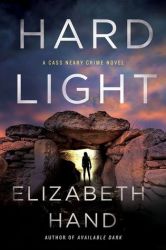
Hard Light by Elizabeth Hand: This is Hand’s third novel featuring the fascinatingly horrible person Cassandra Neary, who’s less an amateur detective than a destructive bystander. If you haven’t read any of these before this one is a decent one to start with, as Cass ends up in London and collides with various counter-culture victims and survivors, and a mystery straight off the Graham Hancock web page. There’s sort of this preposterousness to the novels, like who knew such attention to rock fandom from the 1970s would prove to be so important in 2015, but yeah, if you can swallow that and stomach Cass’s general awfulness the novels are great fun.
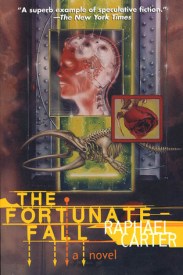
The Fortunate Fall by Raphael Carter: A latter stage cyberpunk novel from the late 1990s, The Fortunate Fall tells about a 24th century journalist on the trail of the truth concerning some 23rd century atrocities. It’s weird, smart, and fun while it gets at concerns regarding free will in a world of manufactured personalities. If you’ve read and liked Pat Cadigan’s stuff, you’d likely enjoy this. Unfortunately, it appears to have been Carter’s only novel (to date) and it’d be fascinating to see what they would publish now twenty-years on deeper into The Matrix. Are we still on schedule for the Unanimous Army to free us from conscious thought with their drill-bits? Or was that a best case scenario?
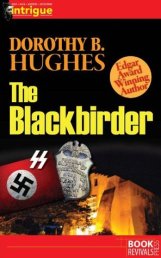
The Blackbirder by Dorothy B. Hughes: The other covers for this are a lot cooler, but this one was the one I read. The Blackbirder is a 1940s crime novel about a refugee woman from France in the USA illegally on the run from the Gestapo and the FBI when an old acquaintance gets murdered on her doorstep. The chase is fast and rich with paranoia as Julie Guilles flees across country from New York City to Santa Fe in the hopes of finding the mysterious “Blackbirder” who smuggles people across the US border. This is a good thriller, along the lines of Graham Greene’s The Third Man or The Ministry of Fear. This kindle edition was kind of shitty, but if you see a copy or anything else by Hughes, you’d be wise to pick it up.
Favorite Reads: March 2016
 Clade By James Bradley: Eco-collapse as viewed by four generations of one family. Young couple Adam and Ellie have a daughter. That daughter grows up and has a son. Along the way the family picks up other members – a more or less foster child – and a second husband when Adam and Ellie’s marriage falls apart. Some folks don’t like the whole linked short stories as novel schtick, but I love it, especially when done well as it is here. And it’s that broadness that makes the book ultimately optimistic. Terrible things happen, but people survive. The world’s never ending. It’s always beginning.
 The Ballad of Black Tom by Victor LaValle: This is an update on HP Lovecraft’s story “The Horror at Red Hook” with LaValle adding an ersatz Harlem jazz musician and small-time conman, Thomas Tester, into the mix. But don’t feel like you have to be to up on your Lovecraft to know what’s going on, Lavalle’s focus is more on depicting how the dreaded cosmic indifference of the Elder Gods likely paled beside human evil, prejudice, and injustice.
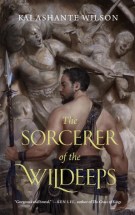 The Sorcerer of the Wildeeps by Kai Ashante Wilson: I’m calling this post-Oscar Wao sword & sorcery. At it’s base this is the story of a wizard traveling with a merchant caravan through a science fantasy setting. It’s focused on the day to day interactions mora than any larger plot, although the larger plot is there it just arises almost as an after though to this story of men on the road. Also, can I just say secondary world fantasy that’s less than 250 pages long? Yes. More please.
 The Last Weekend by Nick Mamatas: An antisocial alcoholic know-it-all survives the zombie apocalypse and lives out his days drilling the recently dead (though more often they’re the currently dying…) while getting drunk in what remains of San Francisco. It’s a genre mash-up that takes genre A (horror: zombie apocalypse) with genre B (American Lit: alcoholic slob) and crafts something that’s funny, abrasive, and awkward at the right times often enough to be enjoyable.
 The History of White People by Nell Irvin Painter: An utterly fascinating read that looks at the fluid concept of race as it’s evolved in Europe and North America from ancient times up to the 20th century. Much of the focus does settle on the United States of America in the 19th and 20th centuries looking not only at the concepts of race, but also at immigration and eugenics. Like I said, a fascinating read because of the subject matter and because Painter writes in a casual and often wry style.
And I read some other stuff that ranged from the goodish to the meh to the Beetle.
 Yesterweird