How I Game Now
It finally happened.
For the longest time my friend and I wanted to run a D&D game of some iteration here in town. Finding players and finding time were all an issue.Well, with summer upon us we have done both. Although everyone we thought to ask said no, we still managed to find seven or eight players, including one of my grad school teachers. She’d never played before and upon starting had this to say:
“Holy shit! You’re making all this up. Cool!”
And she’s come back – and brought fresh baked fudge brownies with her too! So it’s all good.
For the grognards among you, we’re using Beyond the Wall as our skeleton system with skills being more story-gamish than crunchy. While everyone likes the BtW character gen mini-game it doesn’t quite suit the campaign, which is Ghostbusters of Lankhmar. Actually, maybe it does suit the campaign: young heroes go to the big city, where misfortune happens to them and no one cares that they were the village hero.
Anyway, since we’re all old and playing on work nights, my goal’s to have an adventure that we can get through and finish in three hours. This means rethinking some things.
1. No megadungeons. At most a dungeon will have 12 rooms or encounters.
2. No exploration phase. Kill me if I ever have to say or listen to, “you walk into an empty 10×10 room” again. Give the players a map, maybe not the exact map, but something where they have a general overview of where they’re going. And to hell with 10′ poles. I know we all grew up with this style of play, but nowadays it just brings me down.
3. Bonus XP. Your character drank three unmarked potions and survived. You said something funny. You drew a post-game picture. You brought rum-soaked dark chocolate cherries to the table. Bonus XP.
4. Adventure seeds. I give the players 5 adventure seeds (here’s what’s happening in town…), they tell me which one they want to follow up on. I make the adventure. Simple. Some remain from week to week. Some don’t.
5. Empty dungeons that “activate” once the party is in the middle of them. Getting in is easy. Getting out is hard.
And I wrote 5 more things but they were lame and obvious. You get the point. Overall the adventures have been fun and the players have come back from week to week and try to get their friends to come to, so that’s all cool.
Cyclops Has Nothing On Da Weed
 This is David. It’s pronounced Da Weed.
Loren Eiseley
“This book will be read and cherished in the year 2001. It will go to the MOON and MARS with future generations. Loren Eiseley’s work changed my life.”
That’s Ray Bradbury from the back of Eiseley’s The Star Thrower. Reading that quote made me wonder how many people I know (most of whom are readers) have actually heard of let alone read Loren Eiseley. I don’t even remember how I came about reading him. Maybe it was simply from romping around on wikipedia or maybe someone mentioned him. But when I asked friends if they had read him most people my age or younger hadn’t even heard of him. I guess his fame never made it past the 1980s (at least outside of his hometown), which is a shame because he’s amazing.
He’s a more humanist Carl Sagan. A nature essayist that writes like Thoreau by way of Weird Tales. An essay about foxes will start with a quote from Peter Beagle talking about magicians. It will end with Eiseley sleep deprived at dawn, chicken bone in his mouth, playing with a fox cub in the dunes. Maybe it’s the fate of science writers. Their work too tied to progress and the rate of technological advancement to be anything but doomed to oblivion. Maybe he straddled the line too much and wasn’t enough of a materialist. He spoke too often of miracles.
“Since boyhood I have been charmed by the unexpected and the beautiful. This was what had led me originally into science, but now I felt instinctively that something more was needed – though what I needed verged on a miracle. As a scientist, I did not believe in miracles, though I willingly granted the word broad latitudes of definition.”
Lexicon
A friend from home came to Korea for a visit. She was doing both the ROK and Japan in one Far East swing. I convinced her to leave Seoul and had down to the country. We met in Gyeongju the next city over from where I live. She was impressed by my Korean, which shocked me since I can’t speak the language. What I know is maybe a handful of phrases and numbers. Basically I can go into a store and ask how much something costs and know how much to pay when I’m told. But after living here for four years I’m also a lot more comfortable not knowing what people say to me and having a “conversation” regardless of the fact that I can’t speak the language. Either I’m listening for one word I know and reply with one of the hundred or so I know, or I’m just playing a rather involved game of charades, which gets you pretty damn far.
Sometimes I know exactly what’s being said in some scripted exchanges because I know the script. If I’m buying groceries and I’m asked a question, it’s probably about whether or now I want a bag. I get a lot of mileage out of stuff like that. Or it comes back to the comfort level. Some people, like the shop keepers in my neighborhood, I see everyday, and I’ve stopped and chatted with them where they’re speaking in Korean and I’m speaking in English, but we’re having a conversation that I can only imagine resembles that scene in Ghost Dog where Forest Whitaker and his friend that works in the Ice Cream truck and only speaks Creole are having a conversation about a man building a boat on the roof of an apartment building. Neither speaks the same language but they talk to each other just the same.
Or in other words you can get pretty far here simply by playing a decent game of charades.
June Books
I read a Henry Miller book this month. Afterwards to get the taste of Miller man-funk out of my system I made it a point to read more women. For July I plan on switching tracks again and reading only nonfiction. I realized how much I miss libraries. In the USA if I wanted to read a book about some topic I’d take it out from the library rather than buy it, but with no decent English language libraries nearby if I want to read a book about earthworms then I really, really, really better want to want read it, because I’ll be owning it. Now on to the books…
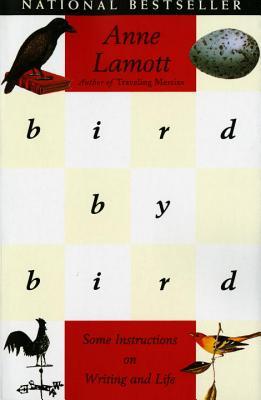 Bird by Bird – Anne Lamott
An enjoyable writing book that was thankfully light on the enthusiastic woo. Lamott does come across as a bit of a kook, but she’s a charming writer with an insightful eye for telling details. Yes, this book is geared towards realism rather than speculation, but all the same her advice and her reality checks are welcome. As is her personality – or at least the constructed personality that comes across in these pages. There’s something pleasant in reading a book by an author you know is a bundle of neurosis and prone to eating their own foot at time.s
 Doll Bones – Holly Black
This book’s about three kids on the edge of adolescence going on an adventure at the behest of a ghost-possessed doll. It’s middle-grade horror with a straight-up quest in the middle of it. As someone well far beyond the target range of the book, it did take some intention on my part to give a damn, but overall an enjoyable read. The depictions of old American milltowns, in this case those in Pennsylvania and Ohio, rang true.
 Lud-in-the-Mist – Hope Mirrlees
A “classic” fantasy novel from the 1920s the reads a bit like Tolkien’s Shire mashed up with David Lynch’s Twin Peaks. The town of Lud-in-the-Mist once had regular communication with the Silent Folk (the fairies) beyond the western hills, but that was long ago in the bad old days of Duke Aubery. His days ended in revolution and the current people of Lud have banned all commerce with the fairy folk, yet the strange narcotic fairy fruit arrives in the town just the same. When the fruit wreaks havoc in the household of Mayor Nathaniel Chanticleer the good man decides to track it to its source, including a trek west to the land from which no one has ever returned. This book’s by turns twee and sinister, and sometimes in the span of the same sentence let alone paragraph. If you like Dunsany’s Elfland’s Daughter or Charwoman’s Shadow you should enjoy this.
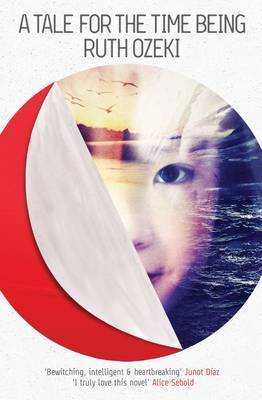 A Tale of the Time Being – Ruth Ozeki
A woman finds a diary floating in the ocean. The diary belongs to a Japanese girl named Nao who’s the victim of intense bullying. She plans on killing herself, but needs to tell the story of her great-grandmother, a Buddhist nun, before she does it. Later the universe collapses into fragments and multiple realities, and people go on dream quests to solve all their problems. I enjoyed the ride despite the lack of closure, which might very well have been the point.
 The Time of the Assassins – Henry Miller
This book’s a long meditation/rant by Miller on the life and works of Arthur Rimbaud. It’s short. It’s dense. It’s ranty. It’s a Henry Miller book. And that’s good, as long as you can overlook the fact that he writes with his dink on the table.
 White Is For Witching – Helen Oyeyemi
There’s this part near the end of Shirley Jackson’s The Haunting of Hill House where the haunted house begins to possess Eleanor and alter her perceptions of reality. This book is like that chapter all the time. Miranda Silver is a young woman with an eating disorder living with her brother and father in a house haunted by four generations of women, and they have chosen Miranda to join them. This was a surprising book, and thinking about it now I feel as if there was a whole layer of commentary present in it regarding Britain’s history of ethnic persecution that I barely grasped. Not that you have to, really, as the book does hold up as a stylish haunted house story.
The Ghost Hunters
Once more ghost hunting became fashionable. People met online and discussed preferred methods. Mediumship wasn’t so lucky. No one could simply channel spirits any more. Electricity was the stuff of life, especially when coupled with water. Appointments were made. A clandestine meeting in a coffee shop, then a parking lot, finally ending in a neon-decorated motel’s VIP suite with a view that overlooked the all night express bus terminal. They took turns in the bath tub, the soap suds dissolving into the sound of hydraulic brakes. The hairdryer failed to spark in their wet hands. Maybe next time. Paracelsus for morons.
May Books
Here we go. For full effect read this post aloud in a halting monotone.
 Ali’s Smile – William S. Burroughs (1985)
Burroughs flirted with Scientology during the 50s and 60s only to end up disillusioned by it. Feeling some compulsion to set the record straight and to rectify whatever damage his support for the organization might have caused he set about writing a series of letters and articles attacking Scientology. This collects them all along with the titular story, but it’s not nearly as enjoyable as the non-fiction parts.
Here’s a link to the PDF.
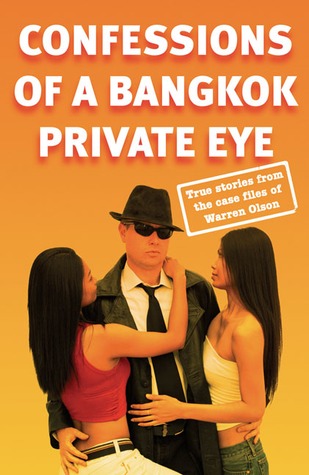 Confessions of a Bangkok Private Eye: From the Case Files of Warren Olson – Steven Leather (2006)
I found this book in an ex-pat bar. It’s trashy and loathsome, but compulsively readable like a tabloid, and I suspect it or books like it might have influenced Lavie Tidhar’s Osama. There’s a certain type of Anglo-expat guy you meet in Asia that’s obsessed with which women are or aren’t sex workers. This book’s like spending 270 pages listening to that guy regale you with his adventures. In every way he’s a guy standing atop the smoldering wreckage of his life, but the captivating part is hearing how proud of it he is.
There’s also something fascinating about well done sensationalistic hackwork. I could picture the author shuffling up the pages of this book and reselling it under some other title like Bangkok Streets: One Man’s Journey. Hell, even from story to story whole passages and sentences get recycled. So like I said it’s trash, but intensely readable.
 Create Dangerously – Edwidge Danticat (2010)
The corner of the Internet where I reside made much of that Salon piece on Junot Diaz’s writing class syllabus. The article’s here if you want to read it. As someone always eager to hear book recommendations I made notes, which is how I learned of Danticat. Part memoir, part essay collection Danticat explores her role as a Haitian immigrant artist residing in the USA. It’s a great read and definitely worth tracking down.
“One of the advantages of being an immigrant is that two very different countries are forced to merge within you. The language you were born speaking and the one you will probably die speaking have no choice but to find a common place in your brain and regularly merge there.”
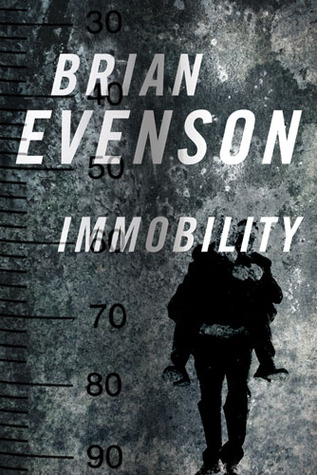 Immobility – Brian Evenson (2013)
I’ve liked other Brian Evenson novel’s quite a bit and think he’s a great short story writer. Seriously, read the “Ex-Father”. This book however was a disappointment.
A man wakes up in the dark with amnesia. Mysterious assailants torture him. He is tasked with a vague secret mission and must journey across a post-apocalyptic landscape to the place where the plot happens and all his (our) questions will be answered, except they’re not. So he has to journey back to the assholes that tortured him at the start and instead of answering his questions they torture him some more until they put him back to sleep and tell him all this will start all over again. At which point the book ends. It’s also one of those stories where the character’s intelligence appears to be dictated by whether or not the plot requires him to do something stupid or smart. It’s not good when books remind me of bad slush stories. This combined two types: “Character wakes in darkness. They have no memory. The torture begins.” And, “Character receives cryptic mission or message. They must journey to the place where the story is waiting for them.”
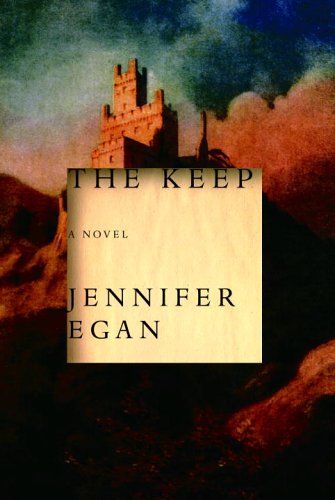 The Keep – Jennifer Egan (2006)
A literary novel that reads like a popular novel while commenting on popular novels, I couldn’t help but think of Stephen King as I read this. Two cousins reunite in Europe twenty years after a childhood prank changed their lives. Meanwhile a prisoner in jail for murder takes a creative writing class. The Keep’s multi-layered and metafictional novel, but also a decently plotted thriller. It’s worth checking out.
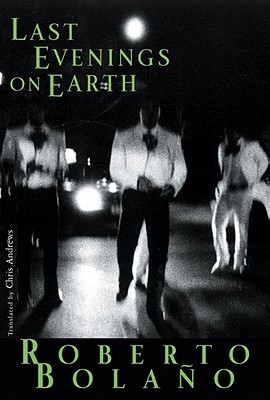 Last Evening on Earth – Roberto Bolano (2007)
Holy shit! This collection knocked my socks off! Plotless short stories that hinge entirely on mood, meandering character studies, and short cruelly humorous vignettes about a lost generation of Chilean expats. Great stuff! One of my favorites was the short character study “Henri Simon Leprince” about a disreputable writer in 1940s France who couldn’t shake his reputation as a shitty writer even as he helped political dissidents escape the German occupation.
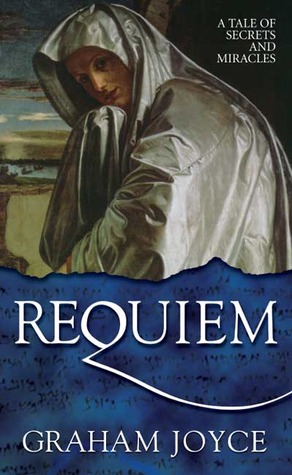 Requiem – Graham Joyce (1996/2006)
A man-pained widower fucks his way into a nervous breakdown. He then fucks his way out. The Dead Sea Scrolls, Mary Magdalene, and djinn are also involved. As with the Evenson above, I read this without liking it. Joyce’s How to Make Friends With Demons, which shares some of the same concerns and tropes, is much better.
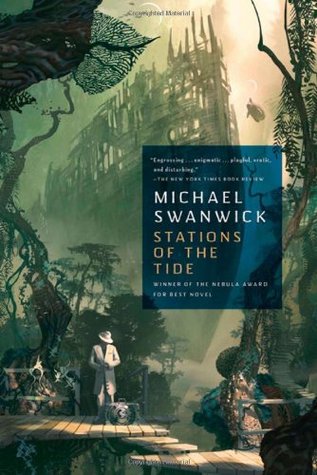 Stations of the Tide – Michael Swanwick (1991/2001)
I bought this book on the merits of the cover. Look at that thing. It’s great. Distracted man in suit with futuristic briefcase dwarfed by alien landscape. I love it. You can expect a 1 Book, 4 Covers post on this book. Anyway this is a weird, kinky science fiction novel about a bureaucrat hunting a renegade wizard on a planet that’s preparing for its regularly scheduled apocalypse. The ending is a bit fragmentary and hallucinatory but the ride is where the fun is. It’s also interesting to me that this books was exactly 100 page shorter than most modern SFF novels that I feel default to being at least 100 pages too long.
I think there’s an argument to be made that the shorter a novel is the more subversive, perception-altering potential it has.
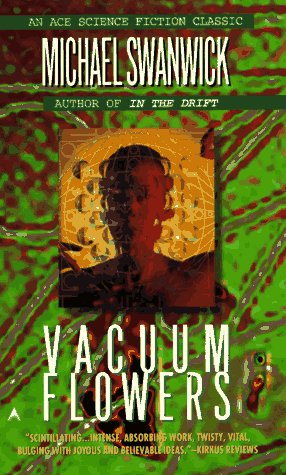 Vacuum Flowers – Michael Swanwick (1987)
I read this book when I was 15 or 16. It made absolutely no sense. It also had this weird yellow Jane Fonda David Bowie Rebel Rebel cover. On reread this month, it only made a more sense because I’m better seeped in science fiction tropes. This is grand tour SFF set in a post-singularity transhumanist solar system of plug-in personalities, unbraked AIs, colonized comets, and other crunchy bit. Overall bewildering but enjoyable.
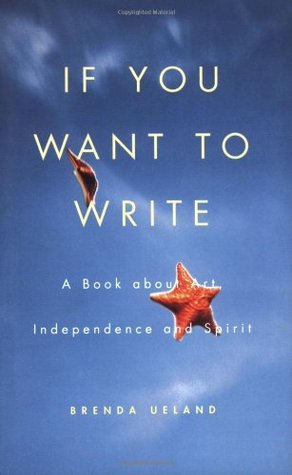 If You Want To Write – Brenda Ueland (1983)
A quick, enjoyable read. This book was first published in the 1930s and while it’s pretty light on particulars (it doesn’t offer any exercises) Ueland’s style is quite enjoyable. She’s a down-to-earth author with little concern for what is and isn’t literature. From her descriptions of students I don’t think Ueland taught in a university, but in a more informal capacity or in a community center. Anyway, not a bad writing book of the inspirational variety.
And last, I read Fritz Leiber’s novella Horrible Imaginings. This is one of those Leiber stories people don’t talk about, written when he was an old man living in a San Francisco rooming house. Any Leiber fan interested in his later work (especially if you like the amazing Our Lady of Darkness) should read this post by writer Marc Laidlaw. Anyway this is a pretty ugly story of the “porn-guilt” subgenre.
An old man, Ramsey Ryker, lives alone in a modern day San Francisco apartment building where he has recurring nightmares of being assaulted by hordes of monstrous miniature penises while immobilized in darkness. Later we learn he occasionally visits peep shows, and he’s become infatuated with a woman he’s glimpsed in his apartment building, a woman who may or may not be a ghost. The end let me down, but the creeping inevitable of all the rest of it made up for it, especially all the digressions on apartment trees and empty space.
How Not To Follow People On Twitter
Here’s another one to file under Captain Obvious is obvious…
There are people I like, people I admire, people I feel are extremely insightful and worth listening to, but if I follow them on Twitter I know that they would drive me annoyed. How do I know this? Because I have done exactly that. I have followed these people, read their Twitter feeds, and become annoyed by their floodlighting. Of course, I probably have a low personal threshold for what is and isn’t floodlighting. Some folks might not mind things I do. Some folks default to hugs. I default to distant nods and maybe a handshake because anything beyond that is inherently suspicious. Other folks might operate their twitter like a traffic cop, muting people for a bit, listening for a bit. I don’t have the will, patience, or time to do that with the attention required. So what to do?
Answer: Follow other people who follow those people you like, and rely on that first group to filter the latter. And so far it’s worked pretty well. The folks I admire and find insightful remain so without drowning me in their moment to moment tribulations, squeegasms, and would-be stand-up routines.
How Soon Until We Start Saying “Culturally Mormon”?
I doubt it will come as any surprise that I have atheistic tendencies. If anything I’m an atheist that believes in mythology, or if I want to be pretentious and pretend I’m an Italian New Wave film director, “I’m an atheist with a nostalgia for religion“.
Mythology’s the stories we surround ourselves with and which shape our perceptions of ourselves and the world we live in. So, yeah, there’s Greek Mythology with Zeus and all that, but there’s also Christian mythology, and national mythology (like the Myth of the Frontier if you’re an American). Religion not only supplies one of these mythologies but builds a scaffolding around it in the form of texts, rites, community, personal practices, or shared references. When I say someone’s Culturally Catholic, Culturally Muslim, Culturally Buddhist, etc. it’s referencing their ability to navigate that mythological framework.
I joke about nuns. My buddy jokes about the Talmud. My other buddy answers his dad’s phone call with “as-salaam alaykum” while we’re sitting in a bar eating pulled pork sandwiches.
Some folks might see all this as hypocritical or cynical, but I find it all healthy and in its way respectful. Where it comes from is a maturing of religion away from one thing and towards another, a cultural identity, and more and more as I encounter ex-Mormons I wonder how long we are away from having people say “Yeah, I’m Culturally Mormon, but I drink coffee and support gay marriage.” Or they’ll sit over a beer swapping “war” stories about their missionary year. From a devout perspective they’ll be outside the fold, but from their own place it’ll be the framework they’ve inherited and can share, and as more and more people leave the fold, find life outside to be pleasant, and stay on good terms with their family and friends inside the fold, I won’t be surprised to see people saying culturally Mormon as a way of acknowledging their experiences.
I give it a decade. By which time we can all wonder about the Cultural Scientologists and puzzle out what their deal is.
Books April 2014
It’s the end of the month. Here’s what I read. Surprisingly I read some recent books. As always if you’ve got an opinion on any of them please share.
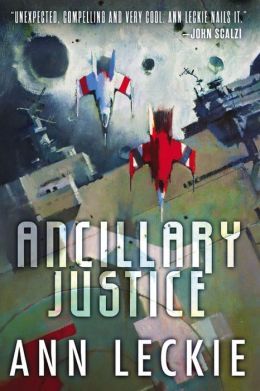 Ancillary Justice – Ann Leckie (2013)
An enjoyable space opera about the sole remaining “zombie” soldier of a destroyed AI-controlled ship searching for revenge in a far-flung interstellar empire. Yeah. I had some issues with it, but they’re more or less fashion quibbles than any actual criticisms. At least any criticisms I have shouldn’t outweigh anyone’s desire to read this book. Maybe it’ll hit all your buttons where it only hit half a dozen or so of mine. That’s all right. Folks might enjoy the stuff I didn’t like the immersive world-building and slow boil plot.
 Annihilation – Jeff VanderMeer (2014)
One of my most anticipated reads this is the first book in the Southern Reach trilogy that should prove to be exciting and expectation defying. It’s a short, dense read, with a clinical prose style reminiscent of JG Ballard riffing on the Strugartsky Brother’s Roadside Picnic. The novel tells the story of the twelfth expedition into Area X, a strange wilderness that does not yield its secrets easily and place that has caused the deaths of nearly all the earlier expeditions that have traveled into it. The next book’s out in a week, and I’m looking forward to it.
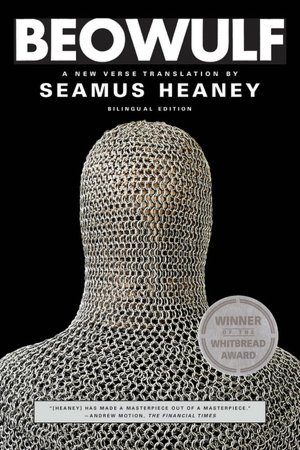 Beowulf – Seamus Heaney, translator (2000)
I saw that JRR Tolkien’s translation’s soon to be published, and that reminded me that I had a copy of this sitting here at home on a shelf. In high school I read Grendel before Beowulf, so my allegiance is always with the monster, but one thing I forget is how much of this book deals with not-Beowulf stuff, like the intercine feuding between the Danes and all that. The left hand pages has the Old English, which if you read aloud sounds like black magic – at least that’s what my wife told me when she told me to stop. She didn’t like the way the cats were paying attention.
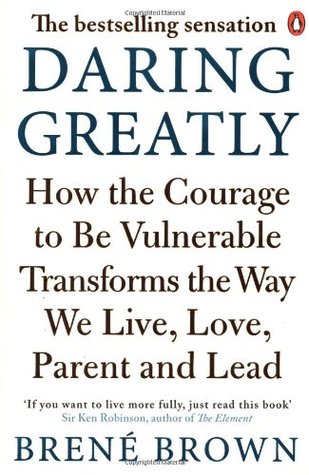 Daring Greatly: How the Courage to Be Vulnerable Transforms the Way We Live, Love, Parent, and Lead – Brene Brown (2012)
Yeah, one of those inspirational self-help books, it left me ambivalent. I had to translate every other sentence into Grump and found Brown’s weird fixation on cool vs. uncool and the hurts of middle school to be off-putting (she tosses out the stale canard that people are only negative and cynical to be cool). Other than that it was okay. At least some of it was. The rest of it I still have to puzzle through. Not that I reject her premises, but I find them overly simplistic.
 The Dazzle of Day – Molly Gloss (1992)
I read Denis Johnson’s Train Dreams and that got me thinking about writers that evoke the landscape in their work, and that got me thinking about Molly Gloss. I loved Gloss’s Wild Life a few years back, and a friend had just given me this book on his recent trip to Seoul (thanks, Gord!) so I decided to give it a try. And I absolutely adored this book. It’s a science fiction novel about Quaker colonists on board a generation ship. The plot’s oblique and the big question’s whether or not to settle on a recently discovered habitable planet, but the true drama and conflict lies in the very real relationships between the characters (will she or won’t she patch things up with her ex-husband, will he or won’t he assist his ailing father) and the society they’ve made for themselves in the near 200 years they’ve been traveling on board the ship. Fans of Ursula K. LeGuin will enjoy. Others might find it too focused on mundane details, but I loved it. It’s richly detailed and naturalistic, while also being speculative. However if you’re looking for big idea SF you should probably look elsewhere.
 The Free-Lance Pallbearers – Ismael Reed (1966)
Imagine Tolkien’s Lord of the Rings mashed up with Sweet Sweetback’s Badasssss Song with a Sauron that’s a Polish used car-salesman turned Fascist dictator that rules HARRY SAM (the Mordor of this novel) from atop a toilet. It’s very much a 60s novel with the anarchic energy of a Looney Tunes cartoon. Folks might enjoy it – or think it’s utterly offensive and a piece of trash. I enjoyed it.
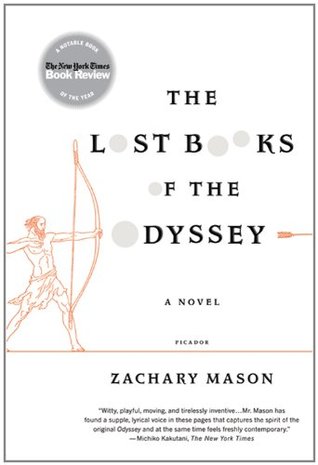 The Lost Books of the Odyssey – Zachary Mason (2010)
This book takes the works of Homer and reimagines them in forty-four different ways. There’s the story of Odysseus the wizard who upon learning of Achilles’ death builds a golem to fight beside the Greeks beneath the walls of Troy; the story of Odysseus the deserter who travels for ten years as a bard telling stories of his heroism; another story depicts a strange Mr. O who sits in a sanatorium for aging soldiers; or a stranger one where it’s revealed that both the Iliad and the Odyssey are mistranslated depictions of ancient chess matches. Some are vignettes, some more elaborate, and not all of them focus on Odysseus. Overall this is a great little book, for lit and fantasy fans. It reminded me a lot of Italo Calvino’s Invisible Cities and Angelica Gorodischer’s Kalpa Imperial.
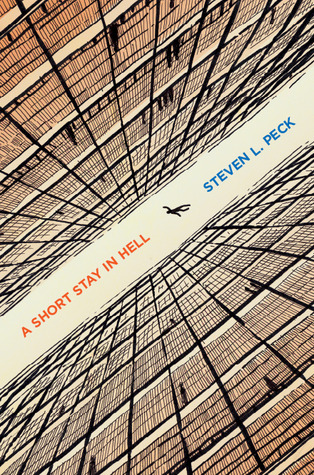 A Short Stay in Hell – Steven L. Peck (2012)
I read this book for our local wine & cheese book club (expats are seriously weird when it comes to making clubs). I hated it and thought it insipid. Basically it takes Borges’ “Library of Babel” story and depicts it in an as literal fashion as possible for a 100 or so pages. But I was keen to hear what other folks thought of it. Most of them liked it and the person who recommended it connected with the book in a way I didn’t – so that was cool to hear. It could be that this was someone’s Gateway Book and it’s always bad form to shit on someone’s Gateway Book. Still, I don’t recommend it.
 Lake of the Long Sun – Gene Wolfe (1993)
Gene Wolfe puzzles me. He’s an extremely unseductive author in a lot of ways. The plot of this book involves a lot of walking around and I feel like it relies too much on the fact that I was raised catholic for it to make sense. But I keep coming back to his work, because I believe there’s a lot there. It’s another generation ship novel, but one with a more baroque society than that shown in The Dazzle of Day. These books swing closer to the Fritz Leiber style, although they never quite embrace the madcap. But if you want dungeon-crawling science fantasy set aboard a star ship so large it contains warring cities, these might be your books.
 The Black Spider – Jeremias Gotthelf (1842)
A Horror novella written by a conservative 19th century pastor. Some of it’s as you would expect: the evil is caused by willful women, and people are only safe so long as they think like their forefathers, but it’s also a pioneering horror novel about a doomed village. When the grisly stuff starts to happen and the Devil’s curse begins to enact itself Gotthelf pulls out the stops and provides some gross-out chills.
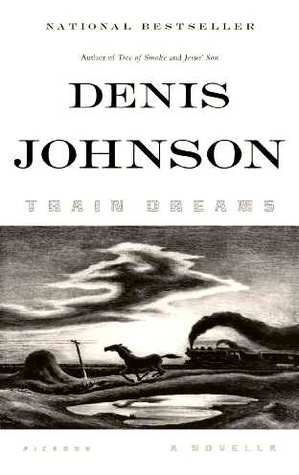 Train Dreams – Denis Johnson (2002)
Another novella, this one about a labourer living in the Pacific north-west in the first decades of the 20th century. It’s taut and moody, laced throughout with vivid depictions of the landscape but light on plot. If anything it’s a long extended character study of one man’s defeat and slow rebirth in the wake of personal tragedy. Whether one feels charitable or not towards the man is another matter. The last image in the novel is truly a great one. For western fans and fans of refined, gem-like prose.
And lastly here’s a fun blog-post by Rahul Kanakia about reading books as a replacement for doing the things you want to do in life.
 Yesterweird