I Didn’t Like It
I read a thing. I didn’t like it. Now I need to tell you how much I didn’t like it, because these other people, they liked it. And I can’t stand that, because I REALLY DIDN’T LIKE IT. And because I didn’t like it that means it’s bad. It’s a bad thing. It’s awful. So there’s something wrong with those people that like that thing. How could they like that thing? Wasn’t it clear that it was bad? Wasn’t that obvious? If the thing was good, I’d know. I’d be able to tell. It would be clearly a good thing. No doubt at all. But that thing? That thing wasn’t a good thing, because I didn’t like it and I know good things. Never mind that it might not have been made for me, never mind that I might not have the life experience it speaks to, or the simple matter of it coming down to taste. If it’s good, it’s good. If it’s bad, I know. And that thing was bad, because I didn’t like it, and I only like good things. Those people who liked that thing, they’re wrong. They’re dumb. They have problems. Isn’t that obvious? It’s a bad thing because I didn’t like it.
Favorite Reads: January 2016
 Ice by Anna Kavan: A stark slipstream novel I flippantly described as Cormac McCarthy’s Frozen. Three unnamed characters, two men and a woman, chase, flee, and collide with each other as the world slides into a glacial apocalypse. This is one of those books you read for the experience, as opposed to the sense it all should logically make. I have no proof but I suspect this novel influenced both Doris Lessing’s Mara and Dann and Jenn Brissett’s Elysium, two books that have been on my year-end favorite reads lists.
 The Great Wash by Gerald Kersh: This reads a bit like Arthur Machen trying his hand at a James Bond novel, which if you’re me sounds pretty cool. Two bachelor writers uncover a diabolical plot involving the world’s scientists and do their best to stop it. Much of it is written in “That was a fascinating story you just told, it reminds me of this fascinating story I am now going to tell you” style, which makes for a breezy read.
 The Pleasure Merchant by Molly Tanzer: A raunchy, irreverent historical novel set in 18th century London about a shop boy turned social climber who ends up in over his head as heroics transform into villainy and the villains behave most heroically. If you like your books to poke fun at and skewer social customs than this is your historical adventure novel. Not that you’ll be above the skewering yourself. Tom Dawne’s climb has its triumphs, but also plenty of cringe worthy elements that cut more than a bit close.
 Fingersmith by Sarah Waters: A twisty Dickensian novel of thieves and con-artists that’s a delight to read, which is a very nice way of saying OH MY GOD THIS BOOK IS FUCKING AMAZE BALLS YOU GOTTA READ IT WHAT PUT DOWN THAT THING YOU’RE DOING READ IT READ IT NOW *gasp* *sputter* So, yeah, I thought it was pretty good. I’d been hearing about it for years and always had it mind to read it. My wife watched the BBC series when it came out, but it wasn’t until I heard that Park Chan-Wook director of Old Boy, Snowpiercer, and Stoker was going to adapt this into a Korean movie that I pushed it to the top of my TBR pile. If you at all like the melodramatic twisty Dickensian style, but wish it had a more modern sensibility then run don’t walk to read this book.
Favorite Reads 2015: A Baker’s Dozen
As is traditional around these parts I like to end the year with a list of my favorite reads. Overall it’s been a great year for reading even if I’ve had to bite my tongue and not complain overly much about books that have disappointed me. Why dwell on the negative when there are so many other books out there to enjoy? So here, in order from most old to most recent, are my favorite reads from 2015.
1. The Monk by Matthew Lewis (1796): What a book! What a gory, extravagant, delightful mess of a book! Yes, I spent a good long time writing about this book this year, but wow, what a book! I lost count of the times it made me stop reading and go, “Wait! What the hell just happened!?!” Ghosts, demons, and dirty/sexy Roman Catholicism – this book has it all.
2. The Virgin of the Seven Daggers: Excursions Into Fantasy by Vernon Lee (1913): Probably the book I talked the most about this year as it was the one that surprised me the most since I’d never heard of Lee before I started reading this. From the first story in the collection I was hooked and felt the need to proclaim Vernon Lee as one of the great overlooked fantasy writers of the early 20th century.
3. Death Comes for the Archbishop by Willa Cather (1927): Cather manages to write an epic novel in less than 300 pages as she relates the story of a pair of priests sent to the recently acquired New Mexico territories with the task of rehabilitating the church out there. As always Cather manages to convey both character and landscape with beautiful language. Yes, there’s no real plot and a lot of things happen “off stage”, but those aren’t real complaints. They’re gripes from people too hooked on TV Tropes.
4. Games People Play by Eric Berne (1967): Weird little pop psychology book about transactional analysis. It’s worth a read as it’ll make you look at the way people (yourself included) behave in social situations. You read it saying things to yourself like, “Oh, yeah, I know a person totally like that.”
5. Katie by Michael McDowell (1982): Violent, crazy good fun. McDowell writes the American penny dreadful you never knew you wanted to read. Download a copy today!
6. Stories of Eva Luna by Isabel Allende (2001): A story collection set in the same milieu as Allende’s novel Eva Luna. Allende’s rich prose and use of recursive narrative structure knocked my socks off.
7. Goose of Hermogenes by Ithell Colquhoun (2003): One of the weirdest books I read this year with a plot more informed by medieval alchemical texts than logical cause and effect. If you like your books ripe with weird imagery this one’s worth tracking down.
8. Bury Me Deep by Megan Abbott (2009): The book that introduced me to Megan Abbott’s work. It’s a sad up-ending of noir tropes to tell the story of a friendship between three desperate but ultimately very different women.
9. Open City by Teju Cole (2011): Possibly the book I’ve thought the most about since finishing it. Cole pulls off a nice twist here as three-quarters of the way through the narrator learns a crushing truth about himself that calls into question his role not so much as a narrator, but as a sympathetic character.
10. American Monster by J.S. Breukelaar (2014): Once upon a time science fiction books were raunchy, messy, and lacking in predictable marketability. American Monster sits well in that tradition as an alien super woman prowls the scummy streets of a post-apocalyptic California in search of the man “with the perfect horn”.
11. Vermilion by Molly Tanzer (2015): Ghost-hunting gunslinger travels an alternate American west in the hopes of discovering who it is killing members of her community. If you like steampunk weird westerns and stories of monster hunters here’s your book.
12. Wylding Hall by Elizabeth Hand (2015): Hand writes the story of a psychedelic folk band that never existed, but you wished did, as they get caught in the kind of story that would make Arthur Machen proud – and she does it all in the form of a VH-1 “Behind the Music” style special.
13. The Long Way to a Small Angry Planet by Becky Chambers (2015): Low-rent space opera about the crew of a star ship that goes around the galaxy building worm holes. Very episodic, but a lot of fun as we live with the crew of the Wayfarer.
And if you want to read past years’ favorite reads here are the links to 2011, 2012, 2013, and 2014.
Katie by Michael McDowell
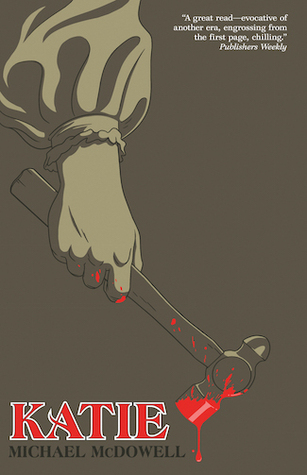
Here’s a contender for favorite read of the year.
Katie‘s a delightfully dark pastiche of penny dreadfuls and Victorian sensation novels, like Wilkie Collins by way of the grislier Hammer horror flicks. It’s set in the north eastern USA during the 1870s with a good-hearted heroine, Philo Drax, pitted against the evil Slape family, and in particular their hammer-wielding, utterly bonkers, clairvoyant daughter, Katie.
If any of that even seems slightly cool, don’t walk, but run to read this. It’s just brilliant page-turning entertainment, gory, wry, and more literate than it has any right to be.
A Year of Weird: 12 Weird Books
Here are twelve weird books to get you through the year until next Halloween. They’re not all horror, but they’re all certainly weird. And if they’re not enough for you, you can always dip into the weird world of old whaling ship logs to hold you over.
 Goose of Hermogenes – Ithell Colquhoun
This surreal fantasy novel tells the story of an unnamed heroine trapped by her uncle, a magician who rules over a magical island. It features all the opaque density of Peake’s Gormenghast at a 10th of the length. Definitely not for all tastes, as what exists as plot or character owes more to medieval alchemical texts than to formal story-telling structure, but the vignettes are rich and beautiful in their strangeness.
 The Star Thrower – Loren Eiseley
Eiseley writes like Thoreau filtered through Weird Tales. One essay in here “How Natural is “Natural”?” could have been written by Lovecraft in how it explores evolution and eternity.
“I too am aware of the trunk that stretches loathsomely back of me along the floor. I too am a many-visaged thing that has climbed upward out of the dark of endless leaf falls, and has slunk, furred, through the glitter of blue glacial nights. I, the professor, trembling absurdly on the platform with my book and spectacles, am the single philosophical animal. I am the unfolding worm, and mud fish, the weird tree of Igdrasil shaping itself endlessly out of darkness toward the light.
I have said this is not an illusion. It is when one sees in this manner, or a sense of strangeness halts one on a busy street to verify the appearance of one’s fellows, that one knows a terrible new sense has opened a faint crack in the absolute. It is in this way alone that one comes to grip with a great mystery, that life and time bear some curious relationship to each other that is not shared by inanimate things.”
 Wylding Hall – Elizabeth Hand
This short novel is a bit like one of those VH1 behind the music specials penned as a ghost story by Arthur Machen. In the early 1970s members of a British acid rock band hole up in mysterious Wylding Hall to record what will turn out to be their greatest album. However while recording their lead singer will disappear into the hall and never be seen or heard from again. Years later the musicians, their friends, and associates meet with a documentary filmmaker to try and solve the mystery.
Hand clearly evokes the late 60s early 70s music scene, and I’ll admit that half way through the book I went on youtube to see if I could listen to any of the fictitious band’s music.
 The Other Side – Alfred Kubin
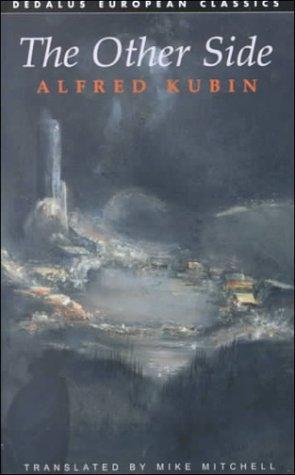
A Gothic fantasy novel from 1908 by noted expressionist illustrator Alfred Kubin that dissolves into decadent surrealism at its end. It’s a book you’re either going to love or hate. I loved it, but I enjoy long slow train rides to oblivion. It’s easy to see that this book influenced both Kafka and Peake, as well as provided a satire of all reactionary, idealistic utopias where one wealthy genius (or man of ego), heaves off to some isolated spot with his followers and impresses his will completely upon them until disaster results.
 The Virgin of the Seven Daggers: Excursions into Fantasy – Vernon Lee
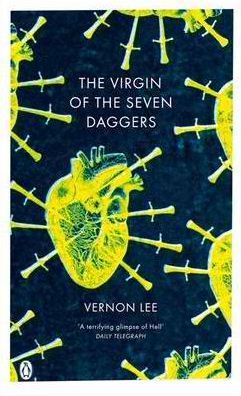
This collection knocked my socks off largely because it was an impulse buy, I liked the cover, and being the ignoramus I am I’d never heard of the author. What I expected was some quaint “English” ghost stories. What I got was startlingly different.
Lee was the pseudonym for Violet Paget a Victorian writer in the circle of Henry James and Walter Pater. She wrote poetry and travel essays, but she’s now mostly known for her supernatural stories like those collected here. Favorites include the titular “Virgin of the Seven Daggers”, “Amour Dure”, and “Prince Alberic and the Snake Lady”. If you happen to see this on the remainder table definitely grab a copy.
 The Elementals – Michael McDowell
McDowell’s probably best known as the screenwriter for Tim Burton’s Beetlejuice and The Nightmare Before Christmas. He was also one of the highlights of the 70s/80s paperback horror boom and an advocate for taking delight in all aspects of trash culture.
The Elementals reads like a weird cocktail mixing Capote, Salinger, and Stephen King at his goriest as two Alabama families decide to spend the summer at their isolated beach houses, doing their best to forget the empty third house nearby that’s slowly being swallowed by a mountain of sand. Unfortunately, things in the third house won’t forget about them.
Both trashy and creepy, and hats off to Valancourt Books for bringing McDowell back into print again.
 Red Spectres: Russian Gothic Tales from the Twentieth Century – Muireann Maguire (translator)
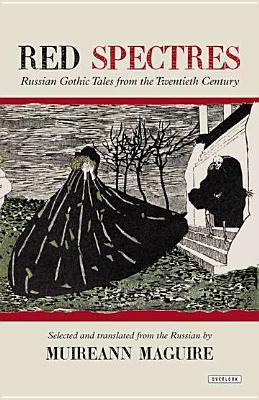
Eleven horror stories by seven authors written in the early decades of Soviet Russia, a time of civil war, strife, and untold hardship. None of these stories have been printed before and with the exception of Bulgakov (and maybe Krzhizhanovsky) I suspect most people don’t even know the authors, but damn… these stories are great, Chayanov’s and Krzhizhanovsky’s being my favorites with doubles, duels, and medical specimens run amok. Definitely a collection worth tracking down.
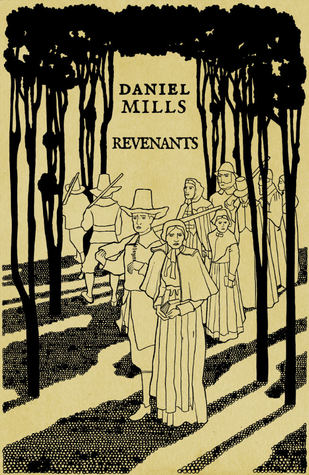 Revenants – Daniel Mills
The year is 1689. The place is Cold Marsh, a village on the border of civilization fourteen years after King Philip’s War ended when the village men slaughtered the inhabitants of a nearby native village. Now a series of disappearances have occurred and the men set out once more into the wilderness to confront whatever evil they can find. This novel captures that awe that exists close beside our fear of the unknown.
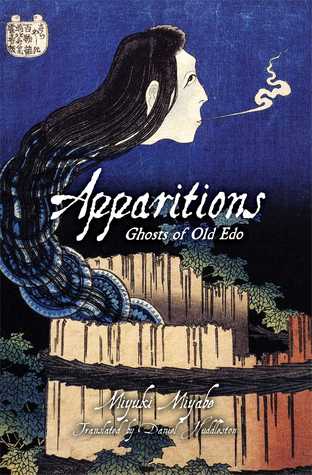 Apparitions: Ghosts of Old Edo – Miyuki Miyabe
What makes these stories stand out is how firmly they’re grounded in the world of the marketplace and the ties between masters, servants, craftspeople, and… ghosts. Taken as a whole you get this sense of the supernatural sharing mundane qualities with the everyday world. If you’ve ever had a temp job where you stepped into a place and instantly your skin crawled and you thought “some bad shit’s going on that I can’t see here”, then you’ll enjoy this book.
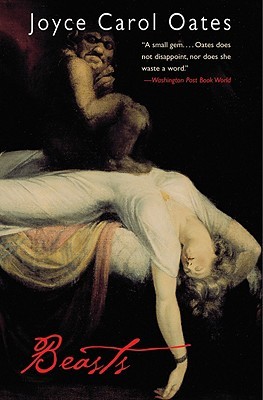 Beasts – Joyce Carol Oates
So imagine Dead Poets Society at an all women’s college circa 1975, except swap out Robin William and replace him with Charles Manson. That’s this book.
A student falls under the spell of her charismatic English professor and his wife. Moral degradation, debauchery, and revulsion ensue. It’s a Gothic horror novella without any supernatural elements in it. I recommend it, but it’s a f’d up book. Not for everyone.
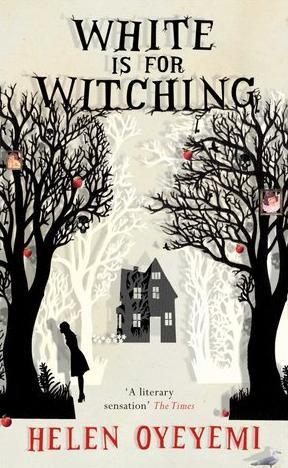 White Is For Witching – Helen Oyeyemi
Near the end of Shirley Jackson’s The Haunting of Hill House there’s a chapter or two where the haunted house takes over the protagonist and warps all her perceptions. This entire book is like those chapters as a young woman with an eating disorder slowly gets taken over by the ghosts of her mother and grandmother lurking in the house. Meanwhile her brother may be making the whole story up and a refugee crisis is brewing. So if you ever wanted to read a stylish, but weird, haunted house story from multiple POVs this is your book.
 The Rim of Morning – William Sloane
This is a twofer as it collects both of Sloane’s mystery-horror novels from the 1930s, To Walk the Night and The Edge of Running Water. I’d wanted to read them since seeing the old Boris Karloff movie The Devil Commands, which was based on Edge of Running Water and gives you sights like this one.
 By far Edge is my favorite of the two novels collected here, but both are curious in that they suggest an alternate horror genre that never quite emerged. If mad scientists, unsolvable murders, and explorations beyond space and time float your boat, then track this down and give it a shot.
Move Your Head 2 Inches
One thing I hate in readers is a lack of curiosity. Often times folks devoted to a genre whine loudest about not having anything to read, when actually, if they just moved their heads a little in any direction, they’d find something great. Kindles have done away with that, although I’m not sure they’ve done much to improve reader curiosity. If anything Kindles have managed to speed everyone’s descent into a bottomless pit of their own choosing, only now that descent’s fueled by Amazon’s algorithm.
An illustrative anecdote: a month or so back I gave away some books to a friend. One of them I thought was awful and told my friend as much. A week or so later he told me he’d read the book, agreed it was awful, and “the next seven books in the series were just as bad”.
Now this lack of curiosity might not be the biggest problem in genre. But I’d hazard a guess that it could be the keystone problem all the other problems trickle out from. Again the solution is simple: move your head a little in any direction. You will find something better.
A while back I read this post by E. Catherine Tobler called “The Women We Don’t See”. It starts with an anecdote from a friend of hers who realized he hadn’t read a book by a woman in two years. And he was okay with that. A more recent while back, the writer K. T. Bradford challenged readers to quit reading white men for a year. I didn’t opt on the challenge, but I wasn’t incensed by the suggestion. If anything, both posts can simply be read as reminders to maybe think two minutes longer before picking up your next book to read. Even looking at the suggested books outlined in Bradford’s post, she’s only listing twelve books. One a month. You can’t read one book a month by a non-Anglo and/or non-dude writer. Seriously?
There are two big reasons authors get forgotten (beyond the fact that they might suck). The first is the author wrote only the one genre book, and that one was usually early in their career. Fred Chappell’s Dagon and Frederick Turner’s Double Shadow both fit this description (although Chappell has returned to genre at times).
The other reason books get forgotten is because they either exist outside a genre or within a genre that in part hopes to reject them. Despite the history and tradition of women and non-Anglo authors writing SFF, it’s certainly not part of the institutional memory yet. Not when an author can be asked to recommend books to readers and come up with nothing better than the equivalent of Led Zeppelin. This is also why I’m probably only hearing about Doris Piserchia this year. It’s probably also why Joanna Russ gets read like she’s an inoculation against feminism. And why a comment Margaret Atwood made years ago still gets trotted out against her.
All of which is to say show a little curiosity. Take the extra minute and change up your reading diet a bit.
Yeah, I hate that analogy too. It suggests I’m writing all this to extol the salubrious effects of reading certain books, like Naomi Mitchison’s Memoirs of a Spacewoman is a bit of broccoli on your plate, and you should read it because vitamins, instead of the real reason, which is it’s a great science-fiction book with a moral dilemma at its heart that’s instantly recognizable to anyone who knows what the prime directive is.
And in case you need a place to start, here’s a link to SF Mistressworks. Go crazy.
May Books
I’m still in thesis-hell, but there’s a light at the end of the tunnel. Once June is finished, I’ll be over and done with my grad program. Hoorah! Anyway, I managed to squeak in some reading time this month, alongside the thesis reading and the books I have to review. When the thesis is done, I will make it a point to read ALL the books. On with it…
The Lost Fleet: Dauntless – Jack Campbell (2006): Despite being incapable of making a conference call, resurrected “hero” Black Jack Geary has the know-how to save the day, all it takes is discipline like people had back in the old days. Military SF in the what-the-world-needs-now-is-a-grandpa subgenre with wooden prose and a plot stolen from Xenophon’s Anabasis. I actually don’t mind this subgenre, but as it was presented here, in as straight-forward a manner as a 2×4 upside the head, no thanks.
Unquenchable Fire – Rachel Pollack (1989): I kind of loved this book. It’s set in the same world as Temporary Agency, which is our own world after a spiritual awakening that makes certain New Age sciences possible. Yet the main character is outside this world as she’s a divorced woman trying to simply cope with being chosen by an awakened being to be the mother of, well, we don’t know, not the messiah, but certainly a prophet who will once again change the world.
After the Apocalypse – Maureen McHugh (2011): Short story collection that mixes the mundane with touches of the speculative. IT techs try to determine if their computer has gained sentience. A convicted killer turns naturalist after the zombie apocalypse. A proud woman with a penchant for survival takes part in a medical experiment. I love McHugh’s stuff and think she’s one of the best SF writers working today, but you sort of have to like your SF with a lighter touch.
Vathek – William Beckford (1786): 18th Century Gothic Orientalism written by decadent libertine hopped up on the Arabian Nights. I’m not sure what to make of it. It’s awful and about horrible people doing horrible things, but it’s also over-the-top and grotesque and as such has its charms. Vathek is a despotic prince who hopes to make a deal with the devil, but is thwarted by the devil and his own mom who’s a powerful sorceress.
April Books

I’m still gill deep in thesis-land and so have been avoiding books. To keep me from falling down novel rabbit holes I reward myself for reading about “Metacognitive Learning Strategies In Second Language Acquisition” by letting myself read a short story or novella every now and then. Here are some high and low lights:
The good….
Guys and Dolls and Other Writings – Damon Runyon
I can’t believe I’ve never read these stories until now. They’re kind of corny mainly because they’ve been riffed on to the point that their originality is buried under decades of imitation. But when you get over the corny, there’s a lot to love.
Stories – Edited by Neil Gaiman and Al Sarrantonio
A fun collection of grim stories. I’m not done with it yet, but so far some highlights have been: “Blood” by Roddy Doyle – A weird horror story about a modern day 40-something Irish banker that suddenly finds himself obsessed with the idea of drinking blood. “Fossil-Figures” by Joyce Carol Oates – Creepy story of the relationship between twin brothers from their birth to their deaths. It’s not a horror story, but it uses a horror story’s tone, and is really quite well done. “The Truth is a Cave in The Black Mountains” by Neil Gaiman, which would be a drive-to-the-story story in less talented hand, but here it’s a story of vengeance set during the era of Border Reivers.
Fantasy – Edited by Sean Wallace and Paul G. Tremblay
Once upon a time Fantasy was a print magazine that became a webzine that became part of another webzine called Lightspeed. This book collects stories from the print era all the way back in 2007. We were all so young then… It’s a good collection too with stories that presage later trends but aren’t harbringers yet, so they’re still weird and crunchy and have odd bits poking out from them. A fun read if you can track it down
And now the not so good…
The Last Defender of Camelot – Roger Zelazny
Zelazny’s a weird author that I know I should like more than I do, but I don’t. What I think the problem is, is that I come to Zelazny too late and all those spots where he’d sit comfortably I filled with other writers. So I read him and think things like, “that was a pretty great story, I’ve seen other people write better.” Maybe it was the collection. This book’s volume X in the collected short fiction of Zelazny, and maybe more completest than a highlight reel. As it was I finished the book thinking how Zelazny’s a great writer of bad stories that I don’t much like.
Cat picture…
 Oh and I guess I kind of lied or forgot or whatever. I did read some longer things, novellas, novelettes, and an actual novel.
Chess Story – Stefan Zweig
Weird novella from 1938 about a chess match onboard an ocean liner between a rustic, crude savant and an obsessive doctor who’s recently escaped from the Nazis. It’s fairly straightforward, but with something ominous underneath it.
Sir Orfeo – JRR Tolkien
It’s weird to think that the medieval European world had no idea what the Iliad was about and had to make do with oral accounts that they reskinned with their own reality, so Achilles is a knight and the Trojan War like the Crusades. Sir Orfeo is a retelling of the myth of Orpheus where Eurydice gets abducted by the King of Fairy and Orfeo’s a king that renounces his crown to become a minstrel. It offers both Mythic McMedieval Feudalism and splendid and profane secrets.
The Cyclops Goblet – John Blackburn
Pulpy thriller about a conman and his wife getting wrapped up in a scheme to steal a hoard of Renaissance gold hidden on a plague-ridden island off the coast of Scotland. Loathsome characters, plenty of double crosses, and a page count that guarantees events move along at a fast clip. It’s a Valancourt reprint. Check it out.
The City and The City – China Mieville
I kept reading this expecting something horrible to happen that never quite did. I appreciated that. This is a great weird thriller that might not be genre but it’s certainly genre adjacent, where the best bits of it read like Alfred Kubin’s The Other Side dragged forward and left gasping for breath in the 21st century. A detective in an Eastern European country tries to solve a murder case that sends him to a different Eastern European country that happens to be his own viewed from a different frame of mind.
Favorite Reads 2014
A bit all over the place, and I like it so.
A reminder, this is all stuff read this past year – not published.
1. Beasts by Joyce Carol Oates: A psychological thriller that’s Dead Poet’s Society at an all-women’s school circa 1975, except Charles Manson and Squeaky Fromm fill in the Robin Williams role. An ugly book, but a great read.
2. The Long Winded Lady by Maeve Brennan: A collection of Brennan’s New Yorker pieces spanning four decades that shows Brennan’s eye for detail and perceptive wit while creating a portrait of a long vanished city.
3. The Dazzle of Day by Molly Gloss: Quakers in SPAAACE!!! The crew of a generation ship faces conflict and peril as they seek a new home. Gloss is a fascinating writer that’s able to craft stories around domestic events and interactions within a landscape, even if that landscape is an artificial world.
4. Annihilation by Jeff VanderMeer: The first book in The Southern Reach trilogy and my favorite. On the surface it’s a simple enough horror novel, a research team in a strange place is slowly destroyed by forces they don’t understand, but there’s something else going on, something that touches more on the emotion of awe than horror.
5. The Lost Books of the Odyssey by Zachary Mason: A fascinating collection of stories that take Odysseus and recasts him in an assortment of stories, some straightforward, some post-modern, all interesting.
6. Last Evenings on Earth by Roberto Bolano: This collection is the first Bolano I’ve read, and it knocked my socks off. Cynical, playful, fascinating, and cruel, this is the book I’ve been foisting on to people, saying, “You have to read this!” Probably has my current favorite short story in it, “Henry Simon LePrinc”.
7. Stations of the Tide by Michael Swanwick: A government agent is sent to a world on the brink of a recurring natural disaster (in this case massive flooding), his mission: bring a fugitive “wizard” to justice. Short and straight forward science fiction in a weird world.
8. Create Dangerously by Edwidge Danticat: Part memoir, part essay collection, Danticat writes about her experiences as an immigrant living in the USA and walking the borderlands between her ancestral country, Haiti, and her current home.
9. Apparitions: Ghosts of Old Edo by Miyuki Miyabe: What it says on the cover: ghost stories set in Old Edo, but what makes Miyabe’s stories work is how they occur amid elaborate social connections and responsibilities, and not just tell some spooky story.
10. Random Acts of Senseless Violence by Jack Womack: A portrait of a futuristic New York City that’s now in our past, yet still recognizable any time you watch a news report. A tough read, but a rewarding one.
11. The End of Everything by Megan Abbott: It’s the summer before high school begins and Lizzie and Evie are inseparable. Until the day Evie is kidnapped, and Lizzie finds her world torn apart. This is a great book: a coming of age story, a deconstruction of the detective novel, and a thriller. Well worth tracking down.
12. We Are All Completely Beside Ourselves by Karen Joy Fowler: Is this science fiction? Is it not science fiction? I come down on the Yes-it-is side. A young woman, floundering about in college, recounts the strange events of her childhood that have left her with two siblings that have disappeared. I won’t say much more than that.
Lists from past years:
It’s Not That
“It’s not that these things happen or even that one survives them, but what makes life strange is that they are forgotten.”
– Jean Rhys, Good Morning, Midnight
That’s one of the books I finished recently. It’s pretty good if you like your modern novels on the short, impressionistic, and ultimately sad and depressing side. In fact if that’s what you like, it’s better than pretty good.
Now if only it had a wizard or some astronauts in it…
 Yesterweird