Favorite Reads 2023

A baker’s dozen of books I read and liked this past year. The last time I posted a list like this was in 2019.
The Cadaver of Gideon Wyck by Alexander Laing (1934)
A weird crime novel, and I mean both of those in their genre sense. It’s a murder mystery but for an audience that were teens who read Weird Tales. Strange things are a foot around a rural New England medical school. Odd experiments, diabolical research, and a despised professor harboring a dark secret. It’s good stuff with plenty of twists. For fans of mystery, mad science, and weird horror.
The Peripheral by William Gibson (2014)
A young woman in a rural near future USA comes into contact with a piece of technology that allows a signal to pass between her time and another one farther in the future after a series of disasters wiped out much of the human race. At first she thinks it’s just a job, but when she witnesses a crime in the future she’s suddenly caught in a power struggle that bleeds across time lines. This was neat. I liked the way time travel only allowed for signals to pass between eras. This meant people could basically Skype, remote operate machines, and engage in financial shenanigans, but those are more than enough to find allies and enemies in your own timeline. A bit light in the prose, but that’s no terrible crime.
Leech by Hiron Ennes (2022)
Sci-fi horror about a creepy doctor who is a single appendage in a vast parasitic colony organism that takes over human hosts and wears them as puppets. And the narrative voice nails that conceit completely. The plot is very Gormenghast by way of Dune with the doctor coming to treat an isolated monarch and his family as they navigate local political unrest caused by their cruelty. This one has a good chunk of gore and isn’t for the squeamish.
The Mountain in the Sea by Ray Nayler (2022)
A near future SF novel with a split narrative all centered around a group of researchers discovering an intelligent species of octopus off the coast of Vietnam. This has those good speculative touches like addictive AI companions and automated robo-vessels that relentlessly pursue their primary function regardless of the cost. This is a good starting place for anyone wanting to engage with modern day SF.
Beyond the Burn Line by Paul McAuley (2022)
This is an SF novel that starts as a pastoral novel set in a society of intelligent raccoon-like creatures. From there it shifts into an espionage novel about UFOs. Imagine something like the X-Files but set in Tolkien’s Shire. That’s what this is. It’s neat, and the pastoral bits, which are mostly a travelogue, are really enjoyable.
The Phantom of the Opera by Gaston Leroux (1909)
Silly and over-the-top. I can get why the story has persisted for over a century now.
How to Do Nothing by Jenny Odell (2019)
This one is less a how-to unplug and more a history of unplugging. It’s smart, and points to not abandoning the world, but finding space enough to cultivate one’s own attention within the world. It also gives a brief history of social networking systems that I wasn’t been aware of before. Definitely give this a read if you want something stable to hold onto in our late stage capitalist world.
H is for Hawk by Helen Macdonald (2014)
I remain a fan of the British Person Takes a Walk genre and this is a good part that with its descriptions of hawking in fields. It’s also a meditation on loss (Macdonald’s dealing with the death of her father) and an investigation into a literary icon (T.H. White who was also into hawks). As this was a very popular novel a decade ago, it’s likely you can find cheap copies now. It’s good.
The Absolute at Large by Karel Capek (1920)
A scientist makes a miraculous energy making machine that has the byproduct of unleashing divine particles into the world. These have the unfortunate side-effect of increasing fanaticism and sectarian strife. This is very much a light satire, but that it’s written in the early days of atomic research before World War 2, so it’s a bit prescient too.
Gunsights by Elmore Leonard (1979)
A later Elmore Leonard Western from the era when he was mostly writing crime novels. This is really something unexpected. On the surface, it’s about one thing (a range war with former allies now on opposite sides), but under that it’s a satire of something else entirely (the way media as often creates events rather than simply reports them). If you’ve never read a Western and want to start with one that’s a bit savvy and smart, this is the one.
Felicie by Georges Simenon (1942)
I’ve read a few Maigret novels and enjoyed them, but this was the first one where I _got_ what his deal was as a detective. Simenon uses his detective less to solve crimes as explore the psychology of the characters involved in it. So this reads not as an account of a crime and its solution, but as a psychological analysis of in this case the crime’s chief witness.
The Saint of Bright Doors by Vajra Chandrasekara (2023)
Fetter was raised as a cult assassin with magical powers, but now he’s an adult trying to live in the big city and keep mind and body together by attending weekly group therapy sessions and avoiding whatever pogrom the government is currently conducting. It’s hard to describe this book, but it reminded me of Michael Cisco’s The Divinity Student as well as Samuel R. Delany’s novels Dhalgren and Triton, novels about young men arriving in cities that are simultaneously fantastic and mundane. It’s good.
Dance of the Tiger by Bjorn Kursten (1978)
This book rewired my brain a little bit. On the one hand it’s a speculative fictionalized account of the interactions between early humans and Neanderthals. Bits of the book are heavy-handed (the way Neanderthal’s speech is portrayed is so corny… but it works!), but after a while those bits are less jarring and the story that unfolds is fascinating. Both in a mythical/mystical sense and in anthropological sense. It really cemented this idea in my head that art-making, and by extension tool-making, are fundamental to humanity as a species, and if there’s any way back to the Garden of Eden it’s through competently making things with our hands. This is probably going to be one of those books I never shut up about if not stopped.
May Books 2022
Once upon a time I regularly posted my favorite reads here every month. Then for no reason at all I stopped. Now for even less reason I’ve decided to start again. A reminder that these aren’t reviews so much as reactions. And I likely read other stuff during the month, but these are what I finished and now admit to having read.

Viscera by Gabrielle Squailia
Take a bit of Leiberesque sword & sorcery, mix it with Patricia McKillip style fantasy by way of William S. Burrough’s Naked Lunch, let ferment, and serve with slivers of calcified god-flesh. There are bug-drugs, cults, gender identity exploration, and a whole lot of grotty weirdness. If you like your fantasy world to make sense (who’s growing the grain in this world?) and have logical magic rules than you won’t much enjoy this. But if you like reading things and saying “That’s messed up” then give this a shot. It’s a book that’s much more about the ride than the destination.

Tender is the Flesh by Augustina Bazterrica
This book is not at all pleasant. Remove all the humor of Swift’s “A Modest Proposal” and replace it with the all brutality of McCarthy’s The Road and Orwell’s 1984 and you’ll have some idea of what to expect. A plague causes the death of all animals, but it’s okay because we can just eat people. But first we must change the language so we can differentiate between people and “special meat”. Yes, Tender is the Flesh is also satire, but in a horror movie way. The whole book is one grisly depiction of dehumanization after another until an ending that leaves you feeling awful. Despite all that, if you appreciate how horror let’s us explore our own broken world, then give it a read.

The Saga of Grettir the Strong by Anonymous
This is a must-read for anyone into low-fantasy or sword and sorcery. Grettir’s not a bad guy, he just solves all his problems with violence. The setting’s decidedly local despite international travel occurring. Many of Grettir’s adventures detail him trying to get a position in some lord’s household and failing due to bad luck or his bad temper. The whole thing has a Western feel to it with one gang of landowners fighting against another for grazing rights and each supplementing their households with violent men except when ghosts, trolls, or berserkers get involved. If you’ve ever been curious to read a Viking Saga, then Grettir’s absolutely the place to start. I read this copy off Gutenberg and had no complaints with it.
Books August 2020
Here are some recent books reads. Maybe you will find them interesting, or maybe you’d like to recommend something you’ve enjoyed.
Rogue Protocol by Martha Wells (Murderbot #3): I am a fan of the Murderbot series and this one delivered the usual murderbot goodness even if it wasn’t my favorite of the series. One thing was Murderbot didn’t seem to have any new shows to watch and obsess over so that quark in their voice wasn’t present as much as it had been in the first two books. And another confession is that I’m less into the conspiracy thread that links all these stories together and only have vague memories of who people are from the earlier books. All that said, if you like Murderbot, then this is good Murderbot. And if you haven’t read Murderbot then this is a recommendation that you should start. It’s a fine series about a security bot that has gained autonomy and found itself the protector of some humans in a very corporate nightmare interstellar science fiction setting. Each book delivers a good few hours of smart action entertainment.
The Sunken Lands Begin to Rise Again by M. John Harrison: This is a book where the bit that moves the plot has been intentionally left out, so you’re left reading about damaged people on the edge of a mystery that they can’t quite discern or even confirm exists at all. I can understand how anyone might hate that, but in the hands of a stylist like Harrison you get something else that looks closer to our lives as we live them within systems too large for us to comprehend. Nostalgia, conspiracy theories, grand paradigm shifts – it’s all here, while also being about a relationship between a man recovering from a breakdown and a woman mourning the death of her mother.
Mythago Wood by Robert Holdstock: This book’s what the old folks call “a trip”. The setting’s England in the late 40s and Steven Huxley has come back home from the war to find his father dead and his brother growing ever more obsessed with the nearby woods. From there it’s a psycho-symbolic Jungian quest story as Steven and his brother uncover the mysteries of Ryhope Woods. The Woods serve as something like a mythic resonator and draw archetypes from those near to it. When I say this is a trip, I mean it. Before long the brothers are in the infinite wood, questing for the center while locked in a struggle that hearkens back millenia to the end of the Ice Age.
Vast by Linda Nagata: Far future hard SF about a band of explorers onboard a spacecraft that’s seeking the origin of a threat to their civilization. It’s also a rather long extended chase scene as the explorer’s spacecraft is being pursued by an enemy spacecraft. While this does have some of the cringe of 1990s SF, it’s also undeniably a book that inspired a lot of books that came after it. It’s hard not to read Alastair Reynolds and not see the debt he owes Nagata’s work. (And he admits this, so that’s no slight on Reynolds.) There’s also a weird Cthulhu mythos vibe here that I find fascinating, and which I might write more about at some point in its own post. I’ll just say that vast is an apt title for this book, and Nagata makes you feel how life might be lived across such vast gulfs of space and time.
Silver by Linda Nagata: I read Vast so I could read Silver, which is a sequel to Edges which was a sequel to Vast, but Silver is also a sequel to Nagata’s novel Memory which had a completely different setting, so we’re in that territory where an author is trying to merge the streams, and it… works. One thing I loved is that all the characters inhabit technologically advanced civilizations, but interact with the technology in different ways, so at first both sides look down on each other before recognizing their similarities. I’ll also say I think Nagata has become more accessible since the 1990s, and this feels less like the Vast setting and more like her Memory setting.
April/May/June/July Books 2020

The next Black Water Book Club should be up this weekend. It’ll feature at least one story, maybe even two. I got caught up in some other reading this past week. Speaking of which, it used to be something of a regular feature on my blog to do a monthly post about the books I was reading. All that stopped back in March when the Fire Nation attacked… I mean, COVID-19 happened… I mean…
The truth is I started reading an SFF book* that everyone seemed to love, and which I too enjoyed at first, but then slowly I fell out of enjoyment with until I stopped reading it entirely, but I never quite admitted that I was giving up on it, so it would sit there on my Kindle taunting me with its “53% complete” every time I searched around for something else to read. And so it has been for weeks. The book sits there like an unusually small boulder of large-size. Since then I’ve been shamefacedly reading books with my head low and feeling all out of sorts with current genre.
As is often the case I feel it is less the book’s fault than the fact that the hype around it elevated my expectations. It’s a fine book, good in fact, but the way people talked about it made me expect more than what it was.
And I’ll say that I usually have no problem dropping books. A book gets a hundred pages (or 10% on my Kindle), and if I’m not hooked by then I have no problem moving on. But, this one remains interesting enough that I want to finish it, only not now but some day. Until then it’ll remain an unusually small boulder of large-size impeding my path.
Now on to one or two sentence reviews for all the books I’ve read since March:
Golden Witchbreed by Mary Gentle: What if Ursula LeGuin’s Left-Hand of Darkness was about Klingons? An envoy from Earth travels to a post-technological world populated by a humanoid species of conservative warriors (Science Fiction)
Top Ten Games You Can Play In Your Head By Yourself – edited by Sam Gorski and D.F. Lovett: A guide to daydreaming, full of in-depth scenarios, and which might possibly make you lose your mind… or save it! (How-To)
Out of Body by Jeffrey Ford: A librarian learns to astral project and gets involved in supernatural hi-jinx involving monsters and monster-slayers. (Urban Fantasy)
The Hearts of Horses by Molly Gloss: A young teen leaves home to take a job “breaking” horse, but does so in a way that impresses most everyone she encounters. This one got me in the feels. (Historical/Western)
2312 by Kim Stanley Robinson: A tour across the solar system and the human habitats there in the early decades of the 24th century. Pretty thin plots and character, but lots of BIG IDEAS and marvels. (Science Fiction)
War of the Maps by Paul McAuley: A western set on a Dyson megastructure built around a brown dwarf star, in other words this has all the weird world-building of Gene Wolfe with less of the Catholicism. (Science Fiction)
In the Dream House by Carmen Maria Machado: Memoir of an abusive lesbian relationship written in fragments across multiple genre styles like an Oulipo exercise. (Memoir)
The Big Ship at the Edge of the Universe by Alex White: Rollicking space opera that manages to mash together Nascar racing and space-wizards while sitting between the feel-good works of Becky Chambers’s and the brutal violence of Kameron Hurley’s.
Lifelode by Jo Walton: Slice-of-life fantasy novel about polyamorous relationships on a farm in a world where the laws of reality change depending on which direction you travel. (Fantasy)
Lady Into Fox by David Garnett: One of those English stories that gets called allegorical because it was written at a time when society could not deal with either closeted gay men or unconventional women, and the tragedies that ensued when society forced the two together. (British Fantasy)
February/March Books 2020
A strange thing has occurred: I am having a hard time reading. I keep starting books then setting them aside, and I’m not sure what the cause of the trouble is. Here’s two months worth of what I’ve finished.

Ashenden by W. Somerset Maugham: I’m a big fan of boring and absurd spy novels and this book delivers both. Ashenden’s a thinly veiled Maugham stand-in and these stories all take place between the start of World War I and the Russian Revolution except the war’s far away and it’s more about intriguing in Swiss hotels than carrying out missions behind enemy lines. Maugham has a great skill in using prose to paint a portrait. One sour note is that these stories take place very deep in the Colonial project and so you get the bigotry that goes along with it.
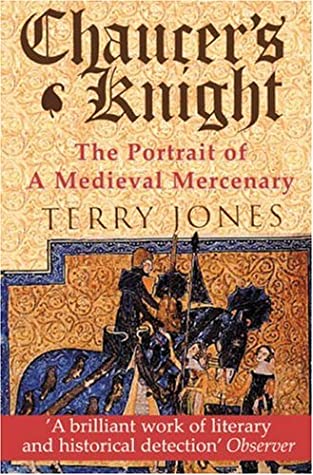
Chaucer’s Knight: The Portrait of a Medieval Mercenary by Terry Jones: I am not up on my Chaucer scholarship, but Terry Jones is. Here he takes to task scholars who see Chaucer’s knight as an exemplar of chivalry, instead of the cut throat mercenary he is. Using The Canterbury Tales, Jones goes into the details of each and every reference, trying to get at how Chaucer’s contemporaries would have reacted to them. Instead of an exemplar of chivalry, Chaucer’s knight is revealed to be a blood-thirsty mercenary typical of the era. Part of what I loved about this book was how bite-sized it was. I could read a few pages one day then put it down for a few days while I read something else.

Foundation by Isaac Asimov: A seminal text, in fact dare I say… foundational? Eh? Eh? So I’d never read this before and was surprised by how much I enjoyed this. Granted, I was amused by how the Foundation’s great project revolves mostly around setting up bogus religions and pyramid schemes. Every chapter is sort of the same too: two characters in a room first they react to plot event, then they plot more events. You simply keep cycling from character and events. And the tech is pure fantasy. Still… this was a big greasy meal and I regret nothing.

The Sign of the Labyrs by Margaret St. Clair: This is going to sound like a back-handed compliment, but I don’t mean it that way: the faster I read this book, the better it was. The story takes place in the future after some unspecified apocalyptic event in an underground maze-like mega-structure. There’s a plague and traps and monsters, and a whole lot of Wiccan style paganism on display. This reminded me of Fritz Leiber’s Gather Darkness, another post-apocalyptic SF novel that embraces the whole witchcraft versus church idea. This one is a heady ride.
How are you all holding up? What have you enjoyed reading lately?
January 2020 Books
And so here we are, another year of book tracking. My goal for this year is to read at least one book a month written in the past ten years, something which I failed to do this January. Here are some things I read that you might like to track down.

Goldfinger by Ian Fleming: I am not a big James Bond fan and find the character’s continued existence to be puzzling. I can never get around how they keep changing actors without there being an explanation. At least with Doctor Who there’s an explanation behind their regenerations! Still, I find myself fascinated with the Bond novels and the power fantasy they portray. We think about the movies with all their gear and supermodels, but the books are much more about indulging in the ear marks of the jet-setting lifestyle and are full to the brim with lavish descriptions of food and local customs where Bond is never simply a tourist spectator. Bond’s also really good at card games your grandmother plays. Like a whole subplot might revolve around a high stakes Rummikub tournament. Anyways, Goldfinger has Bond attempting to foil the plot of the villainous Auric Goldfinger who plans on robbing Fort Knox. Pussy Galore shows up as does Odd Job and a lot of anti-semitism, misogyny, and anti-Asian racism.

Naples ’44 by Norman Lewis: Nothing shatters your national heroic narrative about an event like books written during that event. Lewis served in British Field Intelligence during World War II and his book on the occupation of Naples gives a sobering account of life during wartime. Did you know the US mafia managed to get in good with Allied Command and profit from a flourishing black market? Did you know US soldiers had orders to kill all German soldiers taken prisoner in the war (even being told to beat their heads in with their rifle butts if necessary to save ammunition)? Did you know food was scarce in Italy after the war, but candy was plentiful? The details are often heart-breaking and anger-making, but they’re just as often blackly comic and absurd. Whether displaying one face or the other, Naples ’44 will shatter any sort of rosy view you might have held about the US’s actions during World War II.

Hospital Station by James White: This is the first book in White’s Sector General series about an intergalactic hospital and the problems doctors face treating alien patients there. It’s a collection of short stories that tend to follow a certain pattern: mysterious alien shows up at the hospital, alien wreaks havoc or does very strange things, doctors try to figure out why the alien is doing what it does, finally the heroic Doctor Conway follows his instincts and discovers the right way to treat the alien. There’s clever stuff here: empathic spider aliens (who work in the children’s ward naturally…), a shapeshifter having a nervous breakdown and wanting to return to the primordial ooze womb of its species, and a surgeon made from pure energy that wants to develop a brontosaurus’s telepathic abilities. White was a self-professed pacifist and these stories make a nice counter to the militarism in a lot of the SF of his peers. That said, and for all the wonderful imagination White exhibits in depicting weird alien physiology, he can’t imagine a human doctor with a non-Anglo name or a woman he doesn’t then go on to describe as “curvy”.
Favorite Reads 2019
And so here are my favorite reads from this past year. As usual very few of these books are recent books. Some like the Westlake and the Pohl I’d been meaning to read for years. One delight from the past year was reading Tanith Lee. I wish I had gotten to read her work sooner. One thing I didn’t read much of this past year was non-fiction. Maybe only two or three other books beside the Machiavelli one listed below.
The Hot Rock by Donald Westlake
The first of Westlake’s novels featuring his jinxed crook protagonist Dortmunder. This is a great fun heist novel where a simple jewel heist turns into something so much more complicated. Westlake writes a world that bends not simply crooked but cussed.
The Delicate Dependency by Michael Talbot
A thriller novel about a doctor and his family who become drawn into the vampire subculture of Victorian Europe. It’s a mess of breakneck events, that is a lot more entertaining than it needs to be.
The Compleat Guth Bandar by Matthew Hughes
I am susceptible to the occasional Jack Vance itch
A Closed and Common Orbit by Becky Chambers
Chambers might be my favorite for writing mac&cheese comfort food science fiction.
The Border Keeper by Kerstin Hall
Hallucinatory secondary world adventure fiction that’s like a Spaghetti Western version of the Planescape setting.
Gateway by Frederick Pohl
A classic of 1970s science fiction that digs into the grot and grit of fabulous technology. Humans discover a cache of alien ships and the desperate start piloting them around the galaxy at much risk to life and limb.
Embers by Sandor Marai
A tense little book about two old man confronting their past relationship and the dark secret that binds them. One of those books that’s basically about two people eating dinner atop a roiling sea of subtext and back story.
Gates of Ivriel by CJ Cherryh
Eternal champion style immortal swords woman awakens from her eternal sleep and throws the world in turmoil as she attempts to complete the mission that brought her to the world in the first place. Told from the perspective of the eternal sword woman’s companion, a barbarian warrior bound to the woman by a debt of honor.
Faces Under Water by Tanith Lee
An alternate renaissance Venice full of intrigue, alchemy, and a good bit of skullduggery as a scholar discovers a cursed mask beneath a mysterious woman’s window one night. Gets downright hallucinatory by the end.
Be Like the Fox: Machiavelli in His World by Erica Benner
An oddly uplifting book about a republic in crisis due to the overweening pride and arrogance of a few men, and the dedicated man of principle who must walk a narrow path through the era. Hard to say why I loved this book, but I pretty much recommended it to everyone I knew at some point.
The Raven Tower by Ann Leckie
The kingdom of Iraden houses many secrets as Eolo the warrior discovers as they assist their friend in reclaiming his position as the Raven’s Lease. Interesting world building here in part constrained in focus and scope to all the plot occurring in one location.
The Thief by Megan Whalen Turner
Straight forward fantasy novel about a group of adventurers tasked with stealing an artifact to aid a kingdom. This earns its spot here by its attention to detail and the depth it goes in developing its small cast of characters and slim plot.
Favorite Reads for October and November 2019
Not writing an October post nagged me all November, but I was traveling and that’s my excuse and I’m sticking with it.
Here are the books I liked from the last two months.
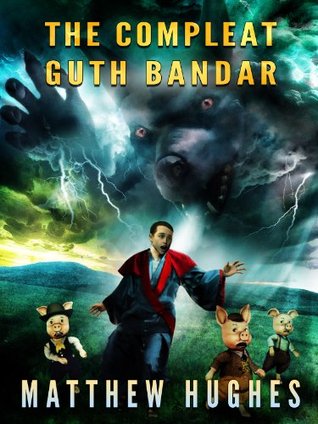
The Compleat Guth Bandar by Matthew Hughes: Set during Earth’s penultimate age, Guth Bandar is a noonaut who voyages into humanity’s collective unconscious while traveling around the galaxy. Boyish and wry like Jack Vance, which it nods at heavily, but it lacks Vance’s cynicism and cruelty. Also spelling “complete” as “compleat”? That’s hot!

Headlopper Vol. 2 by Andrew Maclean and Jordie Bellaire: I didn’t like this one as much as Volume 1, but I liked it more than Volume 3. Heads get lopped as do limbs.
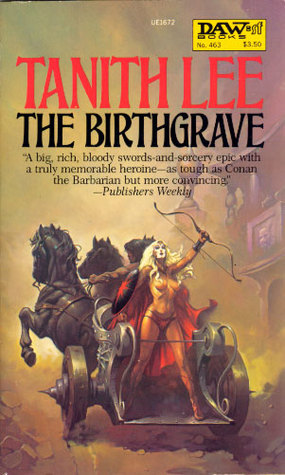
The Birthgrave by Tanith Lee: The book cover that needs to be airbrushed on the side of a van. I wrote about this one on the Patreon. For 1USD you can read about it and a bunch of other old weird books. This one is a cringy mess of 1970s fantasy tropes, but if you’re susceptible to that Conan itch like I am, and enjoy Tanith Lee, this is a must-read.

The Castle of Otranto by Horace Walpole: Another one from the Patreon. And for 1USD yadda yadda… This one lays out the template for the Gothic novel but isn’t nearly as bat-shit loopy as The Monk. Although, that’s not to say it isn’t bat-shit loopy in its own special way.

The Deadly Sky by Doris Piserchia: This one is set on a far future Earth where a young scientist becomes obsessed with the sudden appearance of a hole in the sky. This was Piserchia’s last published book and it falls a bit flat at the end, leading me to think it was rushed to publication. Piserchia can be a ton of fun, but if you’ve never read her I don’t recommend you start here. Instead check out Star Rider.

Galactic Sibyl Sue Blue by Rosel George Brown: A very 1960s SF novel about a hip, swinging space detective named Sibyl Sue Blue. She’s a mom, a cigar smoker, and always down for a good time. Not only do we have warp drives by the year 1990, but women regularly rouge their knees to keep up with fashion.
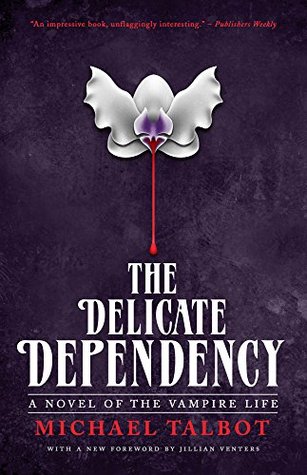
The Delicate Dependency: A Story of the Vampire Life by Michael Talbot: Of all the books here this is the one to read NOW! Even if you don’t like vampire books, this one is a great ride full of twists and turns. When Dr. Gladstone’s carriage strikes down a hauntingly beautiful young man on the streets of London, the event sparks an obsession in the doctor that brings him and his entire family into contact with a shadow world beneath the everyday one he believes he knows.
Favorite Reads September 2019
Here are my favorite reads for September.
Not included are my non-favorite reads like the “hard” science fiction novel that kept using “North American” as a stand-in for White. In my defense, or to further incriminate myself, its cover looked like it could have been an old Traveler module.
On to the books I greatly enjoyed!

The Border Keeper by Kerstin Hall. This cover does not do nearly enough to sell the Planescape meets El Topo vibe of this book. A stranger with a shady past comes to seek the guardian-god at the border between worlds. If you like New Weird fantasy where people hop between 999 worlds each overseen by a unique ruthless monarch from a court full of strange creatures, then yeah you should be buying this book now. It’s fun.

Red As Blood by Tanith Lee. A short story collection of reworked fairy tales that sits comfortably somewhere between Angela Carter and Fritz Leiber. Favorites were the Red Riding Hood, Frog Prince, and Rapunzel retellings. Part of the fun was seeing how far and in what direction Lee would twist the material. The rampant Satanism might be a bit much for some as might the sexualization of teens, but there you go. That’s Tanith Lee for you or the 1970s or something.
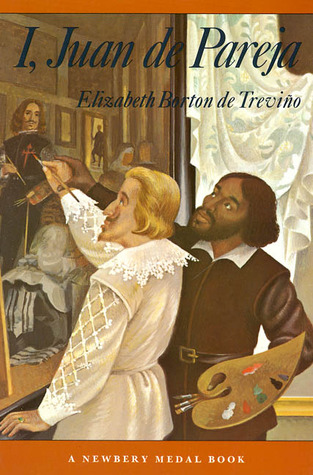
I, Juan de Pareja by Elizabeth Beston de Trevino. Juan de Pareja was a Spanish painter who served first as Velzaquez’s slave then later assistant after Velazquez granted him his freedom. His portrait by Velazquez hangs in the Metropolitan Museum in New York. This book is a historical YA novel from the 1960s and while it hasn’t aged that well, it’s still a fascinating read. The friendship between the two men comes across clearly as does their slow journey towards trusting each other. My main complaint is that de Pareja comes off as a bit too innocent and naive. Still, it’s an enjoyable read.
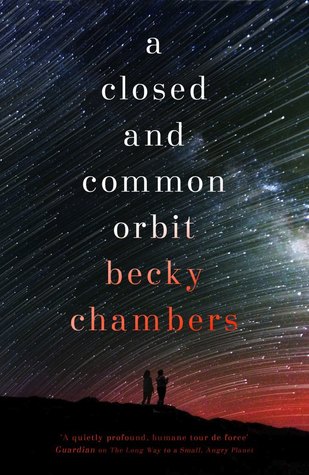
A Closed and Common Orbit by Becky Chambers. A novel about the friendship between a gifted engineer named Pepper and a “young” AI trying to adapt to living in a synthetic body, both of whom are trying to process their own maladaptive tendencies. Not to put too fine a point on it, but Chambers is my go to comfort read. It’s mac & cheese, but it’s near perfect mac & cheese. It’s also another book in that cozy aesthetic like the one I read back in June, Kate Diamond’s The Cloudship Trader. There’s drama and tension, but there’s a kindness too, since you have two damaged people trying their best to understand each other. Give it or one of her other books a try!
Favorite Reads: August 2019
Here I am.
It’s 4AM.
I have insomnia.
Let’s talk about books.

Embers by Sandor Marai: A Hungarian novel from 1942 that’s a rediscovered masterpiece yadda yadda yadda. This book’s about two old guys who haven’t seen each other for forty years. One’s a general, and the other was once his best friend. One day they and the general’s wife went out hunting. THEN EVERYTHING CHANGED. Now the two guys meet again and sit down for a long dinner. The book’s pretty much the general making a long speech that boils down to “Did you fuck my wife?” While that makes it all sound trite, I got hooked by Marai’s exquisitely lean prose that evoked a lost world.

Gateway by Frederik Pohl: 1970s sci-fi that hits the right spot of being smart and entertaining, without having aged too badly. Humanity’s finds a trove of alien spacecrafts on an asteroid near Venus. We have no idea how to operate or control them, but we know they work, and so we send people out blindly in them to travel around the galaxy in the hopes that they make discoveries. Sometimes they do, sometimes they don’t, a lot of times they die trying. The story’s told via flashbacks as Robinette Broadhead goes into therapy after making an astounding discovery.

The Foot-Path Way: An Anthology For Walkers, edited by Hilaire Belloc: This one was a Patreon read. I suggest you avoid it.

Lucian’s True Story: This was another Patreon read. It’s better than the Belloc book. I absolutely recommend it. It’s a hoot!

How to Make Friends With Demons by Graham Joyce: I read this ten years ago and it stuck with me. Rereading it now I still found myself caught up in it. Joyce has written some of my favorite books. He’s also written a book that I hate. Both that book I hate and this one revolve around a guy who has fucked his way into a nervous breakdown, but I feel like here Joyce makes the most of that concept by really putting the screws to his character. On a technical level, I feel like it’s a masterclass of not so much plotting as laying on so many complications that they start interacting with each other and moving the story on their own. Also, it’s about an art forger, and what’s not to love about that?
 Yesterweird