The Books We Don’t Read
This isn’t going to be another Hugo post. But I won’t say that the Hugo announcement didn’t get me thinking more a bit about this. This stuff had been on my mind for a while now. For one reason I recently read Ann Leckie’s Ancillary Justice, a book some folks are claiming is the best/most ground-breaking novel they’ve read in recent years. A claim I don’t at all agree with. My reaction’s similar to this one. In a nutshell I thought it bland. It would have been better if it had had 50 – 100 pages cut from it. This would have kept the descriptions from miring the plot’s impetus. This is my usual complaint with most contemporary genre novels. Stanislaw Lem’s Solaris is 225 pages. Molly Gloss’s The Dazzle of Day is 256 pages. Personally I blame Iain M. Banks.
But… I read it, and that’s the thing.
The fact that I finish a book is a recommendation of that book. The fact that I’m compelled to critique it isn’t a reason not to read it. I might have issue with it, like I did with last month’s On Such A Full Sea or with Ancillary Justice now, but the critique doesn’t make the book not worth reading. Ancillary Justice is an entertaining Space Opera. I’ll blather more about it at the end of the month, as I will about Molly Gloss’s The Dazzle of Day (which I loved and think everyone should read, really).
The problem’s that the conversation’s going to be one-sided.
We’ll talk about the books we read. We’ll engage with them and pick them apart. This may be because we don’t like the book, or had issue with it. But we’re having a conversation with it. Read the book and let’s argue about it! What we can’t do is talk about books we don’t read. And for all sorts of reasons there are plenty of books I don’t read.
There’s the obvious time constraint for one, knowledge for another, and a host of subjective reasons (I’m not the biggest fan of close reactive 1st person), but more importantly I’m not going to read works by authors I don’t respect or who I don’t think are particularly good writers. Nor am I really going to engage with many living writers whose politics are so much different than mine. So Ann Leckie’s on my radar because we’re both in that section of the genre ocean, but Larry Correia isn’t. I’ll dismiss Brad Torgerson as a bad writer, but by doing so I’m never going to engage with his work. And that silence there bothers me, because it’s willful on my part. It’s not that there’s no sound there. It’d that I’m choosing to reject it. That’s part of the problem.
Say there’s a disagreement between two people. One person you disagree with and reject outright as wrong. The other person you agree with, but wish spoke better, for whatever quality of better you want to apply. Now, when you ignore the person you disagree with because they’re wrong, but quibble with the person you do agree with, what purpose are you serving? Because what you might be doing is adding to the noise around the person you agree with without altering the message from the other side.
And those are some of the questions: Do you cheer louder for books you’re not enthusiastic about, simply to shout down the other side? Do you read books by authors you don’t like to prevent yourself from thinking there’s only silence on the other side? And then what about those hateful authors? Are you obligated to read them? Or is politicizing one’s reading time ultimately a waste of time? I don’t agree that’s true, but most people aren’t trying to read over a hundred books this year, and I’m not about to make any claims regarding how other people should spend their time.
I do my best to read widely. Not the easiest or cheapest thing to do outside the anglophone sphere when you’re a klutz and can’t seem to keep an e-reader from self-destructing, not to mention having a full-time job, writing my own stuff, and pursuing a graduate degree. But I try. The question is should I try and read books I’m fairly confident I’m not going to like.
Anyway, that’s what’s on my mind.
Books March 2014
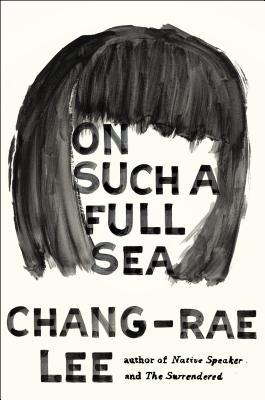 On Such A Full Sea – Chang-Rae Lee (2014)
Lit-author does dystopian SF about a future USA where Chinese migrants toil for privileged Charters and the young Chinese immigrant woman who begins to change this system. There are some brilliant flashes in the story, most dealing with social commentary and group/individual dynamics, but there’s a collapse at the end and that’s disappointing. Maybe it was meant to be post-modern or something like we can’t have nice things because nice things are a genre convention. When I described the novel’s ending to my wife she said it sounded “very 70s” and, yeah, that’s kind of it. The story spirals inward towards a conflict and then spirals outward without resolving anything, and all the tension simply dissipates. Then again I could be completely wrong and it was all some subtle commentary on The Hunger Games or something I didn’t get.
The Man With Six Senses – Muriel Jaeger (1927) 
I blathered about this book here. Short version, a fun book, possibly funnier now than when it was originally written. I hope to track down more of these “Radium Age” reprints at some point.
 The Big Clock – Kenneth Fearing (1946)
One of those noir thriller novels with a crazy convoluted plot that seems more a means to get the most jaded, cynical commentary as possible out of the characters. Magazine Editor starts an affair with his boss’s mistress. Boss kills mistress. Editor witnesses it, but isn’t seen by boss. The boss simply knows there was a witness, so he sets his publishing company the task of finding the witness (so the person can be killed). And who does he put in charge of the search? The Magazine Editor, of course.
Definitely a fun, fast read. It’s ugly in places and cynical in a hard-boiled way but certainly worth tracking down.
 The Memoirs of Lady Hyegyong – Lady Hyegyong (trans. Jahyun Kim Haboush) (1996)
You can read all about Lady Hyegyong’s sad life here. Sad, fascinating stuff. Even now a few weeks after finishing the book I’m still thinking about it. If your library has a copy, take it out.
 Baneblade – Guy Haley (2013)
For a novel about a three-story tall tank battling space orks in a grimdark future, this novel was much better than it needed to be. Also as a media tie-in novel it fits in with my fascination for fan fiction.
 The Long Winded Lady – Maeve Brennan (1997)
Of all the books in this post this is the one that I most recommend. This book collects close to thirty years of Brennan’s New Yorker material. They’re like prose sketches of New York life made from lunch counters, bus stops, and restaurant windows. Brennan casts herself as the supreme observer, and these pieces are all close to amazing, by turns sad, perceptive, bitter, insightful, and comic. You won’t know what you’ll find until you start reading one. Like I said, of all these books this is the one I recommend the most.
“The Man With Six Senses” – Muriel Jaeger
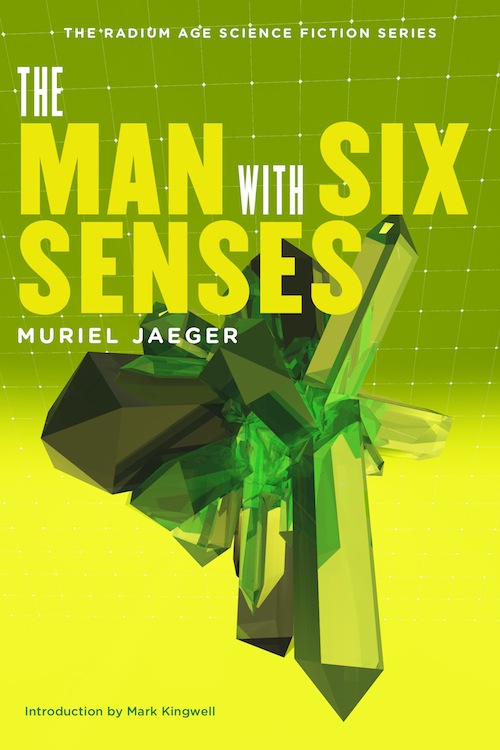
A Radium Age reprint first published in 1927 by Virginia and Leonard Woolf, The Man With Six Senses was one of the first science fiction novels to explore ESP. It’s an enjoyable read, the characters frail and human enough to be recognizable, and as a mixed-up mutant story it predates Olaf Stapledon’s Odd John by about a decade.
The narrator, Ralph Standring, is an Edwardian gentleman whose hopes of marrying Hilda, his childhood sweetheart, are complicated when she becomes involved with Michael, the titular man with six senses. It’s a tragic story one where you feel as if you’re eavesdropping on a three-sided conversation where all the participants are equally misguided. But it’s also drily funny in places. The years since the book’s first publication have not been kind to the world’s Ralph Standrings. While I suspect that Jaeger meant for him to be somewhat satirical, he becomes an out and out caricature at times. Not everyone enjoys spending time with a snob, worse one that’s a whiny “nice guy”, but Ralph’s part of the story and he’ll tell it the way he’ll tell it. That he’s our POV character makes you want to reach into the narrative and slap him. The fact that he’s so superior makes his sense of threat from Michael more acute, and when he finally realizes that Michael is indeed what he claims, Ralph’s reaction is utterly believable. That Hilda and Michael are presented through his eyes makes him somewhat unreliable as a narrator. But that’s part of the book’s charm. Its characters aren’t much more than what they are. They’re not stand ins for any particular philosophy. They’re complicated, misguided, and frail.
I don’t know how much attention these HiLo Books are getting. Granted some are likely available free online at places like Project Gutenberg. I bought this one on a whim, since I’d never heard of either book or author before. Folks that like a good helping of realism in their speculative fiction should track it down. It might surprise you.
Memoirs of Lady Hyegyong
 This is a fascinating book.
Lady Hyegyong was an 18th century Crown Princess in Korea’s Cho’son dynasty. Her husband was the “infamous” Prince Sado.
What’s known about Prince Sado is that he was put to death by his parents the King and Queen. Since no one could harm a royal person, Sado was ordered to climb into a rice chest, where he was locked until he suffocated after eight days. The reason given was because Sado was “mad” and considered a risk to the dynasty. In the 19th century there were rumors Sado was not “mad” but the victim of a conspiracy, and his father unjustly killed him. Lady Hyegyong, by now an old woman, decided to counter these rumors and set the record straight. That the late King, Sado’s father, had all mention of the incident removed from castle records, makes Lady Hyegyong’s account the definitive one. And like I said it’s a fascinating book. Lady Hyegyong gives a first hand account of what happened and details Sado’s “madness”.
But that’s not all that’s in this book. There are four memoirs here. In all of them Lady Hyegyong shows herself to be a perceptive judge of character and court life.
The first details Lady Hyegyong’s life from her childhood through her marriage at age nine to Prince Sado, her removal from her family home and her residency in the Royal Palace. From there she speaks briefly of Sado’s tragic life, the aftermath of his death, and her ultimate resolve to keep living and raise their son (who also happened to be the heir to the throne).
The second and third memoirs deal with her family members and their involvement in court intrigues. I recommend skipping these two, and going straight to the last.
The last memoir is a character study of Prince Sado, his illness, and his relationship with his father. It’s highly detailed as if Lady Hyegyong is trying to find the source and cause of Sado’s madness. Was it because he was separated from his parents at an early age, that his father failed to provide him with decent overseers, or something more sinister – such as the proximity of his palace to the ruined palace once belonging to a Queen who poisoned her competitors in the court? What is certain is that Sado’s episodes were often violent and he killed and/or raped many servants. The first Lady Hyegyong witnessed was the death of a eunuch and she speaks of his being the first severed head she had ever seen. Later Sado beat one of his consorts to death, and nearly knocked out one of Lady Hyegyong’s eyes after hitting her in the head with a chess board. These and other instances were what caused the royal family to fear Sado and led them to giving the order that he should be sealed in the rice chest.

Likely not much bigger than this. Seriously
As a modern reader it’s impossible not to try and diagnose Sado’s “madness”. That he was neurologically atypical is likely. Possibly he suffered from paranoid schizophrenia or a bipolar disorder. He also exhibited several phobias and obsessive compulsive disorders (Lady Hyegyong talks about a clothing phobia that would require a steady stream of fresh cloth, since Sado would destroy any clothes he found fault with), along with a murderous rage. Yet, Lady Hyegyeong is clear in stating that these were episodic and when he wasn’t in one of these phases Prince Sado could be a kind and gentle man, and often Sado comes across not as a monster but a victim. He suffers, even if he is a murderer.
Then there’s the weird stuff – the things that would make a good horror story. It’s like there’s a ghost story waiting right behind the actual tragedy.
Prince Sado was obsessed with Taoist magic, in particular one book of rites known as the Jade Spine Scriptures. He believed the God of Thunder was angry with him and was terrified by thunder storms (that one occurred on the 8th day after he was locked in the chest doesn’t go unnoticed by Lady Hyegyong). Often he would leave the palace dressed as a commoner and no one knew what he did during these times. And when he died, his father had his associates, a group including several shamans and a Buddhist nun, put to death.
It’s one thing to read about Caligula or some other ancient ruler known for being “mad”. It’s another to have a near modern account of a neurologically atypical ruler, one where the individual is painted so vividly that it’s like looking at an evolving portrait of their life. Lady Hyegyong provides that level of detail in her account, and as a book The Memoirs make for compelling reading. Maybe your library has a copy.

Prince Sado
The Last Lines From A Book About A Man With Three Testicles
“Out there far away the rest of the world has gone modern. With whole new jumping generations. And holy hell is the only thing we have up to date here. To make the stars bark. When the west’s awake. Over the cliffs and roaring sea. Where the moon hides and weeps at night.
And
The weary
Wind
Bewilders
Me.”
Genre Character or Writer?
What’s more important to you?
My wife’s a cartoonist and she’s been creating a comic for the past 6 months. In that time she’s built up something of a fan base.* One thing she’s noticed is that her fans are less fans of her comic as a whole than fans of this or that character. It got us talking about what makes us like certain books. Whether it’s the genre/series itself, the character, or the writer.
Put another way, when you read a Sherlock Holmes mystery, what’s more important, the mystery or Sherlock Holmes? What about a Philip K. Dick novel?
There’s no right or wrong to this. I can think of two somewhat similar writers whose books I enjoy, Liz Hand and Kameron Hurley, both of whom write grim, violent stories. But I read Hurley’s Bel Dame series, for the series itself, then the characters, while the writer remains in the background. In the case of Liz Hand’s recent mystery novels I’m reading them more to see how this particular writer, Liz Hand, uses the mystery genre, yet while being less attracted to her messed-up “detective” character, Cass Neary.
And I don’t think it’s something you can maximize. Like if you blend all three effectively then you will write a blockbuster. But I wonder whether other folks have considered this. What do you think?
Do you read by genre, character, or writer?**
* When a complete stranger draws a picture of a character you’ve created, I’ll say you have developed a fandom.
** And yes, this questions skews towards popular genres. Though maybe not.
Books December 2013
December books:
1. A Song of Stone – Iain Banks
I liked this 250-page novel better when it was an 8-page short story by JG Ballard.
After some undisclosed catastrophe causes the collapse of civilization an aristocrat and his sister-lover find themselves involved in a psychological game of cat and mouse with a Lieutenant and her rag-tag force of irregulars. Sophistry, nihilism, and an over-arching unreliable and unlikable narrator all make an appearance.
2. Hild – Nicola Griffith
I loved this book.
Fans of George R.R. Martin, Robert Graves in I, Claudius mode, and Mary Renault should all check this out. It’s the 7th Century, England is a cluster of squabbling kingdoms, and Hild’s the child of a slain king, her whole life enmeshed in a web of courtly intrigue, spun by her mother, and picked up and tended to by Hild as a way to keep those she loves safe. Griffith does a great job making you feel the tension and pain of someone who sees all the ways the world ties together.
3. The Spy Who Came In From the Cold – John Le Carre
Cold War espionage – when filing paperwork meant the difference between life and death! Seriously. So much of this novel revolves around who saw a file folder where and when, that, having worked in enough offices, I have to laugh. To Le Carre’s credit he makes it a riveting read the whole while, but still, file folders. The plot revolves around file folders. Genius.
4. Thursbitch – Alan Garner
A somewhat stunning read that makes me wonder if a book can be simultaneously lean and dense. The themes are reminiscent of Algernon Blackwood being not quite horror so much as awe and wonder at the world, but the prose is utterly stripped down and sparse. To be honest I had to stop a third of the way into the book and restart it in order to catch hold of what was going on. Definitely recommended.
5. Nightshade and Damnations – Gerard Kersh
A collection of short stories from the 1940s and 1950s, somewhat pulpy, but it’s a testament to Kersh’s style and POV that he has aged better than most. I’d heard Kersh’s name for a while now and knew his work from Jules Dassin’s “Night & the City” before I knew who he was. I definitely recommend this book.
6. Orlando – Virginia Woolf
A classic genre novel about a gender-bending immortal trying to find love while attempting to write a novel, the set pieces (the frozen river, the 17th century travelogue, the damp of the 19th century) worked more for me than the English lit fan-service.
Adjusting Downward
Goodreads has a 5-star rating system. I find it pointless to give a book a less than 3-star rating. If you don’t like the book that much, why keep reading it? (Although I did give 1-star in a fit of pique to a SF novel a few years back, likely because acquaintances raved about it.)
If a book gets 3-stars that’s my way of saying it was okay, and I liked it enough to finish it. 4-stars mean I liked it enough to recommend. 5-stars mean it was great, and I hope to reread it some day.
But over Christmas I just finished reading Iain Banks’ A Song of Stone. It was so unenjoyable, but he’s a writer I like so much that I couldn’t drop the book.
So now 2-stars means this book stinks but I finished it out of brand loyalty.
One Book Four Covers: Last and First Men by Olaf Stapledon


Another one of those books I can just pick up and read when I have nothing else to read is Last and First Men by Olaf Stapledon.
I’ve mentioned him here before, but the book deserves some singular attention. It’s a novel without characters except the general human race that reads as the history of the next several million years documenting the rise and fall of civilizations on Earth, then Venus, and later Neptune. There’s a war against Martians, Venusians, and others. Glimpses into religious ideals of the various civilizations and like a thousand ideas for your role-playing game. Every page holds its brilliant little kernel of ideas:
For some thousands of years the race remained in a most precarious condition, now almost dying out, now rapidly attaining an extravagant kind of culture in some region where physical nature happened to be peculiarly favourable. One of these precarious flashes of spirit occurred in the Yang-tze valley as a sudden and brief effulgence of city states peopled by neurotics, geniuses and imbeciles. The lasting upshot of this civilization was a brilliant literature of despair, dominated by a sense of the difference between the actual and the potential in man and the universe. Later, when the race had attained its noontide glory, it was wont to brood upon this tragic voice from the past in order to remind itself of the underlying horror of existence.
Shit. What was their breakfast cereal like?
Anyway the covers are secondary to the book itself. The first cover makes you expect an Armageddon disaster novel, the second’s cool in its way, the third bland but colorful, and the fourth gets points for getting in your face with the Ernst Haeckel. The covers don’t matter. This is one of those books people foist on you, mad-eyed like, “YOU GOTTA READ THIS!”.
So let me be one of them: for folks that want some big idea SF that they can read in desultory fashion, this book is the answer.
Paperback Anthologies
Back in 2010 when I first moved to South Korea and was living in a town of ~200 people, friends back in the States sent me some books (thank you again Rick, Kris, Jeff, and Geoffrey!)
Among the books and magazines were a few paperback anthologies from the 60s and 70s. A more innocent time when paperbacks had cigarette ads in them, and you could put a half-naked hooded fat man in tights on the cover and no one at all would look at it and think maybe it’s not a good idea.
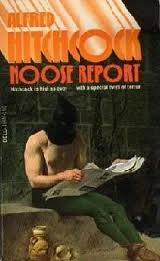
 Yesterweird