How To Read
Back in the good old bad old days I worked with a guy who would take summers off to go work in Alaska as a hunting guide. He’d return in the fall with an assortment of wilderness stories. One of them was about when the other guides and he all got stuck for a week in the back country waiting for the plane to pick them up. They ended up having to trek miles to another pick up site and wait for the plane there. On the way one of the guys dropped his book in the river and wound up with nothing to read.
For a week they were stuck in tents waiting out the rain and waiting for this plane to show up, and the guy had nothing to read. So he started reading the ingredients listed on the soup cans. Over and over again. By the end of the week he had memorized them and could rattle them off in a litany. Chicken noodle. Minestrone. Whatever they had.
That’s how to read.
Desperately. Obsessively. Like your life depended on it.
Spectacles
“He had read endless books, he had digested them, pondered over them. Day by day, year after year, he had turned over all the problems of human beings. Yet there were all sorts of simple things he didn’t know how to do: he couldn’t even walk into an inn and sit down at a table.”
– Georges Simenon, The Strangers in the House
Finished this book this afternoon. I think Simenon’s terrific but he’s one of those authors I can’t read a lot of in one go. Great stuff and he’s writing on all cylinders here, but if I spend too long with his style it becomes so transparent it’s like seeing how the magician does his tricks.
Character-arc spoilers: The novel’s about a drunken recluse. At the end he’s still a drunk, but no longer a recluse. This is something of a happy ending.
Books and TV
Five people walk into a room. They’re all what may be called active readers in that they read at least a book or two a month. One of them brings up a book. None of the others have read it. One only reads award-winners and bestsellers, another is reading her way through Dickens (last year she did the same with Trollope), that guy only reads genre, as do the last two, but it’s a different genre than the first guy’s, and these two are reading at the opposite ends of it. Maybe there’s a book they have all read and can discuss. Inevitably this book will be tied in with a class somewhere at which point the conversation will drown itself in nostalgia.
Across the street, five people walk into a room. They’re all active television viewers. They follow at least one TV show a week. One brings up a show. They may not all like it, but they all talk about it. Conversation achieved.
The Glamour
 I picked this up during a book-buying binge last summer. The only other book I’d read by Christopher Priest was The Prestige. I enjoyed that enough to give this a try.
The Glamour is a suspense novel that borders on the fantastic about a love triangle between people with the ability to make themselves invisible. It reminded me some of Patricia Highsmith’s Those Who Walk Away and some of Fritz Leiber’s The Sinful Ones. Nothing much happens for the first 100 pages, but I found myself swept along and reading anyway. The middle section, narrated by Sue, the woman torn between two men with varying degrees of “invisibility”, was the highlight where she talks about “the glamour”, the ability to become unnoticeable, and their subculture in modern day London.
Of course, “the glamour” also operates as a metaphor for certain social anxieties. Some might prefer it to be either one or the other – metaphor or speculative element, but magic powers as a metaphor for a universally observable social experience fits well with all the unreliable narrators, doubling, and pomo identity hijinks Priest employs in his novels. If that metaphor in the end makes me regard social experiences differently, then I’d say it’s successful.
To Priest’s credit he stays balanced on the border long enough to explore interesting ideas and resists the desire to provide simple solutions to them.
Do the Pulps Still Matter?
I love the tradition but hate our adherence to them.
I love that authors have been working with the fantastic for so long that there are literally hundreds of years of material from around the world to get lost in. I love that every week I can potentially encounter a new author’s work. But I hate our desire to delineate genres and name epochs.
I hate tradition. I hate the collector scum, mylar bagging bull shit. (“Well, blah blah, American SF really starts with Hugo Gernsback.”) I’d rather no one walled the genres apart from each other. I’d rather find my own Golden Age than be stuck with someone else’s.
The Golden Age is the books you read when you were ten. The classics are any author writing before you were born. The walls can’t erode fast enough — and the more the pulp squad circles their wagons and closes their ranks around their andropause and incunabula the more I say good riddance.
Fandom doesn’t matter. The community doesn’t matter. Books matter. Reading matters. I fear we often forget this.
One could look at fandom as junkies on one side (“GRRM, I need my fix!”) and fetishists on the other. (“Oh my god! Sniff this book’s binding!”) What some marketing department decides to name Steampunk or what some editor calls the “new” Sword & Sorcery (when really it’s just recent sword and sorcery) or what some grad student writes about the “sense of wonder” doesn’t matter. They’re either tour guides or real estate agents who’ve positioned themselves between a reader and a book. At best they are useful in small doses.
This might be why I raise my eyebrows whenever I hear an SF writer say: “I love science fiction”. It smells too much of an abusive relationship loaded with codependency. I love to read, and I love books, and most of the books I love happen to be genre books, but I don’t love the genres.
The squishier and spongier they get, the happier I am.
Edgar Pangborn’s “The Singing Stick”
I reread Edgar Pangborn’s “The Singing Stick” this morning. It’s a caveman detective story initially published in 1952 by Ellery Queen Magazine.
What I love is the way Pangborn plays it straight. He uses the tropes of a Chandler-esque Private Investigator story without resorting to too many of the cliches.
Now if only I could find a copy of his novel Davy.
The Future of Reading in Pictures
Right now I see readers existing on a continuum. At one end we have the addict…
“I read that GRRM novel in two days. You got anything else? Robin Hobb? Joe Abercrombie? Scott Lynch? Brandon Sanderson? Nothing! C’mon, man, I’m dying! What about a World of Warcraft tie-in novel…”
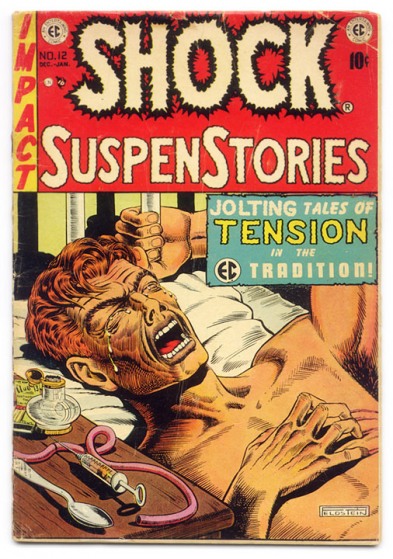
At the other end we have the fetishist…
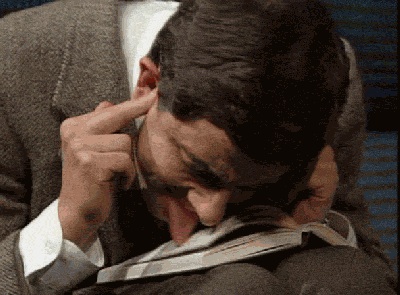
“… wraparound gold embossed *gasp* slip cover with *pant* waxen end pages and *sniff* mint-tinged book binding glue *squee*…”
Of course both can and do exist in the same person, which is great as long as the overall environment they exist in is healthy. Trouble is that as the distance between poles increases, books cease to be objects we encounter in our day-to-day lives and reading becomes marginalized until it’s either as effortless as eating a tube of Pringles or so fraught with arcana that one expects rites and initiations, along with a full bank account, are required to do it.
Books as addictive substance, or books as art object, support either, but if one side wins it’s likely to be a loss for everyone.
Homeland
“Homeland is not flags, anthems, or apodictic speeches about emblematic heroes, but a handful of places and people that populate our memories and tinge them with melancholy, the warm sensation that no matter where we are, there is a home for us to return to.”
– From Mario Vargas Llosa’s “In Praise of Reading and Fiction”
 Yesterweird