The Black Book AKA Reign of Terror
 I’m on a bit of a French Revolution kick, mainly because I’m reading that Tom Reiss biography of Alex Dumas, French revolutionary era general, ex-slave, hero, and dad to the novelist, Alex Dumas. It’s proving to be a pretty great read.
One thing that surprises me is the fact that no one’s ever done a Cthulhu mythos, French Revolution mash-up. So much of it seems like it would fit together: secret societies (the Jacobin clubs), the Cult of the Supreme Being, the master/pupil relationship between Saint-Just* and Robespierre. I could see it working and am surprised no one’s done it.
One thing I did find is this old costume drama from the 1940s called The Black Book. It’s one of those pictures where time and space can be conquered simply by showing a single silhouetted rider cross the screen while the music score swells. “… and he made full speed for Strassburg.”
What’s cool about it is that it’s directed by Anthony Mann. Mann started as a b-movie director, specializing in Film Noir and went on to make westerns and epics. The Black Book is made right in the middle of his Noir phase, so it plays out less like an epic of the revolution and more like The Maltese Falcon. Robespierre hires a special operative to find his missing black book. Several other factions want the book. There’s a femme fatale, a shady cop adept at picking locks, and double crosses. Yeah, it all descends into mad coach rides and women-in-peril, but at seventy-five minutes I won’t complain.
You can watch it at the Internet Archive or Youtube.
* According to wikipedia, Saint-Just wrote an epic poem in the style of Orlando Furioso, except with dollops of the Marquis de Sade heaped in. Yet another reason he’s perfect as a Lovecraftian anti-hero.
August Books 2013
It was staycation. Here are the books I read on the couch.
1. Infidel (The Bel Dame Apocrypha #2) – Kameron Hurley
The Bel Dame Apocrypha has been my favorite SFF series from recent years. The books are an amazing blend of assassins, shape shifters, pistol-packing magicians, and giant insects on some sad sack, craptastic, hellscape planet. They have great world building and a great cast of characters, and I say both those things as someone who hates in-depth world building and large casts of characters.
2. The Record of a Quaker Conscience – Cyrus Pringle
Pringle was a Quaker and objected to the Civil War on religious grounds, refusing to pay anyone to be his substitute upon being drafted. He refused to fight and was sent to prison on one of the islands in Massachusetts Bay. Later he got moved down to Virginia where he ended being tortured. His case and that of his companions would reach Lincoln and he would excuse them from service. Later, Pringle would go on to become a renowned botanist making expeditions into the American South-West. The book is available via Project Gutenberg and you can read about Pringle on wikipedia.
3. Sword of Fire and Sea (Chaos Knight Book #1) – Erin Hoffman
An enjoyable summertime read that reminded me a lot of the enjoyable summertime reads of my youth. It’s secondary world fantasy with elemental magic, gryphons, and stalwart sea captains. Also Hoffman can summarize action so you don’t have to be led about by the hand.
4. Poets in a Landscape – Gilbert Highet
A series of biographies of Roman poets mixed with an Italian travel guide circa 1957. Highet’s a classicist of the urbane over-educated type, but he has a passionate love of his subject, an inviting style, and the ability to share why he feels so passionate about his subject matter. Plus, he gives the occasional “fuck yeah, books!” battle cry that I love. An example:
“History is a strange experience. The world is quite small now; but history is large and deep. Sometimes you can go much farther by sitting in your own home and reading a book of history, than by getting onto a ship or an airplane and traveling a thousand miles. When you go to Mexico City through space, you find it a sort of cross between modern Madrid and modern Chicago, with additions of its own; but if you go to Mexico City through history, back only 500 years, you will find it as distant as though it were on another planet”
“These are not books, lumps of lifeless paper, but minds alive on the shelves. From each of them goes out its own voice, as inaudible as the streams of sound conveyed by electric waves beyond the range of our hearing; and just as the touch of button on our stereo will fill the room with music, so by opening one of these volumes, one can call into range a voice far distant in time and space, and hear it speaking, mind to mind, heart to heart.”
5. A Pretty Mouth – Molly Tanzer
A collection of horror stories documenting the history of the decadent Calipash family. It can be read as a novel or historical inquiry, and while the stories might begin as pastiche, they rise above their source materials by subverting and playing irreverently with them. I definitely recommend it. It reminded me of Caitlin Keirnan’s Dandridge Cycle of stories.
6. Desert Solitaire: A Season in the Wilderness – Edward Abbey
Great nature writing by a combative anarchist misanthrope, Abbey mixes an outdoorsman’s contradictory elitism (more people need to see nature – tourists ruin nature) with a poet’s eye, while reveling in the simple necessities of being a living and highly fallible creature on this ball of dirt we call home.
7. Memory – Linda Nagata
I totally enjoyed this book. It’s set in a world that might be a computer simulation, but also might not be since it’s set far enough in the future that the words they use to describe their existence might not completely match our definition for those words. It’s an adventure story about a young woman searching for her brother in a world haunted by a strange mist that reshapes the land each and every night.
Project GutenBLARG!
 Every now and then I think of spending a whole year reading nothing but books on Project Gutenberg. I’m unsure if this would be a great idea or a terrible one. To this end I will download heaps of books and put them on my kindle. This is what happened yesterday, and while I don’t know if I’ll spend a whole year reading Gutenderp it’s likely a lot more forgettable Victoriana and Alexandre Dumas will enter onto my to be read pile.
The picture is from Pappy’s Golden Age Comics Blog. I have dozens of screenshots taken from there. Unfortunately I can’t always remember the artists, so I’m not comfortable posting them. This picture is from this anti-Communist comic. After Comrade Colonel Sanders says this about the old books he burns the Bible.
July Books
A bumper month for laying about on the couch reading!
1. Mindplayers – Pat Cadigan
In 1955, EC Comics launched a comic called “Psychoanalysis”, and it was pretty much exactly what you’d expect for a comic called Psychoanalysis with a nameless doc talking to people laying on a couch. <i>Mindplayers</i> is sort of like that comic, except it’s SF from 1992, so the psychoanalysis is done via VR you access directly through your optic nerves after you remove your eyeballs. The book has more an episodic than a three-act or whatever structure. I suspect it might be a fix-up. It’s not a problem, but it’s the novel’s style and expectations should be set accordingly.
Also lots of eyeballs get removed and that takes a bit of getting used to.
2. The Glorious Ones – Francine Prose
The Glorious Ones are a troupe of actors made up of archetypes and each tells their story, parading forth their dreams and obsessions. It’s set in 17th century Italy but you wouldn’t know it from reading it. One of those books about stories and the power of stories, probably not for everyone, but a refreshing read just the same largely because it is short.
3. Yellow Black Radio Broke-Down – Ishmael Reed
A pulpy irreverent satire of America’s founding with voodoo priests, drag queen cattle ranchers, nymphomaniacs, beatnik presidents, and the pope – in other words something to offend everyone. Definitely worth tracking down.
4. Status Anxiety – Alain De Botton
I suppose there are some folks out there that object to De Botton’s “pop” philosophical style and shake their heads at his conclusions. I’m not one of those people.
5. Hong Kong – Jan Morris
A fascinating read. I definitely recommend it even though it took me a few months to make my way through it. Hong Kong’s history is depicted in alternating chapters of past and present (1989), and as it is I’m curious if and how Morris has expanded the book in recent years since China regained control of the colony. Morris writes in a Mandarin (in the Cyril Connolly sense), somewhat gossipy style; she seems to know everything about everyone, and in a lot of ways lives up to her description of a student of British Imperialism. In more than a few sections I was reminded of China Mieville’s Embassytown.
6. The Discovery of Witches – Matthew Hopkins
Matthew Hopkins was an infamous 17th century Witch-finder active during the English Civil War who took it upon himself to hunt for witches around the area of Norfolk, all for a modest fee of course. This pamphlet contains the transcript of Hopkins’ interrogation at the hands of magistrates hoping to understand his qualifications. It’s largely a question and answer tract on Hopkins’ witch finding methods and casually brings up torture, imps, and the differences between devil’s marks and hemorrhoids. All in all if the magistrates sought to intimidate Hopkins with their question, they failed, because he turned their questions around and made the whole case an advertisement for his abilities and services.
You can download a copy at Project Gutenberg.
7. and 8. Babel-17/Empire Star – Samuel R. Delany
Two fun reads that play with SF adventure stories and have a neat relationship with each other. In the Babel-17 universe all the characters reference Empire Star and it’s character Comet Jo as he’s sort of the Harry Potter of the future.
9. Elisha Barber – E. C. Ambrose
A historical thriller with magic, warfare, and buckets and buckets of bodily fluids. Elisha Barber can be an exhausting read where all the character spin on their heels and snarl breathlessly instead of speaking. That said, I dug it.
10. Nightside, the Long Sun – Gene Wolfe
I used to make this joke about how I wished more secondary world novels featured mundane details, like, and this was my go-to example, I wanted to see how people bought groceries. Well, I have now read that novel and I liked it.
The whole story takes place over two days in a massive hollowed out intergalactic generation ship where a slum priest learns his parish was sold to a crime boss. The priest decides to break into the boss’s house and talk to him. It’s the dullest heist ever, but it’s pretty great too. Then there’s an exorcism, but before that the priest eats some green tomatoes. Nightside, the Long Sun has to be the most mundane of all mundane SFF novels ever (actually no, that prize goes to China Mountain Zhang). It’s… something. Unfortunately it’s not a stand alone novel.
June Books
Counting books finished, ‘cause no one cares about the books stacked up on the back of the hopper/beside the bed/couch.
1. The Ocean at the End of the Lane – Neil Gaiman.
Oh wow. A book for adults by Neil Gaiman… which means it’s 10 pages of a sad man remembering being a sad kid, then a 170 pages of him as a sad kid and his adventures with the magical pixie dream girl that lived down the road, until finally ten more more pages of the sad man sighing while he looks at a body of water. Yeah, “for adults”… well, at least it was short.
2. The Mapmaker’s War – Ronlyn Domingue.
I hate bloated epic fantasy with a white-hot hatred that could blind the baby Jesus, and the fact that your standard fantasy novel nowadays is 500+ pages of grimdark neckbeardio “world building” only makes my blood boil. So when this book crossed my radar, likely via amazon algorithm, the first thing I did was check out the page count. It was less than 300 pages. That was enough to make me want to read it.
Domingue’s The Mapmaker’s War reads like a blend of William Morris, Ursula K. LeGuin, and Jeanette Winterson mixing social allegory and utopian yearnings with keen-edged, descriptive prose. Fantasy fans deeply embedded in the genre will likely view the book with suspicion, since it’s “literary” in unacceptable ways: 2nd person narrator, unconventional dialogue tags, and lots of summary. Don’t be one of those people. Give it a read. It’s refreshing to read a secondary world fantasy novel completely orthogonal to the genre.
3. The Christmas Witch – M. Rickert.
So I have a stack of old SF magazines from the past 20 years and I’ve been slowly flipping through them. Most stories are meh, but some are not meh. This is a non-meh story, er, novelette. What a novelette is I can’t be bothered to care, likely it has to do with word count and is only important during award seasons. Anyway…
This is a creepy story about a creepy kid set in a small New England town where you’re not sure if the fantasy elements are real or imagined, and honestly, that hardly matters unless you’re a pedantic dope. It’s Stephen King country, but it’s not. If you have a stack of old of SF magazines from the past 20 years sitting around the house, this story is definitely worth checking out.
4. The Fifth Head of Cerberus – Gene Wolfe.
A reread. Three interlinked novellas, the first is a coming of age story set in a brothel run by a genetic engineer, the second is a “tale” told by aliens about the events leading up to the arrival of intergalactic colonists, the third is a security “report” about a prisoner in a remote prison, who may or may not be a shape-shifting alien. If you’ve never read the book, I recommend it.
5. Meet Me in the Moon Room – Ray Vukcevich.
A short story collection by turns funny, sad, whimsical, and absurd. Most of the stories hone in on small moments and instances like an alien possession while folding one’s laundry, and they conclude and let you go almost as if they were jokes. My favorite story was “Beatniks with Banjos”.
6. Empty Space: A Haunting – M. John Harrison.
Some folks read books to be entertained, others to have a good experience. I read books for their mind-altering capabilities, and M. John Harrison delivers the goods. Definitely not for everyone, but if it’s for you it’ll twist around the way you look at the world.
May Books
1. The Witches of Karres – James H. Schmitz. A fun little Space Opera novel. Captain Pausert is your typical rogue with a heart of gold starship captain, long on luck, short on credits. He rescues a trio of slave girls and is soon caught up in a series of adventures. It’s a light-hearted book that gets more than a little wonderful in places. Occasionally it has a sour note (mostly of the precocious teenage girl that flirts with an older man that resembles her father variety), but there’s also much to love: monstrous planets, spider-robot assassins, weird world building, etc.
2. Fury – Henry Kuttner. Classic science fiction of the egomaniacal supermen and the ballgown-wearing women who love them variety. Deliriously fun. Weird narcotics, crime, murder, and mayhem all in the name of progress because man’s destiny is to rule the stars!
3. A Stranger in Olondria – Sofia Samatar. An amazingly rich and textured fantasy novel about a young scholar’s attempt to free himself from a ghost. There’s a lush world to get lost in here, of history and story, without any bloated POV immediacy or tedious door opening. It reminded me of the best bits of Jan Potocki’s Saragossa Manuscript. Read it.
4. Snitch World – Jim Nisbet. A small time crook collides with amoral dot-com venture capitalists in modern day San Francisco. What plot there is focuses largely on a top secret under development phone app, but the real entertainment is in Nisbet’s prose and vivid depiction of San Francisco. An enjoyable book, both funny and sad in a “Those days are gone, but the people live on” kind of way. Folks who have lived in San Francisco may also get an extra kick out of it.
5. God Save the Mark – Donald E. Westlake. A comedy of errors dressed up as a noir novel and populated with hard-nosed cops, femme fatales, and con artists, all of whom are out to get the most gullible man in Greenwich Village. An entertaining book.
6. An Artist of the Floating World – Kazou Ishiguro. A short, bitter-sweet novel about an elderly Japanese man coming to terms with life in post-war Japan. The narrator shies away from the crux of his problem, and the reader is left to surmise via oblique plotting what it is he did in his past that he’s so ashamed of now. It never quite matches The Remains of the Day, but the moments when it is good are very good indeed.
7. Nobody Move – Denis Johnson. A bit of a whirlwind ride as lowlives and petty crooks maneuver and manipulate each other for revenge, kicks, and greed. Johnson tips his hat to the masters, and noir and thriller fans will find enough here to keep them satisfied. It reminded me a lot of Jim Thompson’s The Getaway.
8. The Status Civilization – Robert Sheckley. It’s 1950s SF in the hip mode (think Bester and Pohl) with one of those What-If planetary monoculture set-ups. What if a world was populated by mental patients? What if a world was populated by Medieval re-enactors? In this case it’s What if there was a prison world where evil was considered good? It’s dopey, not completely Bizarro World, but certainly not The Dispossessed either – and every now and then the satire’s quite nicely sharp and pointed.
9. American Gods – Neil Gaiman. Overwritten and much of the first half is a drive-to-the-plot plot, that morphs a bit late into the picaresque, which sadly stops just as it hits it stride and becomes a sit-and-wait-for-the-plot-to-happen plot. It’s also written in that let-me-describe-everything-to-you style that makes good 60,000 word novels into shitty 120,000 word novels. Would I have liked this book more if I hadn’t already have read tons of Chesterton, Leiber, Barker, etc. couldn’t see the lineages of the book’s ideas? But would I have read Chesterton if I hadn’t read Sandman as a weird comic-reading teen nerd? That’s the question.
March Books
I started grad school and am much busier this year than I have been in a while. The blog is likely to be the least of my priorities.
Here’s the book list for last month:
Alchemy and Alchemists – C.J.S. Thompson
Interesting and esoteric the best chapters are full of anecdotes from the lives of various alchemists.
Trafalgar – Angelica Gorodischer
Reads a bit like sitting in a cafe with your grandmother’s youngest brother, the great uncle that traveled everywhere and never seems to stop smoking, drinking coffee, or holding your interest with the accounts of his adventures.
Fremder – Russell Hoban
This book is a beautiful sloppy mess of Science Fiction. It’s one of those books I can crack open at random and just get hit by the prose all over again all. Dig:
“Maybe for some people the business of knowing who and what and when and where they are is simple; not for me. The past and the present flicker together in my mind and it isn’t easy to sort through the different strands of story to find one that is only mine.”
And:
“A373 and Badr al-Budur are two of the quiet places in my head. I like sometimes to think of Pearl speaking in my mother’s voice under the red Isis moon and I like to think of the robot sweepers humming through the silence of the spaceport under the noctolux lamps of Badru.”
The Company – K.J. Parker
Ugh. A hard slog. There are parts of Parker’s fiction I really like, and parts I hate. Everyone ends up having a secret and whichever secret winds up being important to the plot hardly matters (or I could care less). In between the whole story is shown in a matter-of-fact fashion where everything, past, future, interior, exterior has the same emotional weight and the whole novel loses its intensity. Maybe if it were 100 pages shorter, it would actually read like a novel.
Cogan’s Trade – George V. Higgins
An obliquely plotted crime novel with well-observed details and crackling dialogue. The ability for so many people to say so little while saying so much is amazing. Especially interesting of your family is like mine and enjoys playing six degrees of Whitey Bulger.
Ammonite – Nicola Griffith.
Loved it. The book’s a “classic” SF adventure story mixed with interesting world building of the LeGuin sort. A fun read.
The Queen, The Cambion, and Seven Others – Richard Bowes
A great collection of modern fantasy stories and warped fairy tales with Arthur and his Knights, Merlin and Queen Victoria, animal helpers, and the Kingdom Under the Hill – all are here and familiar, but subverted in interesting and refreshing ways. Definitely recommended.
The Enemy Within: A Short History of Witch-Hunting – John Demos
A decent overview of “witch-hunting” from Roman times up to the 1980s with a focus on Europe and America and lots of details on the Colonial era “witch-hunts”. Demos uses the term “witch-hunt” in a particular way, so brings up the various Red Scares in US history and the day care scandals of the 1980s. An enjoyable read if you’re into that sort of thing.
The Project Gutenberg Reader
A while back my kindle broke and my books didn’t transfer automatically to the replacement one and phone calls to the service center in Ireland were required. Whatever enthusiasm I had for e-books and Amazon pretty much dwindled at that time, and now I generally stick to downloading free stuff off of Project Gutenberg, which is great, because Gutenberg has so much weird random classic stuff on it. Like the other day I was reading Greek and Roman Ghost Stories by Lacy Collison Morley and was on the chapter about necromancy when my 4th graders arrived and began causing a ruckus and … well, let’s just say they’ll get theirs the little ankle-biters.
But I wanted to give a shout out to the Project Gutenberg Project, a great website sifting through the depths at Project Gutenberg. They’re definitely worth checking out.
One Book, Four Covers: Roald Dahl’s Book of Ghost Stories


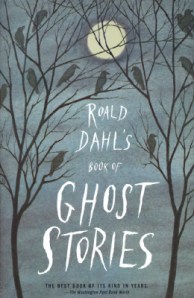

How about that crow cover? That’s pretty nice.
I found a used copy of this at What the Book in Seoul. It was published in the 1980s but the most recent story in it is an Aickman from the 1960s. The majority are from the 1920s, but all are from the 20th century.
In his introduction Dahl talks about the ghost story as a world tradition and the sheer wealth of source material available. This didn’t prevent him from putting together a mostly British table of contents. In fact my biggest complaint against this book is that it’s irritatingly British. Everyone is prim and proper and ducking into corner shops in search of bric-a-brac. Dahl also talks about how bad most authors’ ghost stories are. Even the big name folks’ stories are atrocious. He feels the same when it comes to children’s books too. People think they can write one easily, when the results are quite different.
There is a logic to Dahl’s selections and if you’ve ever read one of his stories you’ll see a kinship between them and his selections here. Most of them have zinger endings of the morbid sort.
Another little chestnut from the introduction is that Dahl records his surprise at how well women write ghost stories. After making a few wince-worthy generalizations, he applauds women as horror writers. They were so good he feared that the whole book would be nothing but women authors. But in the end the men roused themselves and prevailed, thirteen testicle-endowed individuals to eleven uterus-bearers.
Imagine if it had been otherwise. The horror!
Your Guide to Le Morte D’Arthur
First thing you need to know is Monty Python totally nailed it. Read the book, then watch the Black Knight “None shall pass!” scene, and you’ll agree. They nail it.
Second thing, all the knights are jackholes especially Gawain. (An arguable exception is Galahad, but he’s basically Jesus. Okay. There’s a few others who aren’t so bad, but it’s like five guys out of a thousand.)
Third thing, Malory didn’t invent any of this stuff. He edited oral traditions, pieced together narratives, and slathered on a layer of romanticized 14th century Christian chivalry to make the pre-Christian folk heroes palatable to his audience. He also wrote it in jail for a rather impressive laundry list of violent crimes, so when the knights behave terribly you have to figure old Tom knew what he was talking about .
The book’s divided into eight “tales”.
1. The Tale of King Arthur.
You have to read this. It has Merlin, Excalibur, and Arthur’s rise to power. In the first ten pages eight hundred named characters show up. Stuff happens and the jousting is still interesting.
2. The Tale of King Arthur And The Emperor Lucius.
This is great. Arthur unites England and marches on Rome. Rome has giants in its army. Much of it reads like a ten year old freeform rambling a D&D game. “You walk into the room and there are two hundred giants there. Roll for initiative.”
3. The Tale of Sir Launcelot Du Lake.
I have no memory of what this was about. I suspect it was dull, because Launcelot is dull except during the quest for the Holy Grail, when he’s basically having a bad acid trip.
An aside, throughout the book there’s a very keen ranking system of knights that’s reminiscent of a baseball fan’s fixation on batting averages, only it’s jousts and sword-fights being counted. So a knight shows up and everyone says, “It’s Sir Hoppinscotch. He’s the 36th bestest knight in the realm. Let’s see how he does in the left-handed face-smash head-kebob event.”
4. The Tale of Sir Gareth.
This book is fun. Gareth is Gawain the Jackhole’s half-brother, but he’s cool and not at all like Gawain. (Gawain kills their mom when he busts in on her and her lover even though dad’s been dead for years.) Gareth’s like the third best knight in Camelot, depending on if Sir Lameface is dead or not. He has adventures and they are interesting.
5. The Tale of Sir Tristram of Lyoness.
By now it’s all knight-errantry and jousting with the occasional interesting bit like La Cote Male Tayle or Sir Palomides trip to the Red City. It’s 200 pages that read like 800 pages each of them nearly identical and looking like this:
”One morning Sir Launcelot left the castle and rode into the forest. Soon he came upon a well where a maiden was weeping. She said, “Oh good knight can you protect me from the knight who is chasing me?” Sir Launcelot said “Yuppers” and rode off to meet the knight and did so by the bridge where they jousted and both were knocked from their horses. They then fought with swords for so long that the blood ran from their armor and soaked the ground. Finally Launcelot said: “Who are you knight that is so strong?” The knight removed his helmet and it turned out to be Sir Tristram, and the two embraced and shared kisses for they had long pledged loyalty to each other, at which time the maiden appeared and Tristam chopped off her head because she was a sorceress.”
It’s wretched. The big thing is Sir Palomides is in love with Iseult the Fair and it makes him a complete jackhole.
6. The Tale of the Sangreal.
This is awesome Pagan-Christian Mystic hallucinogenic weirdness. Loopy stuff as if the knights of the Round Table got lost in a stoner-metal album. I suspect Malory was mining a tradition here well beyond his usual — and the only way he could make sense of it was basically having Galahad be Jesus, which kind of sucks deus ex machina and all that, but the whole thing is so weird that you just have to go with it. Or read the Mabigboingboingoinen to get the pure stuff.
7. The Book of Sir Launcelot and Queen Gwynevere.
Launcelot’s been schtupping the Queen. (Like you didn’t know.) Arthur finds out. Mayhem ensues.
8. Le Morte D’Arthur.
Arthur dies. It’s the name of the book. Everybody else dies too, or goes away and becomes a hermit/nun.
* * *
There’s actually some fascinating setting stuff here that I’ll probably get into next time.
 Yesterweird
