Happy Holidays
 Happy Holidays to you no matter who you are, where you are, or whether or not you even do anything to celebrate, and a Happy New Year too, while I’m at it.
Carts and Horses
I’ve got these students, smart kids, but you ask them a question and they can’t answer it. Not because they don’t know the answer, but because they don’t think the question is the question. They think the question is a trick, a distraction, from another unasked question. And what they’re trying to figure out is the answer to that question.
Maybe you don’t do the same. I know I certainly do.
Someone asks you a question and you respond to some other, imagined question. Not what was asked, but what you imagined was asked. And sure, some people are Machiavellian assholes all too eager to trap people and get them all mixed up. And yeah, some of these people are teachers, and they’ll boast about how clever they are and stupid/gullible their students are. But those folks are something else entirely. Very rarely is life like some deathtrap dungeon of spiked pits and pendulum scythes (at least it hasn’t been so far). Instead life is rather straightforward. Better to answer the question asked than respond to the one from the imaginary conversation going on inside your head.
Play vs. Play
This will be an RPG update post. If that sounds boring, tedious, and/or excruciating, then I suggest you look away.
Now then.
For the past six months or so I’ve been playing in a face to face Pathfinder game down the road in Gyeongju. It’s been great fun (although I can’t really be bothered to learn all the rules of Pathfinder and do all the accounting – honestly, I don’t think I’ve updated my character’s skills in levels), and it’s made me realize how much I missed regular face-to-face games. Don’t get me wrong, G+ games are fun; I can’t believe I’ve run a game for two years now. But, having a local gaming group that meets regularly and rolls the funny dice together? Can’t beat it.
Of course, the buddy from town that makes the trip with me and I are talking about starting a new game here in town. Our current idea is to run a campaign where every character is the same class (either fighters or thieves, so every adventure is either a Black Company novel or a heist movie – also maybe start characters at 2nd level, so they can have 1 level in another class).
But trying to get a game together here in town is proving to be a bit on the silly side. There are lots of stealth gamers and lots of enthusiasm, but no one wants to set the time aside to actually do it. Not only that, but it’s been fun to once again witness that creeping shame of not wanting to look a nerd when you mention RPGs that some people never get over.
It’ll be interesting to see if anything actually happens. As it is I’m pleased to have the game groups that I do.
Paperback Anthologies
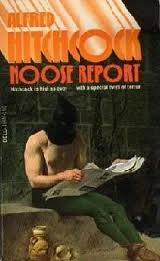
Back in 2010 when I first moved to South Korea and was living in a town of ~200 people, friends back in the States sent me some books (thank you again Rick, Kris, Jeff, and Geoffrey!)
Among the books and magazines were a few paperback anthologies from the 60s and 70s. A more innocent time when paperbacks had cigarette ads in them, and you could put a half-naked hooded fat man in tights on the cover and no one at all would look at it and think maybe it’s not a good idea.
Now With Extra EPIC Flavor
Over at Beneath Ceaseless Skies autarch-in-chief Scott A. Andrews compiled a list of EPIC stories in response to a twitter comment about something or other. My story “Of Shifting Skin and Certainty” got a nod for its use of drugs EPICNESS, which is kind of nice because that story is nearly five years old now and like most (of my) short fiction gets published to silence before being wheeled out to a walled-in garden where it can expire without upsetting anyone.
Anyway, if you like drugs EPICNESS maybe you’d like to check it out. There’s even an audio podcast of it for you deviants into that sort of thing.
And if you’re not into any of that kind of thing maybe you’d like this article on advanced mathematics with Legos in a washing machine.
Know Your History? Some Guidelines For Reading
Every now and then the debate over reading genre classics pops up and rears its ugly head. On the one hand you have folks who feel we’re losing a literary heritage and forgetting too many old great books as new great books get published. Mike Swanwick had a recent blog post to that effect. The genre was once smaller, you could read everything in it, and stay on top of it. It was easier not only to find the firsts in a genre, but also the outliers. Having a hungry curiosity for this stuff is good.
On the other hand you have the opposite position of just knowing what’s current, which in its extreme form might resemble this five year old blog post from Karen Traviss about not needing to read to be a writer. (I don’t know if Traviss still agrees with that blog post, but I’ll keep it until I learn otherwise because it’s useful.) In its milder form, it’s not needing to read every alien invasion story ever, but just those in recent years in order to see how alien invasion stories are being told now in this era.
There’s also a third hand, which shows up in the comments of Swanwick’s post, stating that the “classics” might not be so classic and why navigate through books dripping with the prejudices of their eras. This too is a valuable point, but my reading of Swanwick’s post is one not so much telling writers to know their history and cling to it, but to sift that history and find the gems in it, the outliers as he dubs them, or the books lost in genre’s shadow like the ones I mention here and here.
However there are ways to reconcile these three arguments when you keep these guidelines in mind:
1. Read only what you enjoy, but cultivate a curious and complex palette that enjoys challenges.
2. Make your own genre history. Lots of stuff gets lost in the margins or ignored because it doesn’t tidily fit in with someone’s imposed narrative. Bring these works to light.
3. The early work in a genre has more immediacy than subsequent iterations. It can sometimes be as fresh as more recent works.
4. As far as knowing your genre goes, once you’ve read the initial spark, focus on what’s been done with it in the past decade. But…
5. Always remember there are likely more amazing books that you haven’t heard of than ones you have.
And here’s another post where I carry on in more or less the same way.
From Swedish Royalty to Pulp Trash
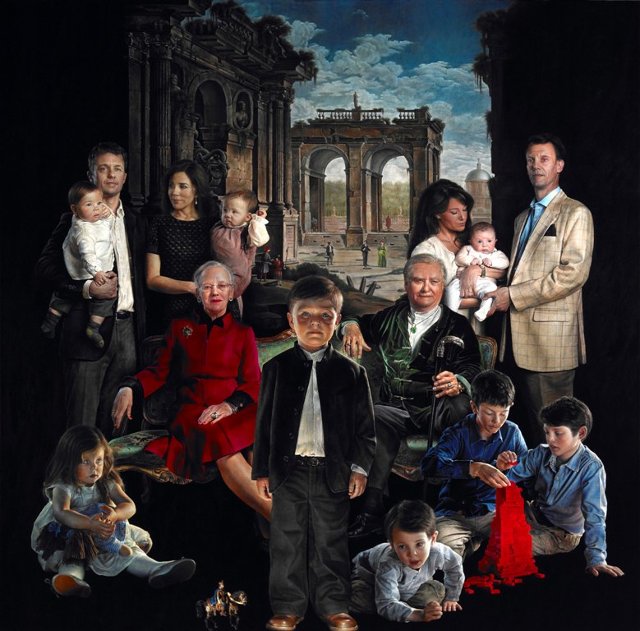 So maybe you’ve already heard about that creeptacular painting of the Danish Royal family. The one by Thomas Kluge pictured above. If not you can read about it here. Isn’t it something? It’s like every VC Andrews book cover I remember from when I was a kid.
When I posted this to Facebook and made the Andrews comparison I asked what was the appeal of her books, and what people told me was that she was basically “like Lovecraft for girls”. Here’s a blog post by the writer Silvia Moreno-Garcia on the subject. Which makes sense, as did my wife’s comment that when you’re 12, you seek out the trashiest stuff you can just because reading those books is like a badge of honor. Other folks talked about how those books addressed the fascination/revulsion teens had about sex or offered some catharsis for teens whose home lives were fucked up, but not that fucked up. So maybe there is a value to trash, especially when painted up as Gothic literature. Or maybe the shit was just fun to read. I never read them, as my trash interests were elsewhere.
But as far as royal portraits go, I think Kluge should do more of them.
The Black Book AKA Reign of Terror
 I’m on a bit of a French Revolution kick, mainly because I’m reading that Tom Reiss biography of Alex Dumas, French revolutionary era general, ex-slave, hero, and dad to the novelist, Alex Dumas. It’s proving to be a pretty great read.
One thing that surprises me is the fact that no one’s ever done a Cthulhu mythos, French Revolution mash-up. So much of it seems like it would fit together: secret societies (the Jacobin clubs), the Cult of the Supreme Being, the master/pupil relationship between Saint-Just* and Robespierre. I could see it working and am surprised no one’s done it.
One thing I did find is this old costume drama from the 1940s called The Black Book. It’s one of those pictures where time and space can be conquered simply by showing a single silhouetted rider cross the screen while the music score swells. “… and he made full speed for Strassburg.”
What’s cool about it is that it’s directed by Anthony Mann. Mann started as a b-movie director, specializing in Film Noir and went on to make westerns and epics. The Black Book is made right in the middle of his Noir phase, so it plays out less like an epic of the revolution and more like The Maltese Falcon. Robespierre hires a special operative to find his missing black book. Several other factions want the book. There’s a femme fatale, a shady cop adept at picking locks, and double crosses. Yeah, it all descends into mad coach rides and women-in-peril, but at seventy-five minutes I won’t complain.
You can watch it at the Internet Archive or Youtube.
* According to wikipedia, Saint-Just wrote an epic poem in the style of Orlando Furioso, except with dollops of the Marquis de Sade heaped in. Yet another reason he’s perfect as a Lovecraftian anti-hero.
Junk From the Notebook 1
Politics won’t harm a writer’s career. It’s talking crap about the genre and “loving” it insufficiently that do you in.
Their enthusiasm for writing doesn’t match their enthusiasm for talking about their enthusiasm for writing.
When someone asks what your tastes are and all you do is hold up your hands and say, “Gah! Who the fuck knows?”
People that talk about “geek cred” should probably see an analyst to resolve their middle school hang-ups.
Fruit on the bottom. Hope on top.
The Books Will Find You
I remember reading the opening of this weird SFF book back in high school where a guy’s kidnapped from the present and imprisoned in the future for a crime no one will tell him about. I never finished it. The thing I remember is the guy being interrogated at a table that had a holographic hand hovering above it. Anyway I set the book down or lost it or whatever, and probably couldn’t have told you who had written it – until today when I started reading Indoctrinaire by Christopher Priest. That’s the book. I’m not sure how it found me here in South Korea.
 Yesterweird