Atalante’s Portable Megadungeon

Here’s a write-up of the greatest magic item of all time: Atalante’s Portable Megadungeon.
Knights check in, but they don’t check out!
And yes, it’s based on the Knight Hotel from Orlando Furioso.
If you want all this in a PDF version, you can find one free here on my itch page.
###
Atalante’s Portable Megadungeon is a large, roughly rectangular carved stone.
- The Stone: The stone is portable, but heavy, as large as a thick tome. It is a bulky item. When placed on the ground outdoors and the command word is spoken, the stone’s spirit instantly creates an illusory megadungeon.
- Megadungeon Appearance: The megadungeon’s exterior appears as an ancient imposing fortress. The gate is open and unguarded. The megadungeon’s interior is an endless array of rooms, corridors, halls, towers, and courtyards that unfold before its unwitting prisoners.
- Illusion of Heart’s Desire: The stone’s spirit can discern the heart’s desire of anyone within the dungeon or within sight of the gatehouse. The spirit can generate the illusion of a humanoid foe carrying whatever this desire may be deeper into the dungeon.
- Entering the Dungeon: Anyone who passes beneath the gate falls under the spirit’s spell and will not be able to find the gate again without a guide unaffected by the illusions.
- Heroes check in, but they don’t check out: At any given time there will be 2D12 prisoners already trapped within the megadungeon.
- The Megadungeon is inhabited: The spirit creates illusory foes. The creatures are unaware that they are illusions and behave as if they were real. They will have factions and regularly intrigue against each other.
- Cruel, but not Evil: The spirit has no desire to kill its prisoners or see them killed. Its job is to keep its prisoners trapped inside for as long as possible. Prisoners of the dungeon can take damage but can not be slain by an illusion while in the dungeon. The spirit will also use illusions to keep prisoners from killing each other. Food and drink can be found by those trapped inside.
- Immunity: The stone’s owner is immune to its illusions and can locate and move to any individual trapped inside in a single round. Individuals immune to illusions can recognize that the megadungeon and its inhabitants are not real. However the illusions behave as if they were real when encountered.
- Escaping the Dungeon: It is impossible to escape while under the spirit’s spell. However if one is unaffected by its illusions and can find the stone in the gatehouse and expose its arcane mark to sunlight, the spirit will take material form. If defeated in combat, duel of wits, or any sort of contest the spirit will dispell the illusion and the megadungeon vanish. All prisoners will be freed instantly with full health. The spirit can not be summoned again for a month and a day.
Enjoy!
What’s the Story With Your…?

Swords and horses…
Knights have them. Knights love them. Knights won’t stop talking about them. Don’t be left out when your knight friends bring up their swords and horses. Here are 20 bits of lore for your sword and horse.
And be sure to name them!
Your sword was…
- Forged from meteoric steel.
- A gift from the Fey Realm.
- Forged from the dreams of a holy hermit.
- Forged in a burning lake of fire.
- Forged with a hatred for some creature.
- Once owned by a legendary ancient hero.
- Retrieved from a slain dragon’s hoard.
- Forged with a hatred for the sword of another knight.
- Forged to love its owner and will shatter rather than see them suffer a killing blow.
- Once a piece of a celestial/infernal machine.
- Used to bind a dragon or elemental’s soul.
- Forged so sharp it cuts steel like it was paper.
- Pulled from an ancient giant’s skull.
- Once used by an ancestor who saved the kingdom.
- Forged to always return to its owner’s hand.
- Forged in a furnace powered by an elemental.
- Forged from a sliver of solid moonlight.
- Forged as a gift to your family by the reclusive grimfolk.
- Forged so sharp it can cut through stone.
- Won by an ancestor from another knight’s ancestor.
Your horse is…
- Descended from the wind.
- Descended from a shapeshifting fey, angel, or demon.
- Descended from a herd raised on human flesh.
- Smart enough to understand human speech.
- Able to turn itself and its rider invisible once a day.
- Actually some other creature trapped in horse form.
- Descended from sea foam and can walk on water.
- So shiny and lustrous it glows in the dark.
- Made from carved stone.
- Descended from the herd of the sun and doesn’t need food or water.
- Can walk on moonbeams.
- Will always return to you when called for.
- Fearless.
- Able to balance an walk along a roof peak or rope.
- Always able to find acceptable food and water for you.
- Able to teleport up to 30’ once per day.
- Able to leap over buildings and trees.
- Able to fly. It has wings.
- A cousin. Magic was involved. It’s weird.
- Blessed and can find healing herbs when needed.
You can download a free PDF of these lists on my itch page.
It’s likely these and future D20 generators will get compiled into a zine of some kind, probably one based on Orlando Furioso. Stay tuned!
Orlando Furioso, Canto XLV

The penultimate canto… let’s do it!
To start we get some expounding on the nature of fortune and how “Good follows Evil, Evil follows Good, shame ends in glory, glory ends in shame.” Ruggiero has just wrought havoc upon the Greeks. Now he wants to sleep. He arrives at an inn but is recognized. The Greek king has him abducted, and the king’s sister urges him to treat Ruggiero harshly since he killed her son in the battle. In the end Ruggiero gets locked away in some deep dungeon full of snakes, where he’s chained around hands and feet and forced to eat moldy bread.
Back in France, word spreads about Bradamante’s oath to only marry a man who can defeat her in battle. This has made her parents furious. Much moping ensues.
Back in Greece, Prince Leon hears how the knight that defeated the price’s army is being held captive in a dungeon. Leon “loves” this knight because his kink is apparently masochistic self-destruction by proxy. He goes down to the dungeon with his assassin henchmen. They trick the gaoler to open the prisoner’s cell, then the henchman kills the gaoler.

They go into the cell where Ruggiero is on the brink of death. Leon professes his love/admiration for Ruggiero and together all leave the dungeon, Ruggiero pledging himself to assist Leon in any way he would wish. It’s about now that Bradamante’s challenge to any suitor reaches Leon, and he starts hatching a plan.
We can all see where this is going here.
Leon will accept the challenge, then he’ll have Ruggiero fight wearing his armor, then when Ruggiero defeats Bradamante, he’ll say it was himself and marry her.
When Ruggiero hears the plan he gets all torn and twisted. But chivalry is chivalry and his word is his bond and all that. He accepts and they head off for Paris. There’s a good bit here where Ruggiero hammers the edge off his blade so as not to harm Bradamante, while Bradamante sharpens her sword thinking she’s going to have a chance to kill Prince Leon.
The duel begins.
Bradamante’s doing her best, but Ruggiero is like a rock. This goes on all day. Finally the sun goes down, and since Bradamante couldn’t defeat the challenger it’s declared that she lost and was bested. Ruggiero however doesn’t stick around. Once he can he rides straight away returning to Leon. Leon’s delighted. He showers Ruggiero with hugs and kisses. Once that’s done Ruggiero rides off to mope in the nearest dark forest.
Meanwhile Bradamante’s pretty upset. She doesn’t want to marry Leone and is thinking of poisoning him. Fortunately, she has a pal in Marfisa who goes to King Charles and says Bradamante can’t marry Leone because she already married Ruggiero in a ceremony she witnessed. This sends the court into a tizzy. Prince Leone is disappointed but takes things in stride. It’s Aymon, Bradamante’s dad who is a complete ass over this news. How can a Christian marry a Muslim? Etc. Etc. Assholery.
King Charles can’t decide what’s what, so Marfisa steps in again and says how about we have Ruggiero fight Leone and decide it that way. Leon says that’s fine. He thinks he can have his secret knight fight Ruggiero. (Yeah, he doesn’t know the knight’s name only that he is a great warrior.) But when he gets back to his tents, there’s no Ruggiero there and no one can tell him where he’s gone.
One canto left!
CANTO SCORE CARD
Knights: Ruggiero, Ungiardo, Bradamante, Leon the Greek Prince, Marfisa, King Charlemagne
Awful Parents: Constantine the Greek King, Theodora his sister, Aymon, Beatrice
Swords: Balisard
Horses: Frontino
Henchmen: Assassin
Magic Items: Hector’s Armor
Orlando Furioso, Canto XLIV
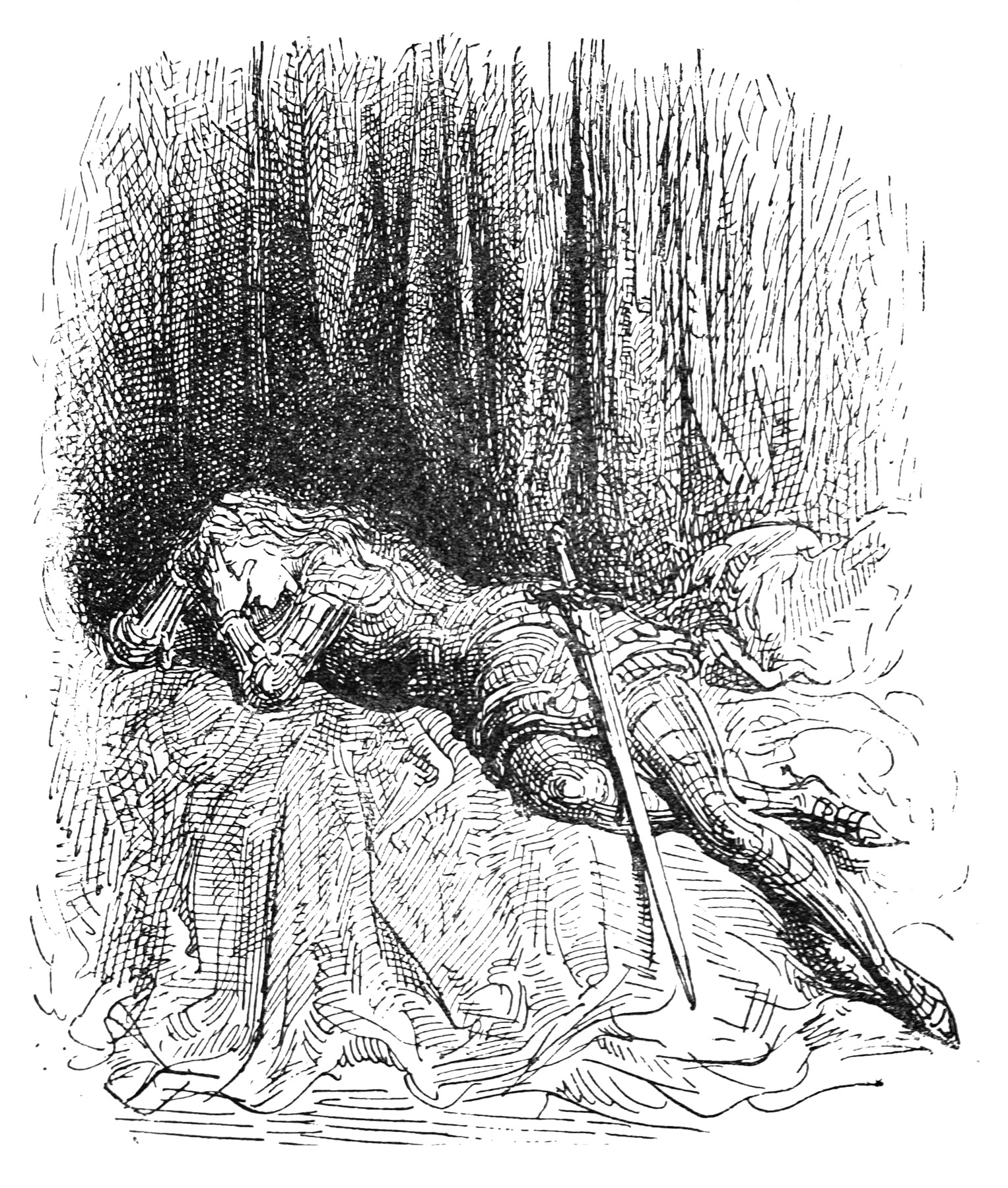
We start with everyone in the hermit’s cell congratulating Ruggiero. When Rinaldo learns Ruggiero’s betrothed to his sister he’s delighted by the news. Unfortunately, Ariosto reveals the fact that their parents already pledged Bradamante’s hand to Leon, the Greek prince of Byzantium. Neither Rinaldo nor Bradamante’s knows about this yet, so Rinaldo has no reason not to be delighted.
I gotta hand it to Ariosto. He’s down to the last three cantos and he’s still going to introduce a love triangle.
Everybody goes back to France except Prester John who goes back to Africa. When he and his army get there all their magic boats and horses turn back into leaves and rocks. Astolfo flies back to France on the hippogriff, but releases it when he arrives there. This was part of his pledge to Saint John back in the Earthly paradise. His horn’s also lost its power. He reaches Marseilles just as everyone else is arriving. Charlemagne greets them all and there’s much rejoicing. The war’s over. The Christians have won. Everything is great, until Rinaldo mentions to his dad how happy he is to have Ruggiero as a brother-in-law. And that’s when the truth is revealed. Ruggiero’s practically a beggar. Bradamante can’t marry him. They’ve arranged her marriage to Prince Leon.
This triggers all sorts of trouble. Bradamante and Ruggiero get mopey and depressed, because of course they do. Rinaldo and Bradamante can’t disobey their parents. Still, Bradamamnte goes to Charlemagne and gets him to agree that no man may marry her unless they defeat her in battle. This angers her parents who drag Bradamamnte off to one of their fortresses. And this sends Ruggiero spiraling, and being the man of violence he is he figures the only way to solve this problem is to go to Greece and kill Prince Leon.
Leon and his dad are at the moment waging war on the Bulgars and doing all right. The Bulgars are nearly crushed, and would have been if not for Ruggiero showing up during the decisive battle. He rallies the Bulgars and sends the Greeks running. Unfortunately he can’t get his hands on either Prince Leon or his dad. But all his violence impresses Prince Leon, and the Prince falls in love with Ruggiero. Now that’s kinky! The Bulgars plan on giving their kingdom to Ruggiero, but he takes off after Leon before they can. They both take shelter in the same city. The ruler of it gets word to King Constantine, saying the mysterious knight who defeated his armies is here. The King wants the knight captured, and so…
Until next canto!
CANTO SCORE CARD
Knights: Ruggiero, Orlando, Astolfo, Oliver, Sobrino, Rinaldo, Marfisa, Bradamante, Prince Leon and his dad King Constantine, King Vatran of the Bulgars, Ungiardo (a vassal of Constantine’s)
Awful Parents: Aymon, Beatrice
Swords: Balisarda
Horses: Frontino
Mages: Holy Hermit
Orlando Furioso, Canto XL
I humbly beg your apologies. Last post I said that Orlando was the captain of the fleet, but I was wrong. It’s actually Dudone the Dane who is the captain. Mea culpa. I will find myself a suitable rock with which to pound my chest.
We start with a big sea battle that goes badly for the Saracens. Dudone employs Greek fire and soon Agramante’s fleet is ablaze. Agramante escapes, but the illustration paints a grim picture.

Back in Africa, we find Orlando, Astolfo, and the gang getting ready to attack Biserta. There are prayers. In the city the whole Muslim population turns out to pray for protection. This is all a call back to when Rodomonte attacked Paris back in canto whatever (it was Canto XVI).
Battle ensues. It’s grisly as we have come to accept from previous instances. Brandimart climbs a ladder but it breaks before his men can follow him, so he gets stranded in the city. Honestly, Brandimart seems a shit knight. Ariosto keeps saying he is one of the best, an equal almost to Orlando, but whenever we read about him he’s getting kicked in the nuts by events. The Patroclus vibes are strong with him.
Despite being stuck in the city Brandimart hacks and hews his way through the inhabitants. Again shades of Rodomonte here inside the walls of Paris, but, unlike the savage Rodomonte, Brandimart doesn’t slay his own troops and rush off before his comrades can reach him. When they do reach him, the battle’s won and it’s off to killing, looting, raping, and pillaging which Ariosto mentions.
So well done, fellows. True paladins of the faith.
From there it’s back to Agramante on a boat – or is it back to Dudone (Dude-One?) on a boat – or is it back to Ruggiero who has set off to find Agramante and ask him if he really and truly broke his oath about the duel fought back a few cantos ago? Anyway, it’s one of those things. Agramante encounters Gradasso on an island and they propose sending a messenger to Orlando saying let’s you and your crew fight me and my crew. Orlando accepts but lacks the weapons to do so with honor (Gradasso has his sword right now). Despite this he equips himself as well as he can and sets out with Oliver and Brandimarte. Meanwhile Ruggiero encounters the burnt ships of Agramante’s fleet and sets off along the coast only to encounter Dudone. Dudone attacks him. He fights with an iron club. But the club has no name. That’s all left unresolved when the canto ends.
Next time I don’t know what will happen, but I assume someone will get punched. Or we’ll be thrown to some other place and hear the names of another thousand characters. Until then!
CANTO SCORE CARD
Knights: King Agramante, Dude-one the Dane, Orlando, Astolfo, Sansonetto, King Branzardo (ruler of Biserta), Prester John, Oliver, Brandimarte, King Bucifar (ruler of Algaziers), Sobrino (Agramante’s councillor), Ruggiero
Horses: Brigliadoro (Orlando’s horse with King Agramante), Baiardo (someone’s horse Astolfo’s? Rinaldo’s? currently with Gradasso)
Swords: Durindana (Orlando’s sword with Gradasso), Balisard (Ruggiero’s sword)
Orlando Furioso, Canto XXXIX

This is it.
This is the canto we’ve all been waiting for.
This is the canto where Orlando gets his wits back.
The canto where Orlando is FURIOSO NO MORE!
But first Ruggiero and Rinaldo continue with their slap fight, and while Rinaldo is all “I’m gonna kill him”, Ruggiero is all “I can’t because he’s my fiancé’s brother!”
Needless to say the Muslim army is like, Ruggiero, bruv, what are you doing? Even King Agramant is like, “This sucks.”
And that’s when Melissa the Sorceress steps in and casts Alter Self and makes herself look like Rodomonte. She goes over to King Agramant and is like, “King Bruv, dafuq you doing? Why not let me fight?” And Agramant is like “Dude, where have you been!?!” And Melissa-Rodomonte is like “Places.” And Kind Agramamnt is like “Good enough” and he calls an end to the duel.
And, if you remember the duel’s agreement, Ruggiero said he’d switch sides if King Agramant stopped the fight. Well, looks like that happened. (sneaky, sneaky Melissa!)
Needless to say the duel ends and all hell breaks loose. The armies set on each other’s throats. Bradamante and Marfisa wade deep into the fray and start killing people left and right. Like hounds allowed after their quarry after being held back so long. (Ariosto, you calling the Lady Knights bitches?)
Meanwhile a bunch of shit is happening in Africa. Astolfo and his Nubian army are capturing cities left and right. In one of them they find Dudone the Dane. Who’s he? Some guy, but he’s a Sailor Guy. Once he’s free he gets with Astolfo and the two of them start strategizing their return invasion of Europe. Dudone’s like “We need a navy” and Astolfo is like “Watch this!” And he takes some leaves and with the blessing of Saint John throws them on the sea and POOF the leaves grow and transform into ships. And this navy captures the ship Rodomonte sent over with his captives and in those they find this guy, that guy, and the other guy (Brandimarte). Fiordiligi shows up and she and Brandimarte have a reunion. And soon all the Christian knights are gathered and mustered and ready to bring the war back home when out of the wilderness comes this howling mad man.
That’s right! It’s our boy Orlando doing the Furioso! He’s threatening everyone and Brandimarte and all his former friends try and subdue him and it takes like five of them to hold him down and when they have him subdued Astolfo gets the vial of Orlando’s wits (the one he got on the moon) and pours it down Orlando’s throat. At which point, Orlando forgets all about Angelica and comes to his senses.
Now they can go back to Europe and kick Agramant’s ass.
Meanwhile, Agramant’s had the worse of it and decided to flee for Africa. He’s piled his remaining troops on board his boats and set off.
But what’s this on the horizon?
A fleet of boats! And with Orlando at the helm!
Oh no!
Agramante, bruv, you fucked!
CANTO SCORE CARD
Knights: Rinaldo, Ruggiero, Marfisa, Bradamante, King Agramante, Astolfo, Orlando, Salvaggio, Sansonetto, Brandimarte, Dudone the Dane… and a bunch of other people. I have to admit that whenever Ariosto says so-and-so or so-and-so was there I feel like it’s like whenever Simon the Devious shows up with his crew in What We Do In the Shadows. Sometimes it’s just NAME and I’m left wondering if it’s a person, kingdom, or horse.
Damsels: Fiordiligi who is also called Fiordilisa
Mages: Melissa
Monsters: None
Magic Items: Leaf boats, Orlando’s bottle of wits
Orlando Furioso, Canto XXXVII

This is one of those cantos where I wonder if I should be looking up all the Italian historical figures Ariosto name drops because maybe when he has one of his stories about some horrible kingdom he’s actually throwing shade at some 15th century contemporary he mentions. But I feel like looking every one up goes against the nature of this project, which is that people should pick up old books and read them because they’re entertaining af and not because they’ll give you culture.
On to our canto…
Ariosto starts by extolling the virtues of women and saying that we don’t know the whole of all their great deeds because men suppress their accomplishments. A notion Joanna Russ would agree with.
“For Woman’s merits many a man will not
Proclaim, though gladly ill of her he says.”
Ariosto then goes on to say how it’s impossible to pick one women to hold aloft as the greatest, since there are so many who could be called so. But if forced to pick, well, the answer would be obvious: his patrons wife!
“She is Vittoria and justly crowned, As one to victory and triumph born.
Where’er she walks, the laurel-leaves abound.”
This whole bit fills the first twenty plus stanzas of the canto. Once that’s done, it’s back to our story…
We pick up where we left off with Bradamante, Marfisa, Ruggiero reconciled and preparing to split up. They had heard a shout in the woods and gone off to investigate. And promptly came upon Ullania (handmaid of the Queen of Iceland) and maids. They’d been beaten, whipped, and had their skirts cut short up to the “umbilical”. Exposed, they try to cover up. Bradamante recognizes Ullania and wants to know what happened. And the tale is a familiar one: an awful kingdom ruled by a vicious tyrant with inhuman laws did this to them. Where’s the kingdom? Just over there.
And so…
And so, our heroes find some clothes for Ullania and her maids, and all set off for this awful kingdom. When they get close they reach a village full of sad women, and there they learn more about this vicious tyrant by the name of Marganor. Marganor HATES women and forbids any to come into his kingdom. Those who do arrive must be beaten or killed. Meanwhile the village men are forbidden to go near their wives and if Marganor learns of any who do it’s more beating and killing ensues.
Our heroes are like WTF? So the villagers give some backstory for Marganor because of course they do.
Marganor had two sons: Cilandro and Tanacro, who were really good boys until they met women and became rapists. Not that Ariosto calls them that, but that’s pretty much what they are.
First Cilandro falls for a Greek lady and tries to assault her, but gets killed by her knight protector. Marganor falls sad, but at least he has another son. But soon Tanacro falls for a Byzantine lady, Drusilla. She’s already married to a knight named Olindro, but Tanacro doesn’t care. He figures that Cilandro failed because of a lack of planning, so he decides to smarter in his assualt attempt. He sets up an ambush, kills Olindro, and would do the deed with Drusilla there except she pitches herself off a cliff. Only she doesn’t die, but survives. Tanacro brings her back to the castle where he pays to have her treated. In time she heals, and Tanacro presses for marriage. Drusilla agrees, but only as it suits her desire for revenge. She gets some poison and concocts a ritual where she and Tanacro need to drink before her late husband’s tomb. Tanacro agrees and this gets worked into the wedding ceremony. They drink their cup in front of everyone. Drusilla reveals the cup was poisoned. Tanacro dies. Drusilla dies. Marganor does a misogyny and starts killing every women in the church. (He even assaults Drusilla’s dead body.) After that he starts making his decrees banishing women from the kingdom and saying he’ll kill any knight who comes here with one.
Well, our heroes hear all this and think, yeah, we need to stop this. So when morning comes off they ride straight for Marganor’s castle. On the way they come upon a bunch of soldiers escorting an old woman under guard. Turns out that’s Drusilla’s maid (and the one who brewed the poison) and they’re bringing her back to be tortured. Our heroes ride straight into the soldiers and start killing. They free the old woman, then continue on to the castle. Where by now Marganor has had time to march out with his troops.
But, c’mon, this is Bradamante, Marfisa, and Ruggiero.
First, Marfisa charges straight at Marganor and punches him straight in the face. Then Bradamante and Ruggiero charge and clean up all the soldiers. That done, they don’t kill Marganor but strip him naked and have every in the kingdom come around and abuse him. Kids throw rocks at him. Maidens heap garbage in his face. The old women poke him with sharp sticks and Ullania kills him by making him jump from a high tower. After all this Marfisa writes some new laws that put wives in charge of husbands. She says she’ll be back to check if they’re followed. We’ll see if that ever happens. Deeds done the heroes ride forth, making haste to the crossroads where they part and the canto ends.
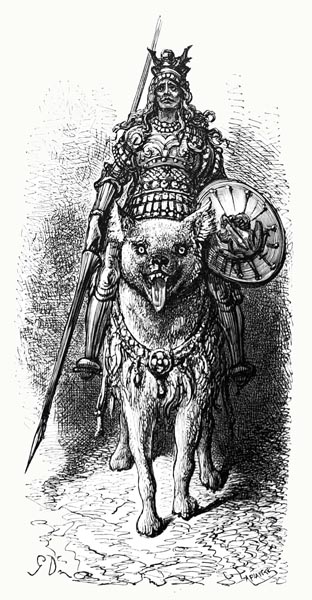
See you next time! Until then enjoy this knight riding a wolf. A whole nickel to anyone who can guess what canto it’s an illustration from.
CANTO SCORE CARD
KNIGHTS: Bradamante, Marifisa, Ruggiero, Marganor (Cruel Tyrant), Cilandro and Tanacro (Marganor’s rapist sons), Olindro
DAMSELS: Ullania, Drusilla,
HORSES: Frontino (Ruggiero’s horse)
MONSTERS: King Marganor and his rapey sons Cilandro and Tanacro
MAGIC ITEMS: Bradamante’s golden lance, Ruggiero’s everything
Orlando Furioso, Canto XXXIII
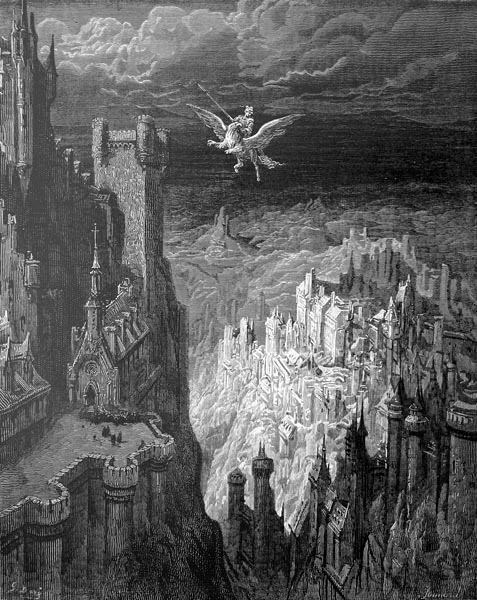
This canto has three bits. The Bradmante bit, the Rinaldo bit, and the Astolfo bit. The first bit’s the most blah, but they get better as they go on.
We pick up where we left off: after dinner in Tristan’s castle when all the guests are strolling around the hall looking at the paintings. These were all painted by Merlin and show events in the history of Italy yet to come. Ariosto uses the moment to give several cantos worth of history lessons. This is actually a neat trick, since the book he’s writing is taking place in the 8th century and he’s writing in the 15th century so he can write history as if it’s prophecy.
Cool.
Except it’s not so cool. It’s a whole lot of Italian names and politics I only recognize because I’m a Renaissance dork and I’ve read Barbara Tuchman. It is a bit nice getting the romantic version of events Tuchman writes about as military mistakes, but overall I skimmed. I won’t even attempt to write down all the names mentioned.
That done, Bradamante sleeps and dreams of Ruggiero. It’s not a bad dream, but she wakes, gets angry, and rides forth where she promptly encounters those Arctic Knights who are eager to win back their honor after losing to Bradamante the day before. She kicks their asses again. Bjork then shames them that they got their asses kicked by a girl. The knights grovel. Bjork reveals her name is Ullania. The knights take vows of poverty. Bradamante rides away. She stops at an inn, and Ariosto leaves her there to go back to Rinaldo.
Rinaldo is dueling Gradasso. They’re away from their respective armies and with Durindana (sword) and Baiardo (horse) as the prizes. Gradasso currently has Durindana and he’s giving Rinaldo a time of it. Rinaldo’s doing his best to dodge the slashes, when suddenly Baiardo starts making a fuss. Both knights turn and see a terrible bird attacking the horse. Rinaldo secretly thinks it’s Malagigi the Wizard playing tricks again, but Gradasso and he quit their duel to save the horse, which has run off into the forest. The two say they’ll fetch the horse and come back to continue their fight, but of course it’s more complicated than that. They get separated. Rinaldo gets lost. Gradasso finds the horse, but instead of going back to the fountain he decides to ride home saying if Rinaldo really wants the stuff he can come get them.
From there it’s on to Astolfo.
Remember him?
He’s the guy who got turned into a bush, got better, found a flying horse, and took off around the world on its back? I think he’s also a Prince of England. Well, he’s still flying around and we get some more travelogue scenery. Look it’s the Pyrenees! He flies in to Africa where he reaches Ethiopia and the Kingdom of Prester John. I’ll assume you know who that is. If not, to Wikipedia with ye.
Astolfo lands and goes to meet the king, but finds him terribly afflicted. Every day when he tries to eat a whole flock of demon harpies attacks his table and shits all over everything. This is his punishment for trying to attack heaven which is accessible from a mountain nearby. Astolfo says he’ll take care of things and at first he tries to do the slashy-slashy but that fails, so he uses his horn and does the blasty-blasty and that works. The demon harpies flee. They fly into caves in the mountainside that go to Hell and Ariosto stops there, promising to continue on with Astolfo in another canto.
Until then!
CANTO SCORE CARD
KNIGHTS: Bradamante, Arctic Kings, Rinaldo, Gradasso, Astolfo, Prester John/Senapo (astute readers will notice Ariosto cribs the story of King Phineas from classic myth for the Prester John section)
DAMSELS: Ullania
HORSES: Baiardo
MAGIC ITEMS: Merlin’s magic paintings, Durindana the sword, Astolfo’s horn of blasting,
MONSTERS: The Harpies
Orlando Furioso, Canto XXXII
This book has broken my brain. At last! You would think it would have happened sooner. But it’s happened.
Earlier this week, I dreamed I was reading Orlando Furioso and Gradasso was doing something. It had a rhyme-scheme and everything. Exciting!
Let’s get to it.
Ariosto doesn’t pick up where he ended last canto with Rinaldo and Gradasso facing off. Instead, he goes back to Bradamante, pining away for Ruggiero back in her castle at Montelbano. Ariosto then turns to King Agramante regrouping his forces in Spain where he’s sent out messengers to once more to marshal his champions to him. Rodomonte ignores him but Marifisa arrives with Brunello the thief. She turns him over to the king who promptly has the thief hanged.
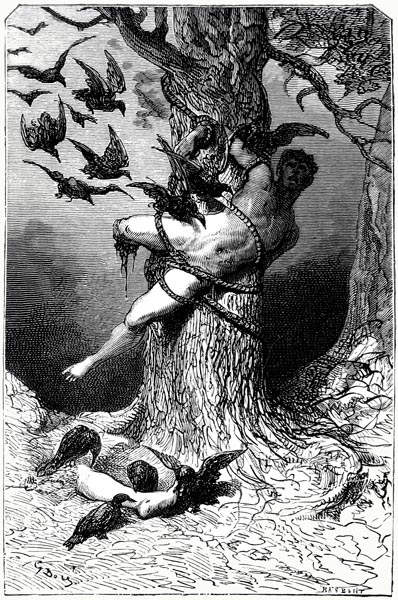
“The hangman left him in a lonely place
As food for vultures, as a meal for crows.”
Back to Bradamante.
There’s lots of gnashing and wailing and overwroughtness. Especially after she hears more about how Marfisa is spending all day tending to the wounded Ruggiero. This really sends her spiraling and she decides to die. And what better way to die than by riding into battle, killing her rival, and having her ex-lover stab her to death or die trying. Talk about big emotions. Resolved now to enter the fray, Bradamante grabs the horse and lance left to her by Astolfo (remember him?) and sets forth.
Soon enough she comes upon a trio of knights escorting a lady along with a host of vassals. Bradamante asks who they are and learns the group comes from north of the Arctic circle and are the kings of the Lost Isles, while the woman is a messenger sent by the queen of the Lost Isle, which also might actually be Iceland. They’ve come to give Charlemagne a magic shield to help him in the war. There’s also a whole thing about the queen not marrying anyone unless they best all others in battle. The usual Red Sonja chivalric nonsense. Bradamante lets them pass on unchallenged and continues on her way, not caring what path her horse chooses. At last it gets dark and she needs to find a place to stay. Some shepherds point her to a castle, but warn her about the rules of the place.
This castle’s owned by Sir Tristan. He has hospitality rules and the back story to justify them. Knights must fight anyone who challenges their right to stay there. Ladies must have no one else there more beautiful than themselves.
Neither thing stops Bradamante and she rides up on the place. The guards say she’ll have to fight the other guests for the right to stay there. She says fine, and out ride the three kings from the Arctic circle. She beats them all because Astolfo’s lance is magical, then goes inside to claim their place. At the feast the lady from the lost isle arrives and the host says, well, Bradamante’s actually prettier than you, so get ready to be thrown out in the rain. Bradamante though says she fought as a knight and not as a lady, therefore the lady has no challenger to take her place. This reasoning is deemed sound and everyone enjoys their dinner.
Afterward, all the guests get up to admire the wall decorations, and that’s where the canto ends.
CANTO SCORE CARD
KNIGHTS: Bradamante, King Agramante, a Gascon knight who tells stories, Marfisa, Sir Tristan, Sir Clodion (part of Tristan’s back story), the Arctic Kings
DAMSELS: The Lady of the Lost Isle (Bjork?)
HORSES: Rabicano (Astolfo’s horse, now Bradamante’s)
MAGIC ITEMS: Bradamante’s lance
DECEASED: Brunello the Thief
Orlando Furioso, Canto XXX

I guess we’re nearing the end of the book. Less than twenty cantos to go. Ariosto’s started to tie up the loose ends and the deaths are starting to show up fast!
We start with Orlando raging around wreaking havoc with a dead horse around his shoulders and the intestines of his victims staining his lips. He’s killing everyone he comes across, one-punching his fists through their skulls, screaming, and all around carrying on in a bad way.
He lays waste to here. He lays waste to there. The devastation done to Malaga is worse than that he did everywhere else. At Algeciras (AKA Gibraltar) he spies a boat full of revelers at sea. He decides he wants to be there and rides his horse straight out to sea. The horse dies. Orlando nearly drowns, but washes up in Ceuta (which is in North Africa but still governed by Spain to this day). There he sees an army and marches towards them.
But enough of that… Ariosto flits over to Angelica and appears to write her out of the story. She’s fine he says, but it would take a hand better than his own to tell the rest of her tale. GRRM should take note. That’s how you do it.
At last Ariosto returns to Mandricard and Doralice. They’re not happy. Mandricard keeps brooding. His pride’s been hurt by Ruggiero and Gradasso. Doralice implores him to get over it. But he won’t. And neither will Ruggiero nor Gradasso. They demand Mandricard turn over Hector’s shield (to Ruggierro) and the sword Durindana (to Gradasso). Neither will concede to the other and at last King Agramante tells them to cast lots to determine who will fight Mandricard. Ruggiero wins. Gradasso sulks. And Mandricard broods. Doralice almost convinces him to give up the fight, but at the very moment he’s about to relent Ruggiero shows up and challenges him.
The whole Saracen army comes to watch. Some see only disaster from this fight between Moor and Tartar. Others are there simply for the thrill of watching the two klonk heads.
And what a klonking it is!
Helmets gleam, trumpets shrills, lances shatter and fly so high in the air their bits get singed by the sun. Melee ensues with the two trying to jab their swords through their opponent’s helmet visor. Mandricard wounds Ruggiero. Ruggiero wounds Mandricard. Mandricard casts aside his shield for a two-handed strike… and Ruggiero, gravely wounded, slips his sword Balisarda through the cuirass and unimpeded the blade reaches Mandricardo’s heart. Ruggiero then collapses from his wounds and for a moment Mandricard stands. Some cheer. Some wail. Then Mandricard falls.
DEAD.
A doctor rushes to treat Ruggiero. Gradasso seethes (that glory now being heaped on Ruggiero should be his!) And Ariosto insinuates that Doralice quit mourning Mandricard the moment Ruggiero won the day. Ariosto leaves Ruggiero under all their care and hies off to where Bradamante pines.
In case you need a refresher, Bradamante is the Christian Lady Knight who is in love with Ruggiero but got separated from him when Ruggiero went back to Paris. She’s been in her family castle pining away for him in vain. Ippalca returns and tells the tale of all that happened to her. Then Ricciardetto arrives and continues the story. When he mentions Marifisa (Muslim Lady Knight) Bradamante gets sadder because obviously Ruggiero has shacked up with her. She’s so sad that when Rinaldo arrives recruiting for his warband to take to Paris, Bradamante stays home and lets the others go on and without her.
And what happens on the way to Paris, the next canto will say.
CANTO SCORE CARD
KNIGHTS: Mandricard, Agramante, Marsilio, Ruggiero, Gradasso, Sobrino, Marsilio, Bradamante, Ricciardetto, Vivian, Rinaldo
DAMSELS: Doralice, the most beautiful maiden in Europe now that Angelica has left for Asia and Isabella is dead, Ippalca
MAGES: Falerina who crafted Ruggiero’s sword Balisarda, Malagigi
SWORDS: Durindana, Balisarda
HORSES: Brigliadoro, Orlando’s horse, then Mandricard’s, currently Ruggiero’s
MAGIC ITEMS: Hector’s Armor
MONSTERS: Orlando, the guy’s too Furioso for his own good!
ANOTHER GUY: Turpin, Ariosto keeps talking about this guy as if he’s an expert on everything that happened to Orlando. He’s a mythical Bishop credited with fighting alongside Orlando and writing the account of all this back in the 8th century, six hundred years before Ariosto.
 Yesterweird