Favorite Reads: September 2017
I’m thinking of renaming this blog “Me & My Garbage Opinions”.
Catchy, no?
Also, thinking of starting a patreon where every month I talk about all the books I didn’t like enough to finish, or simply thought kinda meh. Because there are always some.
But here are some books I thought pretty great! You should check’em out!

The Dream-Quest of Vellitt Boe by Kij Johnson: Vellitt Boe is a professor at a Woman’s College in Ulthar in the Dreamlands of HP Lovecraft fame. One of her students runs off with a man from the waking world (our world) and it falls to Vellitt to find her. Of course, not everyone wants the girl found and various forces set out to keep Vellitt from succeeding in her quest. Okay, I’m a big fan of Lovecraft’s Dreamland stuff and the recent spat of self-aware returns to Lovecraft’s work by contemporary writers. Vellitt Boe’s a great character and as the story progresses and she learns more about the waking world there’s a great sense of why someone from a fantastic world such as hers would become captivated with ours.

The Only Ones by Carola Dibbell: Last month I talked about Anne Charnock’s SF exploration of the future of reproduction technology in Dreams Before the Start of Time and mentioned how it set aside conflict to get deeper into the ramifications of the technology she investigated. Like Charnock’s book Carola Dibbell’s The Only Ones explores the future of reproductive technology, but it’s all about the conflict that technology will produce. In a plague ravaged future Inez might be the answer to the world’s problems, but she has a lot on her plate, not the least of which is making sure her cloned daughter manages to get into a good school or not. I can’t really describe this except by saying it’s Flowers for Algernon meets The Road except the Road guy had it easy compared to Inez.
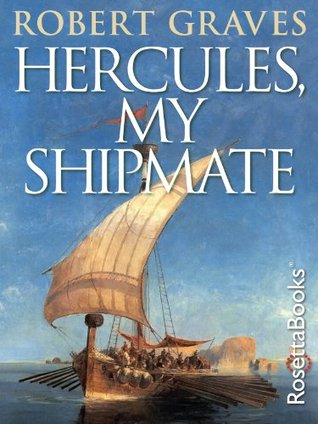
Hercules, My Shipmate by Robert Graves: I think Graves’ The White Goddess stuff is a bit horseshit and what happens when Edwardian Public School educated Brits discover magic mushrooms and want to justify their serial infidelity with 19 year olds. (“Is it really cheating if all women are aspects of the same goddess?) On the other hand, The White Goddess is great world-building for a fantasy novel, and that’s what we have here in Graves’ retelling of the myth of Jason and the Argonauts. While I prefer Mary Renault’s Theseus retelling The King Must Die, this book has its wild and weird moments. I’m also happy that Butes the bee-guy survived.
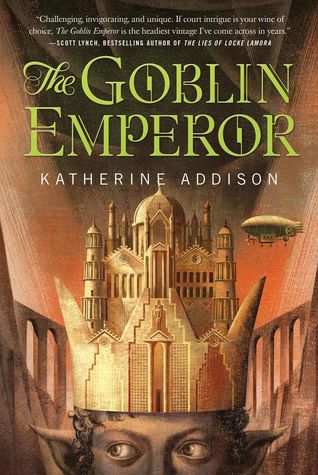
The Goblin Emperor by Katherine Addison: This was fun. More importantly I think it was perfectly pitched. In a world where Goblins and Elves are the same species, a half-goblin son of the elf emperor finds himself appointed emperor when everyone before him in the line of succession gets killed in an airship crash. Thrust out of exile and dropped into the elven court the goblin emperor quickly proves himself if not prepared than capable of learning how to rule in a just and noble fashion. If I have any criticism it’s that our hero is too likable, which isn’t much of a complaint because it’s not that kind of book.

Woe to Live On by Daniel Woodrell: This is a killer book, beautiful, violent, and lean. Set during the American Civil War on the border between Kansas and Missouri, the novel follows Jake, son of German immigrants, as he and his friend Jack join a group of Confederate irregulars (terrorists) as they wreak havoc upon the Union. As the war progresses and the atrocities mount, Jake’s idealism gets stripped away until the realities of what he and his associates are slowly dawns on him. A week after reading this I realized it’s A Clockwork Orange as if written by Mark Twain.
Favorite Reads: August 2017
I read some books and I have things to say about them.

Winged Victory by VM Yeates: If you follow me on Twitter you would have seen me talking about the depressing book I was reading and wondering whether the protagonist would die or drink himself to death. Whelp, that book was this one about World War 1 RAF pilots. It’s good, but it’s bleak. It’s an unrelentingly depressing autobiographical novel loaded heavily with dollops of cynicism and despair that’s by turns horrifying and beautiful. I liked it, but it’s certainly not for everyone and a lot of it is repetitious, but still if you like war novels this is a good one.
Also, biplanes!?! Can you imagine being 15,000 feet in the air in basically a wooden go-cart? That’s nuts!

Dreams Before the Start of Time by Anne Charnock: I LOVED this book and really recommend it. It’s a series of vignettes following two families (and various others) into a future where technology heavily impacts reproduction and our concepts of family. It’s a fascinating read, and Charnock stays to the core of the situation without getting too hung up on logistics. For one, I’m glad there’s no plot regarding religious conservatives objecting to the technology. On the other hand I can see that bugging people, the way the world situation and reactions to the technology get glossed over. The two complaints I had with it are slightly different. First, nearly all the characters are upper middle class, or near to it, and second, they’re all white-Anglo seeming. (It wasn’t too hard to imagine characters being West Indian, but overall the book doesn’t dig too heavily into the politics or economics of the tech it explores.) But yeah, if you like plotless social SF this is worth the read.

Moriah by Daniel Mills: This is some straight-up Hawthorne darkness going on here. Civil War veteran and broken man Silas Flood heads to Moriah Vermont to examine a family of spiritualists. It’s heavy and stark with dark secrets brewing below the surface, but if you like atmospheric horror centered on the human condition and our inability to cope with our own frailty, then track this down.

Hex-Rated by Jason Ridler: Retro-pulp smut that reads like a cartoony Rockford Files mixed with a porno flick that’s trying to ape Hammer Horror. While the 1970s veneer might be only skin deep and Brimstone’s sensibilities clearly our own, it’s fun reading along as he punches his way through Nazis, cultists, and devils. Sure, it might be cartoony, but it’s nice to read something that delights in being so richly itself.

The Strange Case of the Alchemist’s Daughter by Theodora Goss: In a way this is like the Brimstone book in that it’s cartoony, only the cartoon’s a different one. Where Brimstone’s like something from Heavy Metal magazine, The Strange Case of the Alchemist’s Daughter is like Penny Dreadful by way of the 1960s Adam West Batman. Until I got my head around that, this was a bit hard to get into, but once I saw POW! word balloons and lurid 1960s colors on this Victorian romp I was on board. And like with Penny Dreadful, this is a who’s who of Victoriana as various female protagonists, led by Mary Jekyll, attempt to solve a series of crimes linked to her father’s experiments. It’s fun.
Favorite Reads: July 2017
I’m out of the Transfer Towns for better and worse. Better, because after six years dirty ole Pohang has started to feel a bit like home. Worse, because I had a book-reading writing/gaming buddy I could hang out with almost everyday living right up the street. I haven’t had anything like that in years, possibly even decades. It was great!
On to the books…
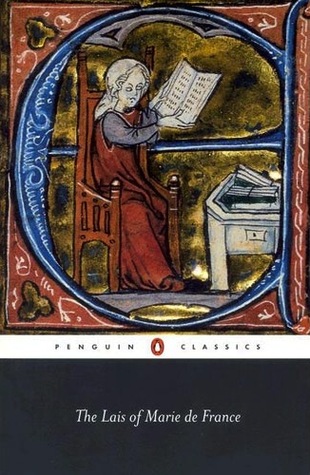
The Lais of Marie de France by Marie de France: Most summers I get this desire to read Arthurian tinged stuff and that led me to reading Jessie Weston and she got me reading Marie de France. Decent editions of both are available at Gutenberg. In France’s lais we’re dipping into the Chivalric tradition centuries before Mallory with stories of knights and their lady loves, magic oaths and spells, even a noble werewolf (BISCLAVRET!!!) Collected together these make for a series of great words and the like a collection of fairy tales you can dip in, read one or two stories, then put the book aside. Although you can certainly read it straight through. One thing that makes France’s handling of the material so enjoyable is how separate it is from the Christian tradition. That tradition is present but it’s not hitting you ever the head like it would by the time Mallory’s recounting the Grail Quest. I might use this for a yesterweird series of posts.

Jhereg by Steven Brust: Suddenly so many of the D&D characters my friends and I rolled up as teens make sense. Wicked Awesome Super Assassin Wizard does wicked awesome super assassin wizard stuff with his wicked awesome super assassin wizard powers and wicked awesome super assassin wizard friends. Yes, I’m mocking this book a bit, but it was a fun romp and I enjoyed its pace and flippant attitude. I know there are a lot more books in the series, but I’m in no real rush to read them. I’d rather save them as treats between other books.

Laura by Vera Caspary: Of all the books I read last month this one had me running around the most and recommending it to friends. Laura is pitched as a Femme Fatale, but really she is a modern professional woman in the world of 1940s advertising, doing her best to be an independent woman. What results because of that is like a Gothic novel set in the hard-boiled worlds of New York cops and savage murderers. Definitely give this a shot if the hard-boiled tradition is at all a thing you enjoy.

A Lady’s Guide to Ruin by Kathleen Kimmel: I haven’t read a lot of romance novels, but I’ve been told that there are two kinds: the first kind has the love-struck characters boning in the first twenty pages, and the second kind where there’s pages and pages of angsty, yearning, and flushed groin business before the boning happens somewhere in the 3rd act. This book is the latter type. It’s about a lovable thief and con-artist masquerading as a noblewoman in order to escape her criminal past. Of course she falls in love with the Earl who believes she is his cousin. To Kimmel’s credit, by the time the boning happened I was more interested in all the plot machinations and wished the groining would finish quick so the character could go back to resolving the plot.

The Broken Sword by Poul Anderson: If you had handed this grim fantasy ballad to the Viking era to 13 year old me, I would have gobbled this up and thought it was the greatest book ever: a dark brooding antihero, a quest to forge a demonic sword, monsters, war, sexy weird elves… the whole book is a witch’s brew of moody heroics that even though I’m less in love with such beverages now I can remember how much I loved the taste of them back then. If you’re a pulp fantasy fan and you’ve never read this, you owe it to yourself to track down a copy.

The Sisters Brothers by Patrick de Witt: The Sisters Brothers, Eli and Charlie, work for as hired killers for the Commodore and the Commodore wants them to kill a gold miner named Hermann Kermit Warm. So begins a picaresque novel as the two set out from Oregon and make their way to the gold fields of California. Along the way they encounter an assortment of odd characters and circumstances, all of it narrated by Eli Sister the more pensive and over-weight of the two brothers. This was a fun if deceptively easy read and with a level of artful construction that I appreciated. If you like atypical westerns this is worth tracking down.
And special mention goes to…

Cyrano de Bergerac by Edmond Rostand: This is a delight of a book, and if you have an afternoon to spend and want to spend it with a wry smile plastered to your face this is the book to do it with. How can you not love a play that gives stage directions such as: “A MUSKETEER, superbly mustached, enters”?
Favorite Reads: June 2017
North Korea claims to have successfully tested an ICBM, and what if I got incinerated without letting people know what I read and liked in June!?!
So here we are – prepare to have at least one calamity rectified.
Sadly, June was kind of shit for reading. Most of what I read made me shrug at best, while some of it actively annoyed. The high-lights on the other hand were few and far between.
Highlight the first:
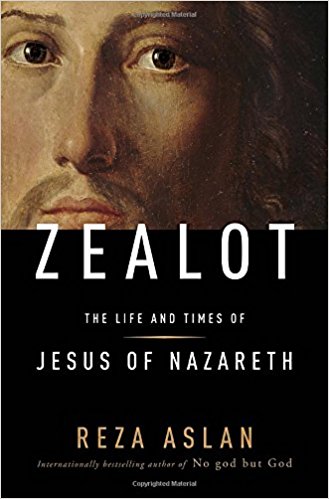
Zealot: The Life and Times of Jesus of Nazareth by Reza Aslan: Yeah, this was as good as the hype claimed. The focus is on 1st century CE Palestine with attention paid to all the various sects and factions at play in the region. If Iron Age politics are your thing, you definitely should check this out. Also, Aslan’s investigation of how Jesus of Nazareth becomes Jesus Christ and the history that not only shapes Jesus’s message but how we approach it (hint: the destruction of Jerusalem in ~70CE is a HUGE deal) makes for fascinating reading.
Highlight the second:
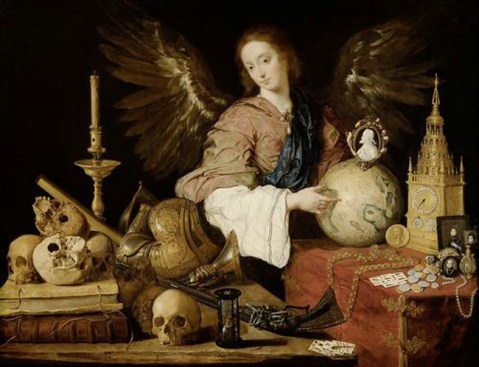
The Blazing World, and Other Writings by Margaret Cavendish: If you at all like science fiction and fantasy and are interested in its roots, you must read this. Cavendish was a 17th century English noblewoman who was a philosopher and an essayist, and The Blazing World reads like her riff on travel narratives mixed with speculative natural philosophy. A princess finds herself transported to another world where the inhabitants make her the queen and she has adventures. It’s loopy. and you might skim some of it, but there’s enough wondrous stuff in it that you’ll occasionally want to slow down and pay attention.
Favorite Reads: May 2017
Last month I was hospitalized. This month I became a university professor. What a crazy few weeks it has been. Here are my favorites out of everything I read.

All Systems Red (The Murder Bot Diaries) by Martha Wells: There’s something to be said for having a light touch – or at least knowing how heavy a touch a book requires. Martha Wells knows just how much and what kind of weight to put on this story of an introspective and rogue security robot doing its best to protect its humans from danger. A bit of the fun is how much the robot comes off as an angsty, emotionally over-wrought teenager (with colossal firepower) who doesn’t care and just wants to be left alone to watch TV.
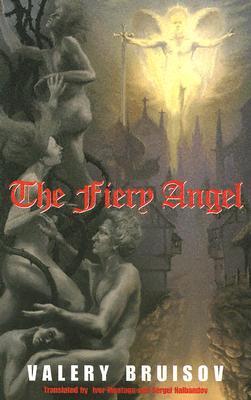
The Fiery Angel by Valery Bryusov: This is an awful cover to a fun novel. Early 20th century Russian Symbolist poet transforms his f’d up love life into a Gothic novel about witchcraft set in 16th century Germany. If you don’t think I’d be all over something like that, umm… welcome to my blog, and that’s the kind of thing I’d be all over like maple syrup on pancakes. I don’t really care that this might not work well as a novel and the protagonist more or less floats from incident to incident; I was on board from the start. If you like the yesterweird, you should definitely check this out. Bryusov wrote some SF that I’ll now be on the look-out for.

Mars Girls by Mary Turzillo: This is a YA adventure novel set on Mars, and I’ll be reviewing it next week as part of the Mars Girls blog tour. I’ll tell you up front though, it’s good. If you want some fun non-dystopian science fiction, check this out.

Polaris by Ben Lehman: OK. Technically this is a role-playing game, but its premise (tragic Arthurian/Dunsanyian apocalypse) is just so rich that I think of it as a novel. The whole ritualization of the game experience and the poetic sensibility the players are expected to bring to the table make this feel to my mind like what I imagine role-playing would be. Not that anyone in my current gaming group would want to run or play it, but yeah… Actually this reminds me of two things: 1) a highly stylized tabletop version of HG Wells’s Floor Games that a psychiatrist might use to get a sullen teen (or murderbot) to work out their issues, 2) the actual tabletop scenes in Mazes & Monsters.
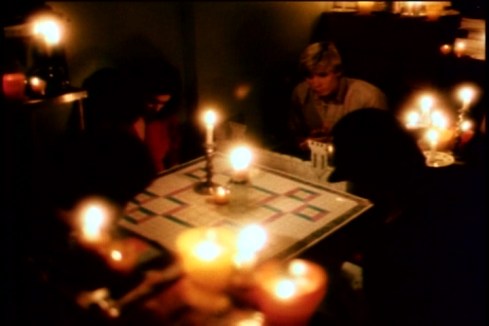
But all that happened long ago, and there are none here who remember it.

The Wreckage of Agathon by John Gardner: There’s a whole subgenre of lit books about suburban college profs swapping wives and having affairs while they drink themselves to death. Well, The Wreckage of Agathon is that kind of book except set in BCE Sparta during a Helot rebellion. It’s a fun, if at times aggravating trip as it meanders all over the place. Between this and The Fiery Angel I’m starting to think I might have a thing for autobiography dressed up as a historical novel.
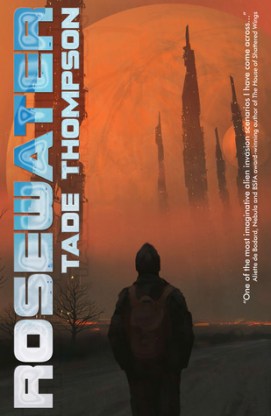
Rosewater by Tade Thomson: I thought this book was a mess, but such an enjoyable and fascinating one that I’m going to blather on about it. In a lot of ways Rosewater is exactly the kind of genre book I want from a small press publisher: a strange mess full of ideas.
The setting is 23rd century Nigeria after the Earth has been visited by extraterrestrial spores that have begun reshaping our habitat to better suit themselves. Kaaro is a former thief turned government agent. He’s also one of the few people made “sensitive” by the alien spores and gifted with a sort of telepathy. While most people see the alien spores as a blessing , Kaaro is less enthusiastic, but when something or someone starts killing off other sensitives Kaaro finds himself getting involved.
On one hand there’s a very cool cyberpunk novel in here as we follow Kaaro’s journey from thief to agent and onward, one made more interesting by the theme of colonization that pushes its way forward in moments. But it’s never didactic and beating you over the head with polemic. It still pitches floating cannibal mutants, weird sex, and weirder fungi at you. Where the problem comes in, in my opinion, is that it’s not simply that there’s too much here, but the order feels off and whenever I felt like I understood the setting and what things were about, Thompson piled on another idea that made everything wobble and tumble down. Not only that, but there were times things felt redundant – like we’d read for pages Kaaro’s journey into the fungi xenosphere, which is kind of like a trippy internet, only to have him come out and log into his 23rd century internet – and I’ll say it, we’re so post-Gibson and Stephenson at this point that describing how people use your super-cool super-futuristic internet is basically eating regurgitated pizza slices from 1997.
So on the other hand, I wish some better editing had happened and reins were tightened just to hone the story down to the essential bits, because those bits are good, very, very good. Anyway, if you’re in the market for some bewildering, but enjoyable near-future weirdness give this a look.
Favorite Reads: April 2017
I read a ton this month mainly because I was sick and spent nearly a week lying in bed.
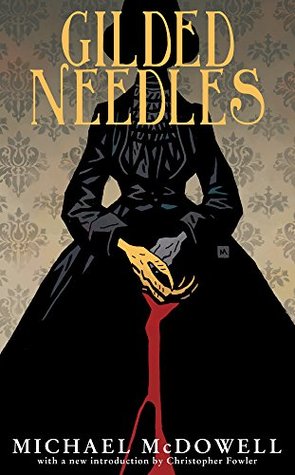
Gilded Needles by Michael McDowell: I sang the praises of Katie when I finished that, and now I sing to you the praises of Gilded Needles. Set in 1880s New York City Gilded Needles is about a pair of families, the criminal and matriarchal Shanks clan that operates out of New York’s infamous Black Triangle, and the wealthy and upright Stallworths, and the feud that develops between them when Judge Stallworth decides to get tough on crime. The fun comes from how much our sensibilities have changed from the Victorian that we can enjoy rooting for the Shanks family as their matriarch goes about her ruthless quest for revenge against the upright (bigoted) Stallworths. Track this down and read it! It’s so much more fun than it has any right to be!

Infomocracy by Malka Older: A near future science fiction political thriller about twenty-first century elections. This book was neat. It presents a world of micro-democracies and the political operatives moving between them. There’s an overarching tech company that’s a bit like Google that controls it all, but the down on the ground stuff comes alive that you can easily imagine what life in this world is like. Definitely neat and interesting to see someone positing a political landscape beyond our own.
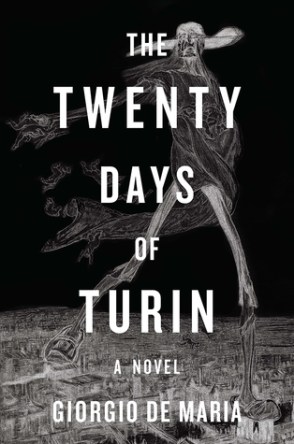
The Twenty Days of Turin by Giorgio De Maria: A 1970s “cult” novel from Italy. It’s a quick read, but an unsettling so one. A nameless businessman is obsessed with the “Library” an institution in Turin where people could leave their diaries and journals and access those of others including complete strangers. As more and more of the Library gets flooded by hateful screeds against the defenseless, a plague of insomnia affects the population, until finally a series of brutal murders occurs. This leads to a cover-up and the closing of the Library. Twenty years later, our nameless narrator starts investigating what happened and why. Some see the library as a precursor of the Internet and the book as a commentary on the rise of Fascism in Europe since the 1960s. Whether the book is or isn’t, it’s definitely worth the read.

The Thirty Years War by C.V. Wedgwood: What a miserable episode in human history this was. From the opening salvo in Bohemia and the assorted defenestrations to the closing years of the Hapsburgs fighting the Bourbons, it’s a horrible three decades of war, misery, and misguided principals. The best of a generation threw themselves into the war and a later generation came out of it cynical and less dogmatic. In snatches you get glimpses of rulers more afraid of their own armies than their enemies, the plight of towns and cities after years of deprivations, the infuriating machinations of nobles who can meet to negotiate a peace treaty only to spend six months discussing who gets to enter the room first. This isn’t an easy read, but worth it.

The Princess and the Goblins / The Princess and Curdie by George Macdonald: Princess Irene lives in the mountains where Curdie is a miner. The pair of them discover the goblins are plotting mischief and set about trying to stop it. Later Curdie leaves the mountains to help Princess Irene when her father’s threatened by devious courtiers. These two books were delightful. Yes, there’s some Christian parable getting laid on pretty thick in The Princess and Curdie, but it’s less annoying than in the Narnia books. If you enjoy Tolkien’s The Hobbit and want more of the same definitely track these down. They’re quite fun.

Ombria in Shadow by Patricia McKillip: I’m late to the McKillip party I know, but this was the perfect follow-up to the Macdonald books. Both exhibit the level of world-building I enjoy that’s more linked poetic associations than actual nuts and bolts details about when the giants ruled and magic systems. Ombria’s an ancient city ruled by the Greve family. When the Prince dies, the evil Domina is set-up as regent over the new young prince much to the dismay of the dead prince’s bastard brother and his former mistress. The pair set about doing their best to undermine Domina Pearl and rescuing the young prince from her influence. This is kind of Gormenghast-lite, which I wish there was a lot more of in the world.
Favorite Reads: March 2017
Here are the March books I loved.

The Stars Are Legion by Kameron Hurley: A space opera set on a Dyson sphere made up of organic planets, also a quest story and a love story, and gross and grotty as hell. There’s a lot of weirdness and a lot of political machinations and a lot of things that bleed goo the characters eat. But even with its modern SF tweaks, it’s still classic in its leanness, resembling the works of Brian Aldiss or Alfred Bester. So good.

The Scarlet Pimpernel by Baroness Orczy: I have a weakness for over the top novels set in any one of France’s revolutionary periods and the Scarlet Pimpernel delivers on that and sweetly – despite being absurdly purple in its prose, snobbish, and xenophobic as all hell. What I liked most of all is that the Pimpernel is not the hero, but the macguffin. He’s what everyone’s after. Fun stuff. Also you don’t have to dig too deeply under the surface to find a fairly decent BDSM kink novel.

Joe Gould’s Secret by Joseph Mitchell: This is a nonfiction classic. A pair of long portraits of an eccentric Greenwich Village crank that originally ran in the New Yorker and are ripe with sadness, humor, and insight. Goul’s described as “like finding the right man while walking down the wrong street” and you get that along with all the foibles and hang-ups. In the end this turns into a portrait of wasted potential, but even there Mitchell finds something courageous in Gould. If you’ve never read Mitchell, this is a good place to start.

The Immense Journey by Loren Eiseley: A collection of essays by 1950s rhapsodic naturalist Loren Eiseley, some I’d read before, and some I hadn’t. Eiseley stands out both on account of his style and for his awe-tinged view that takes in both the horror and the wonder of the natural world.

Foreign Gods, Inc. by Okey Ndibe: A taxi-driving Nigerian immigrant in New York City hatches a scheme to return to his home village and steal the idol worshipped there by his uncle in order to get rich and out of debt. Unfortunately, things get complicated very fast. I could see some folks bouncing off this book, because you do feel for the main character Isaac even when you know he’s doing awful things, and that bystander to tragedy aspect might turn off readers. But I dug it, and this book was neat for walking the line between mimetic fiction and genre fiction, hopping about from immigrant narrative, horror story, and noir with skill.
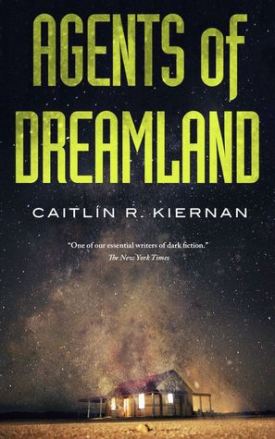
Agents of Dreamland by Caitlin R. Kiernan: Weird secret government agents versus monstrosities-from-beyond-the-stars-hoping-to-put-our-brains-in-mason-jars type fiction, the narrative flips between the agents and the cultists they’re investigating. It felt a bit like the opening novella to a longer piece, but there was enough here to feel like a solid concise stand-alone unit. If there are more I’m definitely sticking along for the ride.
Favorite Reads: February 2017
A simple month…
 The Fury of Black Jaguar by Angel Luis Colon: Blacky Jaguar is an ex-IRA thug recently returned to New York City and this pulpy short novel details the havoc he unleashes when some criminals think it’d be an easy score to steal his car. What follows is a splatter-saturated ultra-violent comic strip in prose form.
 The New Weird, assorted Ann and Jeff VanderMeer editors: I’m skipping the essays here, or maybe saving them for a later time, and focusing instead on the fiction. A lot of these authors are among my favorites writing today, but I kind of feel like the New Weird never fully materialized, getting swamped under the twin rising tides of Steampunk and GRRM knockoffs instead. This isn’t necessarily a bad thing, the weird/new weird should be sort of indefinable and hard to pin down. And it might never be something to pin a whole genre to and more a strain within a genre. Whatever it is, this is a great collection and a fun one. Track it down.
And a last, sad note…
I think the days of the expat bookstore have come and gone. I’ve rambled about these stores before. Fewer teachers, shifting demographics, and ebooks have all done their part, but their days are numbered and I’m sad to see these stores fade away. They were one of the few places I could go and roam and have that thrill of finding some odd/fascinating/sought after book while in South Korea. (It’s not like I can go to the library.) A lot of them also served as a community hub, holding classes or having a movie night. While I doubt What the Book in Seoul will disappear anytime soon, the fact that larger cities like Busan or Daegu can’t support such a store anymore makes me pause and bow my head in memoriam.
Favorite Reads: January Books 2017

The Occult Philosophy in the Elizabethan Age by Frances A. Yates: Fascinating bits, even if I suspect a lot of Yates’s scholarship might now be outdated, especially where concerned with the Rosicrucians. But otherwise the book shines in so many other ways: the popularization and influence of kabbalah and alchemy on Catholic reformers and Shakespeare, the Arthurian cult and how that got applied to Queen Elizabeth (makes me want to read Spencer’s The Fairy Queen), and the weird history of early Protestantism makes this worth tracking down.

The Hospital Ship by Martin Bax: The crew of the hospital ship travels from port to port tending to victims of unknown civil disturbances. No one knows what’s happening, because the radio operator is slightly mad. And then the ship enters the Mediterranean and finds nothing but crucified bodies waiting for them on the piers. A 70s brit-lit novel curiosity, a bit apocalyptic new wave SF and a bit Graham Greene – all shuffled together with pages from a medical textbook. I liked it but it’s not a book I can really recommend, unless any of the above sounds neat. Where I think it ends is in showing two ways humanity can go forward: a mechanistic way and a compassionate way.
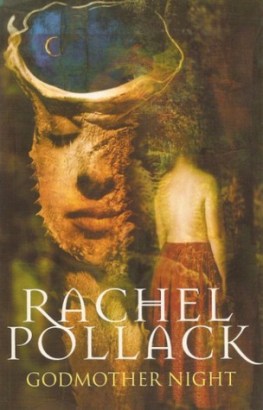
Godmother Night by Rachel Pollack: Imagine Neil Gaiman’s American Gods except as a lesbian love story that riffs more on fairy tales than mythology. This was the first fiction book in a while I had to set aside for a week because the events in the plot started to get too intense. Pollack’s three for three with everything I’ve read by her being really, really good. I downloaded her latest and hope to read it in the next few months.
Look at that cover though! It’s so much a Sandman cover you can almost pinpoint the month in the 1990s when the book hit. Not to say Pollack’s ripping off Gaiman, I just think both came to the same place independently of each other.
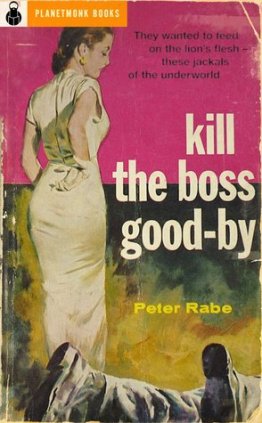
Kill the Boss Good-by by Peter Rabe: Syndicate boss Tom Fell cracked up and went to a sanitarium leaving his lieutenant Pander in charge. Now Fell’s back and wants to get back in charge, but Pander has other ideas. A simple straightforward crime novel, but an enjoyable ride all the same. Rabe was one of the steady producers of Gold Medal novels, the same paperback original line that published Jim Thompson and David Goodis and others. Rabe also was a psychiatrist by trade and this makes the bits when Fell’s having a manic episode read as observed details. There’s a Black Lizard reprint that might be possible to find or the Starkhouse reprint I read.
Favorite Reads: December 2016
Ever notice how you never see what people read in the month of December because they’re always posting Year’s Best lists and stuff like that? Yeah, me too. So there will be none of that here. Instead you just have the same old end of the month review. Enjoy!

The Dark Domain by Stefan Grabinski: Read this! If you at all like dark, weird, and old fiction it’s well worth your while to track this down. Grabinski’s sort of considered Poland’s Poe, and his work certainly has the old horror vibe, but he wrote in the earlier part of the 20th century and Grabinski’s obsession are all his own. Demon-haunted trains, dueling your own doppelganger, coal smoke elementals, undead gravediggers, sex with ghosts – if any of that sounds cool, read this book. You’ll not be disappointed.
The Quiet Woman by Christopher Priest: I blathered about this book two posts ago.
The Fortress at the End of Time: I’ll likely blather more about this book later this week. I liked it quite a bit. It’s military SF, as long as you realize for a lot of people being in the military means being extremely bored extremely far from home.

Scatter, Adapt, and Remember: How Humans Will Survive a Mass Extinction by Annalee Newitz: A fun, fascinating book about mass extinction that makes you feel hopeful that humanity might manage to adapt to most apocalyptic scenarios and manage to bounce back against a hostile universe. Newitz’s approach is to look across species boundaries to see what strategies have worked for animals along with looking at those used by human populations to survive. To this she also adds the “remember” part and tries to capture ways fiction, and in particular, science-fiction can point a way forward. A neat book.

Drinking Sapphire Wine by Tanith Lee: I did not read this version. I wish I had, because who doesn’t love 70s cleavage… I mean, the e-book was full of horrible typos. Anyway this is the second book in a series I haven’t read any other book in and despite that I quite liked it. It’s SF of the gender-swapping far future society that’s all David Bowie//Studio 54 scenesters all the time variety and it embraces that notion absolutely and completely, but the real story happens when the narrator gets exiled from that society and takes up gardening outside in the desert. Somethings you could only get away with in the days of cheap paperback novels. But I really should read more Tanith Lee, because this was fun.
And that’s all.
This year I was toying with the idea of writing about the books I don’t finish and talking about those, but really I haven’t found anything in a book I didn’t like that wasn’t covered in this post here.
I guess one reason I’d add to the list of why I might stop reading a book is a personal one regarding subject matter: I find losers and dirt-bags of most varieties far more interesting to read about than good students no matter how corrupt the system those students struggle against. It’s a shame, but that’s the truth. And it’s also number one on that list.
 Yesterweird