BWBC 20: Certain Distant Suns

Greetings friends!
This story is great. That’s it. You can go on about your business now. I don’t know if it’s my favorite in the collection*, but it’s certainly a standout.
Joanne Greenberg might be most famous for I Never Promised You a Rose Garden a semi-autobiographical novel about teenage schizophrenia she wrote in the early 1960s under the pen name Hannah Green. I’ve read it. It’s good. I mention it briefly here in this post where I misspell the author’s name. This story is completely different from that novel. It’s also very funny and reads like a Kelly Link story.
“Certain Distant Suns” by Joanne Greenberg
“Certain Distant Suns” is set in 1970s USA among the Jewish American community around New York City. It’s told from the POV of a nineteen year-old girl and the chaos that results when her Aunt Bessie declares that she no longer believes in God. For the first two-thirds of the story nothing fantastical happens. The family first has to deal with Bessie’s apostasy, then with her increasingly more eccentric decisions. She stops believing in Capitalism, germs, and electricity. And with every decision the family panics and wonders how Bessie can possibly survive. But she does, and she becomes an inspiration to the narrator, who notices how much happier Bessie is now that she’s given up all these things.
But this is a fantasy collection, and we’re in a stretch of stories dealing with faith and belief. A cosmic backlash brews against Aunt Bessie. And when it arrives it’s not just a single thing, but two-pronged. I don’t want to give too much away, because you should read this story. I will say that it involves a magic TV among other things.
Greenberg’s style is wry and observant, and it’s fun to see her mix the cosmic scale with the intimately personal. I’m not sure when I’ll again have the chance to read her work, but to stumble at random onto a story like this is exactly what I wanted out of this collection.
* At the end of this project I’ll likely do a Top 20 favorite stories list. And this story will definitely be there.
BWBC 18: Hearn Manuel

A thousand apologies!
I missed posting last week and I have no excuse. In fact, I’m a bit ahead with the reading, so much so that this week might have two posts. We’ll see how ambitious I get. But today’s post will be on the stories “Of a Promise Kept” by Lafcadio Hearn and “The Wizard Postponed” by Juan Manuel.
They aren’t dazzlers and are on the shorter end of stories, but they’re all right. I’m getting the feel for Manguel’s rhythm and how he’s putting together this mix-tape of an anthology. Some stories are long hefty numbers, while others are short little ditties.
And these two stories are definitely ditties.
“Of a Promise Kept” by Lafcadio Hearn
I’m a big Hearn fan. That might not be cool to admit, and I recognize that much of his fame is wrapped thick in Orientalism and Exoticism, but that doesn’t change the fact that I am a fan. Maybe it’s the journalistic angle he brings to his work. Maybe it’s some melodramatic kindred spirit bull-spit. Whatever reason it is (it’s probably the latter), I am always excited to read his work.
“Of a Promise Kept” is typical Japanese-era Hearn. There are two samurai. They are “foster brothers” and love each other very much. One needs to go far away, but promises his friend that he’ll be back on such-and-such a holiday. The holiday approaches, and the friend preps a big feast. Everyone tells him he’s crazy, because no one can guarantee when the other samurai will arrive, but the friend won’t hear it, and commands the feast be prepared. Of course, the day arrives and the feast is set out and hour after house goes by and the samurai doesn’t show. Despite this, the friend refuses to accept defeat, and stays up well into the night after everyone else goes to sleep. At which point the samurai arrives and sits with his friend, and tells a story about why he was so late. Turns out his family disapproved of his behavior and tried to keep him a prisoner in their house. But the samurai knew a way to travel a thousand miles in one day, using that one weird trick known as suicide. So that’s what he did, and he’s dead now, but he kept his promise.
All this makes the friend, the “foster brother”, get pretty angry with his dead friend’s family, so he travels to them and kills them, but he gets away and no one’s angry with him because he only did what was right. The End.
It’s not bad, but there’s better Hearn to be had – or maybe more Hearn. He might be the sort of writer that improves with quantity consumed in a single sitting.
“The Wizard Postponed” by Juan Manuel
Don Juan Manuel was a 15th century Spanish nobleman with a reputation for political maneuvering. He was also a writer and wrote some Aesop style fables in among all his other treatises. “The Wizard Postponed” is one such fable, and it’s not bad.
A certain learned dean travels to Toledo to learn magic from one don Illan. When he tells don Illan his desire, the don tells his maid to prepare dinner while the men go apart into an enclosed room. While they are in the room a messenger arrives for the dean saying his uncle is dead and won’t he come to the funeral. The dean says no and stays with don Illan, agreeing to help the don’s son find a position once the magical education is done. Days later another messenger arrives telling the dean he’s inherited a powerful position from his dead uncle. The dean leaves to take the position and don Illan accompanies him. From that position the dean inherits another and another, and with every success, don Illan asks for some position for his son. But each time the dean refuses the request saying he must appoint some other person instead. This goes on all the way until the dean becomes pope and still refuses to give don Illan’s son a position, at which point the maid arrives to tell the men that dinner is ready.
It turns out everything was an illusion made by don Illan to show how the dean would never repay the don for teaching him magic. The dean’s shown the door and don Illan goes to eat dinner by himself. The End.
It’s entirely possible that Jorge Borges made this story up.
Next: a monkey’s paw and a bottle imp!
Thousand Year Old Vampire: Thoughts and Impressions

I’ve done a couple of play-throughs now of the game Thousand Year Old Vampire and thought I’d put my impressions down here.
This isn’t quite a review, just thoughts and reactions, and I’m dividing it into two posts, this one with my impressions, and another post with the write-ups of the stories the game created. That one screams of “Let me tell you all about my D&D character” and no one who doesn’t want that needs to experience that.
A tl;dr review would Thousand Year Old Vampire is good. Is it a game or is it an activity? I don’t know and I don’t care. I liked it and thought it a great way to simultaneously create and enjoy a story.
For folks who don’t know Thousand Year Old Vampire is a beautiful little game-book by Tim Hutchings of numbered entries that each contain a writing prompt that allows you to live the many centuries long life of a vampire. The way the game works is you create a character with a limited number of traits, connections, and memories. Then you become immortal and you roll dice to discover what happens to you. Events unfold mimicking the passing years and decades, each roll causing you to gain and lose memories until you’re making desperate choices about what to forget and what to remember. Soon the game becomes about whether it’s possible to retain any aspect of your original humanity as you slowly succumb to your vampirism and the toll of years.
It can be sad. It can be enlightening. It can be comical. Whatever it is, it’s certainly emotional.
And it’s random, so the story that emerges is at best messy and at worst incoherent.
You don’t get to choose what happens to you. What might seem like a cool foundation for a grand narrative early-on becomes a dead-end that never gets developed. This was the case in my first play-through, and while the experience was still fun, it didn’t feel coherent like a good book or movie would. What I did feel was like I was creating a living breathing character with a rich history, and certainly someone who could be useful in another situation. For example, Waldemar the Wolf has the makings of at least three different RPG villains depending on what stage of his incarnation you took him: the bandit wolf, the mercenary captain, or the sinister opera fanatic.
One thing I loved about it was that it’s backwards story telling: you tumble forward at random, but can craft a narrative by looking back and seeing the connection points. Do you nudge it and shape it? Yes, probably. Or I should say, it’s fine to give in to the temptation to nudge, because the game invites that just as much as it invites not doing that by churning up a series of unrelated random events.
Overall, each game took about 90 minutes or so, and at the end I felt like I had watched a pretty good horror movie either in its own right, or because it suggested other stories. When I played I went back and forth between two word documents: my vampire’s character sheet and the journal of their life while consulting wikipedia to create the concrete details.
Is it sort of like homework?
Kinda.
But so is Sherlock Holmes Consulting Detective and I love that game. If you like vampires and story-telling, this game is well-worth checking out. While I did get the book via the kickstarter, there’s a PDF available at DrivethruRPG.
And here’s another link to the second part where I tell you all about my vampires Waldemar and Antonio.
You have been warned!
Thousand Year Old Vampire: A Tale of Two Vampires
Read this post for my overall thoughts on Thousand Year Old Vampire.
Continue reading here to learn all about the much checkered careers of Waldemar the Wolf and Antonio the Alchemist.
When I played I used two word documents. One was a character sheet. The other was a timeline where I recorded the events of their lives. I also had a few wikipedia pages open dealing with whatever epoch and area my vampires found themselves. For most of it I stuck to Italy starting in the Roman era and going forward as far as the game allowed. Waldemar died wretched and inhuman sometime in the 17th century, while Antonio made it all the way into the early half of the 20th century before he died a hero fighting against Mussolini’s Blackshirts. Read on to learn the particulars…
Waldemar the Wolf

Waldemar started life as a Visigoth slave in the latter days of the Roman Empire. He had a gift for canines and a charming smile. He was also having an affair with his master’s concubine. All that ended when he gets attacked by a vampire (a decadent Roman senator) and changes. His first victim proves to be his lover, only she’s transformed into a vampire, and the two end up at odds with each other. She betrays him to the authorities and Waldemar flees into the Alps where he spends so much time among the wolves that he starts to resemble them. His vampire marks take the form of sharp teeth and a whispering voice. Eventually an avalanche buries his lair and he spends centuries entombed in a cave.
It’s not until the Middle Ages that Waldemar emerges to join the mercenary free companies. Over time he attracts many followers and gains a reputation for ruthless brutality. The whole while he’s pillaging and amassing a vast fortune that he hides in the countryside near Venice. But in time, the other mercenary captains grow jealous of him and denounce him as a satanic monster. This sends him packing for Germany where he returns to more wolfish banditry, preying upon the unwary.
It’s in Germany that he gains a new mark: gnarled claws for hands. And it’s also there that he falls in love with classical music and opera.
At some point in the 16th century he remembers his hidden fortune and returns to Italy. There in a Venetian villa he starts to take a keen interest in the theater. Meanwhile, his hands become more painful, and he hires a shady doctor to inject narcotized blood into his knuckles. He’s also keeping an old crone around to look after him, because she reminds him of his mother.
He tries to write an opera and it fails catastrophically. He takes to brooding in his villa.
It is there one day that he first espies the doctor’s daughter. And so would begin a new obsession, but the doctor realizes what’s happening and kills Waldemar by injecting him with toxic blood.
So long, Waldemar.
Antonio the Alchemist

I pretty much stuck with the Rome theme and had Antonio be another young man made into a vampire by a decadent Roman senator (the same one that would go on to bite Waldemar a century or two later).
Antonio’s an urban youth, caught between his petty criminal brother, an early Christian street preacher, and a noblewoman lover. The one with the strongest pull over him is the preacher, who will unfortunately become Antonio’s first victim when he’s turned into a vampire. Antonio will take the preacher’s place and establish himself as a messianic figure in the early church. His brother and lover will join him and the three will use the cult to benefit themselves. However, when the Emperor passes some anti-Christian laws, Antonio’s cult collapses leaving only the most fanatical behind. These he preys upon until a betrayal by his brother sees Antonio entombed alive.
There he waits out the centuries, until a priest unseals his tomb and returns him to life. Antonio bends the priest to his will and takes up once more feeding upon a Christian congregation. He might have gone on this way, if not for the arrival of a powerful wizard known simply as the Woman From Across the Sea. She takes Antonio with her on a mystic quest where their fates become bound. In the end, she claims a favor from him.
The experience somewhat unhinges Antonio’s mind and he heavily rewrites his journal to hide his more atrocious crimes. Yet, guilt plagues him and he becomes obsessed with the question of salvation. This makes him take actual religious vows.
In the Church, he gains a reputation as an alchemist and scholar, but he no longer remembers his brother, his lover, or even how he became a vampire.
At this point the Woman From Across the Sea returns claiming her favor: a vial of Antonio’s blood. She uses it to create an elixir that satisfies his blood cravings.
Meanwhile, Antonio’s skills as an alchemist have earned him many patrons and he has no problem taking money trying to transform lead into gold. This makes him wealthy and disliked. But his enemies are no match for his quick-wits.
Alchemy gives way to astrology which gives way to astronomy. Antonio becomes obsessed with the stars and starts experimenting with telescopes. He wants to see the sun again. This leads him to study solar eclipses. Despite it being the 16th century, he starts constructing a device with which he might view the sun’s corona during an eclipse. This gets him in trouble with the church and denounced as a heretic. But it doesn’t stop him from making the attempt. This ends in failure, and leaves him almost blind. But his reputation as an expert on optics remains. His next attempt succeeds, and he manages to capture an image of the sun’s corona.
And for a generation Antonio’s the darling of the scientific world. It’s only later when a new generation unearths his alchemical poetry that his reputation falters, and he gets viewed out as a quack.
This sends Antonio into seclusion, where the Woman From Across the Sea finds him again. They speak of many thing, the nature of transformation being the most prominent. Something in Antonio once more stirs.
It’s around here that Antonio takes up poetry, using it to veil his esoteric ideas.
By now it’s the 19th century, and Antonio’s poetry has come into favor with a new generation. He once more has disciples and devotees. But he’s a little bit more wary, knowing how fickle fashion can be. He establishes a school for metaphysical research, and it’s there that the Woman From Across the Sea finds him one last time. Together they manage to conceive a child.
Before long, it’s the 1920s, and Antonio’s Metaphysical Institute is viewed as subversive by the Fascist government. The Blackshirts arrive in the dead of night ready to do their worst, but Antonio is there ready for them. He fights them singlehandedly allowing his disciples enough time to escape. He dies, burned to death by the Fascists, but future generations remember him as a hero.
The End.
Each story was a wild ride, full of unpredictable twists and turns. Waldemar met three other vampires early in his life, but never interacted with them again. Antonio had a weird relationship with the immortal Woman From Across the Sea. That came about quite nicely, and whenever the story prompted me for an immortal character I had her appear again.
Here’s the link again to my other post on my impressions of the overall game.
BW BC 13: And Now the Strangeness Starts

Hello, welcome back, I’m glad you could make it.
Three more stories this week: one a flash-length excerpt from a longer story, the other two your standard slightly shorter than average short stories. Isak Dinesen/Karen Blixen gives us our flash length story, an excerpt from ”Peter and Rosa”. After that is a bit of decadent literature from Junichiro Tanizaki called “Tattoo”, and a humorous story from Flann O’Brien called “John Duffy’s Brother”.
From “Peter and Rosa” by Isak Dinesen
Did you know that when Isak Dinesen sent the manuscript for her collector “Winter’s Tales” to her publisher it was right at the start of World War 2, and she had no way of knowing if it was received or published until after the war when former soldiers wrote to tell her how much they loved her book? While that story is wild on multiple accounts, I like to imagine what kind of guys these soldiers were who read Dinesen during the war.
An old friend of mine described Dinesen as a writer who readers always feel like they alone have discovered, and I think there’s something to that. When one of her stories clicks, that feeling of some truth being revealed to you and you alone is overwhelming. You might have to read a few of her stories for that to happen, but when it does… mmm, chef’s kiss.
Sadly, the excerpt Manguel includes here from “Peter and Rosa” is not enough to generate that feeling. If anything it gives only the barest hint with its short tale of a ship captain, his ship, and his wife’s jealousy that has all the qualities one recognizes from fairy tales.
All I can say is find yourself a Dinesen collection. She’s well worth the read.
“Tattoo” by Junichiro Tanizaki
I have to imagine that when Edgar Allan Poe’s work was translated into Japanese, they arrived alongside Oscar Wilde’s and Charles Baudelaire’s, making like this stew of decadent weirdness that the edgelordier sections of early 20th century Japanese writers must have loved. This story is direct from that main vein about one Seikichi, a sadistic tattoo artist, being gifted with a teenage girl to decorate as he pleases in the days before she is to start her training as an elite courtesan.
The ick-factor is strong here.
Seikichi starts the session by showing the girl his collection of erotic torture etchings. This terrify-titillates her, leading to an all-night tattoo session that leaves both exhausted. In the morning the artist knows he has reached his peak, but is more alarmed at the change in the girl. She has been transformed from the shy girl into a cruel woman. And as the sun rises, its light appears to set fire to the new tattoo.
And what is the tattoo of? A spider.
That’s it. The end. No moral. No comeuppance. No attack by the suddenly living spider, just a whole heap of decadence with a few extremely vivid images. Which is in no way a bad thing, but maybe not everyone’s cup of tea.
“John Duffy’s Brother” by Flann O’Brien
This is a story about a man who wakes up one day and thinks he is a train. He goes to work and does his job, and says things like he’s a train, then he goes home to lunch and realizes that he is in fact not a train. He’s then mortified by his morning’s behavior, but no one there ever mentions it. In fact they hardly noticed. Beyond a newfound particular-ness with sticking to a timetable, the man hadn’t really changed all that much. But still, those hours when John Duffy’s brother thought himself train would go on to haunt him for the rest of his life.
Initially, this story didn’t make much of an impression, but now a few days later I see it’s quite funny. Like what if Gregor Samsa did wake up one morning as a giant cockroach but nobody cared or noticed? That would be funny.
Next week… more transformations! Or, at least one transformation because it looks like a long story.
Until then, stay safe!
BW BC 12: Days of Future Present

And we’re back with three short stories this week. The first one was my favorite of the bunch.
“Split Second” Daphne Du Maurier
Mrs. Ellis is a fussy widow. She likes everything to be in its proper place and stresses a lot about her adolescent daughter who’s away at school. While taking a post-lunch stroll, a delivery van narrowly misses Mrs. Ellis, and things turn strange after that. As she attempts to make sense of the new world she finds herself in, we, the readers, get a deep dive into a story of paranoia and fear.
Is Mrs. Ellis insane? Has she been an unreliable narrator this whole time?
Why are all the details she gives to prove her identity partially right but partially wrong?
Du Maurier adds layer upon layer of details, and this is very much one of those claustrophobic stories where you wonder whether you could prove your own identity if everyone around you denied you were who you said you were. Not my favorite style of story to be sure, but Du Maurier makes it real and the slow progression from detail to detail makes the escalating tension masterfully done. It’s good, but maybe not for everyone. Du Maurier’s worth tracking down, but she’s a writer that you can’t rush and she’ll take as long as she needs to tell her story.
“August 25, 1983” Jorge Borges
A young man named Jorge Borges visits an old man named Jorge Borges, but they are both the same man and each claims to be dreaming the other. How does this work? Who knows! It’s a Jorge Borges story with a lot of talk of doubles, mirrors, suicide, and who can tell what is real and what is truth and yadda yadda. The whole thing has a masturbatory air. There’s better Borges to read.
“How Wang-Fo Was Saved” by Marguerite Yourcenar
Marguerite Yourcenar was the first woman to be admitted into the French Academy. Her novel about Hadrian was a big deal when it came out, as it was an exploration of post-war Europe through characters from Antiquity. As a fan of Graves’s I, Claudius I hope to track it down some day. “How Wang-Fo Was Saved” is her rendition of a classical Chinese tale. Or at least so Manguel says. I have my doubts. My take is that Yourcenar used Orientalism to write fantasy that bordered on the Conte cruel.
Wang-Fo is an itinerant painter and little more than a beggar. Ling is his apprentice and deeply devoted to his master. But before they met Ling was a privileged aristocrat with a beautiful wife and a vast fortune. His life changed abruptly the moment he met Wang-Fo in a tea house and the old man described the world in a way that opened Ling’s eyes to wonder.
However, not everyone is pleased with Wang Fo. In particular the Emperor is more than a little pissed at him. You see all through the emperor’s youth he was kept in seclusion with nothing but Wang Fo’s paintings for company. The Emperor became so enamored with these paintings that when he eventually left seclusion everything in the actual world proved to be a disappointment. Now he hates Wang-Fo. So when Wang-Fo shows up in the city the Emperor promptly has him and Ling arrested.
The Emperor’s arranged a whole sort of punishment for Wang Fo that involves blinding the old man once he finishes an uncompleted painting from his youth. Ling protests and gets killed for his troubles.
Without any other choice, Wang Fo starts on his work, but here a strange thing happens. He paints an ocean and a boat appears on that ocean. In fact the room is now full of water. Inside the boat is Ling and he has come to rescue Wang Fo and take him away into his painting, which he proceeds to do. The End. It’s not a bad story, but Orientalist af.
Next week… more unless there’s less.
February/March Books 2020
A strange thing has occurred: I am having a hard time reading. I keep starting books then setting them aside, and I’m not sure what the cause of the trouble is. Here’s two months worth of what I’ve finished.

Ashenden by W. Somerset Maugham: I’m a big fan of boring and absurd spy novels and this book delivers both. Ashenden’s a thinly veiled Maugham stand-in and these stories all take place between the start of World War I and the Russian Revolution except the war’s far away and it’s more about intriguing in Swiss hotels than carrying out missions behind enemy lines. Maugham has a great skill in using prose to paint a portrait. One sour note is that these stories take place very deep in the Colonial project and so you get the bigotry that goes along with it.
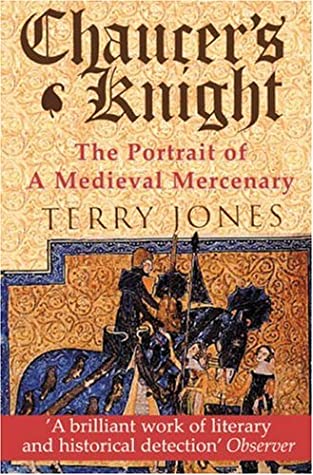
Chaucer’s Knight: The Portrait of a Medieval Mercenary by Terry Jones: I am not up on my Chaucer scholarship, but Terry Jones is. Here he takes to task scholars who see Chaucer’s knight as an exemplar of chivalry, instead of the cut throat mercenary he is. Using The Canterbury Tales, Jones goes into the details of each and every reference, trying to get at how Chaucer’s contemporaries would have reacted to them. Instead of an exemplar of chivalry, Chaucer’s knight is revealed to be a blood-thirsty mercenary typical of the era. Part of what I loved about this book was how bite-sized it was. I could read a few pages one day then put it down for a few days while I read something else.

Foundation by Isaac Asimov: A seminal text, in fact dare I say… foundational? Eh? Eh? So I’d never read this before and was surprised by how much I enjoyed this. Granted, I was amused by how the Foundation’s great project revolves mostly around setting up bogus religions and pyramid schemes. Every chapter is sort of the same too: two characters in a room first they react to plot event, then they plot more events. You simply keep cycling from character and events. And the tech is pure fantasy. Still… this was a big greasy meal and I regret nothing.

The Sign of the Labyrs by Margaret St. Clair: This is going to sound like a back-handed compliment, but I don’t mean it that way: the faster I read this book, the better it was. The story takes place in the future after some unspecified apocalyptic event in an underground maze-like mega-structure. There’s a plague and traps and monsters, and a whole lot of Wiccan style paganism on display. This reminded me of Fritz Leiber’s Gather Darkness, another post-apocalyptic SF novel that embraces the whole witchcraft versus church idea. This one is a heady ride.
How are you all holding up? What have you enjoyed reading lately?
January 2020 Books
And so here we are, another year of book tracking. My goal for this year is to read at least one book a month written in the past ten years, something which I failed to do this January. Here are some things I read that you might like to track down.

Goldfinger by Ian Fleming: I am not a big James Bond fan and find the character’s continued existence to be puzzling. I can never get around how they keep changing actors without there being an explanation. At least with Doctor Who there’s an explanation behind their regenerations! Still, I find myself fascinated with the Bond novels and the power fantasy they portray. We think about the movies with all their gear and supermodels, but the books are much more about indulging in the ear marks of the jet-setting lifestyle and are full to the brim with lavish descriptions of food and local customs where Bond is never simply a tourist spectator. Bond’s also really good at card games your grandmother plays. Like a whole subplot might revolve around a high stakes Rummikub tournament. Anyways, Goldfinger has Bond attempting to foil the plot of the villainous Auric Goldfinger who plans on robbing Fort Knox. Pussy Galore shows up as does Odd Job and a lot of anti-semitism, misogyny, and anti-Asian racism.

Naples ’44 by Norman Lewis: Nothing shatters your national heroic narrative about an event like books written during that event. Lewis served in British Field Intelligence during World War II and his book on the occupation of Naples gives a sobering account of life during wartime. Did you know the US mafia managed to get in good with Allied Command and profit from a flourishing black market? Did you know US soldiers had orders to kill all German soldiers taken prisoner in the war (even being told to beat their heads in with their rifle butts if necessary to save ammunition)? Did you know food was scarce in Italy after the war, but candy was plentiful? The details are often heart-breaking and anger-making, but they’re just as often blackly comic and absurd. Whether displaying one face or the other, Naples ’44 will shatter any sort of rosy view you might have held about the US’s actions during World War II.

Hospital Station by James White: This is the first book in White’s Sector General series about an intergalactic hospital and the problems doctors face treating alien patients there. It’s a collection of short stories that tend to follow a certain pattern: mysterious alien shows up at the hospital, alien wreaks havoc or does very strange things, doctors try to figure out why the alien is doing what it does, finally the heroic Doctor Conway follows his instincts and discovers the right way to treat the alien. There’s clever stuff here: empathic spider aliens (who work in the children’s ward naturally…), a shapeshifter having a nervous breakdown and wanting to return to the primordial ooze womb of its species, and a surgeon made from pure energy that wants to develop a brontosaurus’s telepathic abilities. White was a self-professed pacifist and these stories make a nice counter to the militarism in a lot of the SF of his peers. That said, and for all the wonderful imagination White exhibits in depicting weird alien physiology, he can’t imagine a human doctor with a non-Anglo name or a woman he doesn’t then go on to describe as “curvy”.
BWBC 01: Enter… the Ambiguity
Welcome back to the Back Water Book Club or the BWBC as I’m going to call it from now on. This week we hit the stories!
To start off is Julio Cortazar’s “House Taken Over”.
It’s a ghost story. Sort of.
It’s more a metaphor story, but for what I don’t know. This story has ambiguity dripping all over it. A middle-aged brother and sister living in an old house find themselves at odds with a nameless unseen “they” that shows up one they and starts taking over their home. At first it’s only part of the house, and the brother and sister flee behind a sturdy oak door into another part of the house, but before long the unseen “they” take over even this part, and the brother and sister are forced to flee the house entirely.
But who are “they”? It’s uncertain. They simply appear and instead of confronting them, the brother and sister let them take over the house. Is it scary? Are the brother and sister actually ghosts haunting their ancestral home? Is the haunting actually an indictment of the brother and sister, as the intruders appear to have much more life than either of the pair? The story offers no answers. My reading’s that the “they” are metaphorical, a symbol of the unseen majority that will push the marginalized into the streets unless confronted.
Scary? No. Strange? Kinda. Ambiguous? Oh yeah.
Following that, we have a more traditional story in Robert S. Hichens’s “How Love Came to Professor Guildea”. This one features the recognizable Victorian trope of two old educated bachelors of opposing personalties who manage to be great friends despite their differences. Instead of Holmes and Watson, it’s a Father Murchison and a Professor Guildea. Murchison’s the sentimental idealist, while Guildea’s the man of pure intellect and reason. The two meet and get into debates about the human condition. Then Professor Guildea finds himself haunted.
And it’s here where we encounter the “ick factor” I talked about back in the introduction, because whatever the entity is that attaches itself to the Professor, its main characteristic is that it’s mentally disabled and the chill of the story comes from that fact. The entity that haunts the Professor is described as an imbecile (and not so flattering as such), and this makes both men shudder. While the entity seems to mean no harm, the very affection that it shows the Professor is deemed unnatural and a thing to be feared. And so the men set out to rid themselves of the thing with mixed results.
So, is this scary? Sort of. From the entity’s initial appearance as a ragged form on a park bench to the Professor’s slow discovery of its nature, and the dawning realization of what it wants, the story manages to get under one’s skin and linger. But that it relies on ableism to do so can’t be denied.
Next week… a possible hoax and some more ick factor from Tennessee Williams!
Favorite Reads for October and November 2019
Not writing an October post nagged me all November, but I was traveling and that’s my excuse and I’m sticking with it.
Here are the books I liked from the last two months.
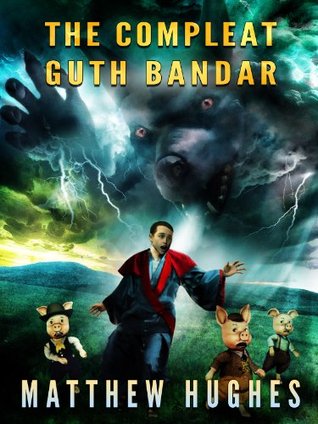
The Compleat Guth Bandar by Matthew Hughes: Set during Earth’s penultimate age, Guth Bandar is a noonaut who voyages into humanity’s collective unconscious while traveling around the galaxy. Boyish and wry like Jack Vance, which it nods at heavily, but it lacks Vance’s cynicism and cruelty. Also spelling “complete” as “compleat”? That’s hot!

Headlopper Vol. 2 by Andrew Maclean and Jordie Bellaire: I didn’t like this one as much as Volume 1, but I liked it more than Volume 3. Heads get lopped as do limbs.
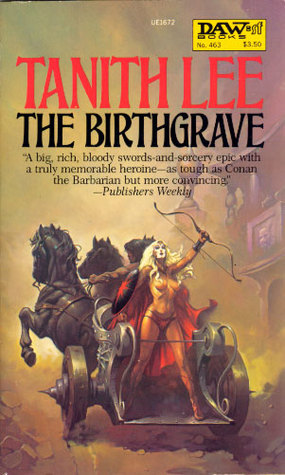
The Birthgrave by Tanith Lee: The book cover that needs to be airbrushed on the side of a van. I wrote about this one on the Patreon. For 1USD you can read about it and a bunch of other old weird books. This one is a cringy mess of 1970s fantasy tropes, but if you’re susceptible to that Conan itch like I am, and enjoy Tanith Lee, this is a must-read.
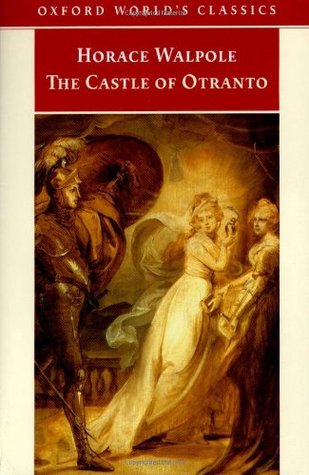
The Castle of Otranto by Horace Walpole: Another one from the Patreon. And for 1USD yadda yadda… This one lays out the template for the Gothic novel but isn’t nearly as bat-shit loopy as The Monk. Although, that’s not to say it isn’t bat-shit loopy in its own special way.

The Deadly Sky by Doris Piserchia: This one is set on a far future Earth where a young scientist becomes obsessed with the sudden appearance of a hole in the sky. This was Piserchia’s last published book and it falls a bit flat at the end, leading me to think it was rushed to publication. Piserchia can be a ton of fun, but if you’ve never read her I don’t recommend you start here. Instead check out Star Rider.

Galactic Sibyl Sue Blue by Rosel George Brown: A very 1960s SF novel about a hip, swinging space detective named Sibyl Sue Blue. She’s a mom, a cigar smoker, and always down for a good time. Not only do we have warp drives by the year 1990, but women regularly rouge their knees to keep up with fashion.
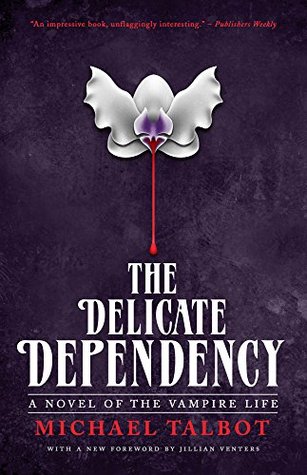
The Delicate Dependency: A Story of the Vampire Life by Michael Talbot: Of all the books here this is the one to read NOW! Even if you don’t like vampire books, this one is a great ride full of twists and turns. When Dr. Gladstone’s carriage strikes down a hauntingly beautiful young man on the streets of London, the event sparks an obsession in the doctor that brings him and his entire family into contact with a shadow world beneath the everyday one he believes he knows.
 Yesterweird