Move Your Head 2 Inches
One thing I hate in readers is a lack of curiosity. Often times folks devoted to a genre whine loudest about not having anything to read, when actually, if they just moved their heads a little in any direction, they’d find something great. Kindles have done away with that, although I’m not sure they’ve done much to improve reader curiosity. If anything Kindles have managed to speed everyone’s descent into a bottomless pit of their own choosing, only now that descent’s fueled by Amazon’s algorithm.
An illustrative anecdote: a month or so back I gave away some books to a friend. One of them I thought was awful and told my friend as much. A week or so later he told me he’d read the book, agreed it was awful, and “the next seven books in the series were just as bad”.
Now this lack of curiosity might not be the biggest problem in genre. But I’d hazard a guess that it could be the keystone problem all the other problems trickle out from. Again the solution is simple: move your head a little in any direction. You will find something better.
A while back I read this post by E. Catherine Tobler called “The Women We Don’t See”. It starts with an anecdote from a friend of hers who realized he hadn’t read a book by a woman in two years. And he was okay with that. A more recent while back, the writer K. T. Bradford challenged readers to quit reading white men for a year. I didn’t opt on the challenge, but I wasn’t incensed by the suggestion. If anything, both posts can simply be read as reminders to maybe think two minutes longer before picking up your next book to read. Even looking at the suggested books outlined in Bradford’s post, she’s only listing twelve books. One a month. You can’t read one book a month by a non-Anglo and/or non-dude writer. Seriously?
There are two big reasons authors get forgotten (beyond the fact that they might suck). The first is the author wrote only the one genre book, and that one was usually early in their career. Fred Chappell’s Dagon and Frederick Turner’s Double Shadow both fit this description (although Chappell has returned to genre at times).
The other reason books get forgotten is because they either exist outside a genre or within a genre that in part hopes to reject them. Despite the history and tradition of women and non-Anglo authors writing SFF, it’s certainly not part of the institutional memory yet. Not when an author can be asked to recommend books to readers and come up with nothing better than the equivalent of Led Zeppelin. This is also why I’m probably only hearing about Doris Piserchia this year. It’s probably also why Joanna Russ gets read like she’s an inoculation against feminism. And why a comment Margaret Atwood made years ago still gets trotted out against her.
All of which is to say show a little curiosity. Take the extra minute and change up your reading diet a bit.
Yeah, I hate that analogy too. It suggests I’m writing all this to extol the salubrious effects of reading certain books, like Naomi Mitchison’s Memoirs of a Spacewoman is a bit of broccoli on your plate, and you should read it because vitamins, instead of the real reason, which is it’s a great science-fiction book with a moral dilemma at its heart that’s instantly recognizable to anyone who knows what the prime directive is.
And in case you need a place to start, here’s a link to SF Mistressworks. Go crazy.
A Day In Deep Freeze by Lisa Shapter
 My review of Lisa Shapter’s novella A Day in Deep Freeze is up over at My Bookish Ways. The book reads like a horror-themed slow-burn Philip K. Dick in the mode of Time Out of Joint with a narrator slowly crumbling beneath his paranoia and inability to confront hard choices about who he is. It’s one of those books where if the hero succeeds and gets what they want, it’s the worst possible solution they could achieve.
Anyway, I blather.
Check out the review. Check out the book.
YesterWeird: The Monk by Matthew Lewis Chapters 1 & 2
The Monk is a Gothic novel from 1796 written by a 20-year old Matthew Lewis rife with murder, magic, sex, and decadent Catholicism, because if you’re an 18th century English Protestant nothing says sexy decadence sexier than a Spanish Catholic. Set in Madrid the novel depicts the corruption of the monk Ambrosio and his ultimate pact with the devil, as well as tells a gory picaresque as two sets of lovers try to escape the various forces arrayed against them.
If there’s anything The Monk reminds me of it’s a 1970s era heavy metal concept album. But more on that in a bit. For now here’s Michael Gothard from Ken Russell’s The Devil:
 In Chapter 1, all Madrid’s come out to see Ambrosio speak because he’s a great holy man and handsome too. The church is packed and people have climbed up onto the statues to get a better view. A young woman and her chaperone arrive late and have a hard time finding seats, but the chaperone’s able to play upon a couple of cavaliers’ sense of gallantry and convince them to give up theirs. At first they’re disappointed, because old lady, but then they espy the young woman’s delicate foot peeking out from beneath her skirt, and nearly slip into raptures. Finally, the young woman unveils and one of the cavaliers instantly falls in love. He gets her name (Antonia) and gives her his (Lorenzo), and there’s talk of another character (the Marquis de las Cisternas) and I’m pretty sure already I’m not going to keep everyone straight in this book.
After Ambrosio’s speech the throng dethrongs and the cavaliers and the ladies split up. Lorenzo stays behind and has a bad acid trip vision of angels and demons fighting for Antonia’s soul. They pretty much tell him “SHE’S GONNA DIE!!!!!”, but he’s not really picking up the cues. Another guy arrives Don Christoval arrives and he’s appy to see Lorenzo since he now has someone to peek at the nuns with. They go hide and watch a stranger eave a letter beneath the foot of a statue. The nuns show up. One of them is Lorenzo’s sister (Agnes), and she’s the one that takes the secret letter, which makes Lorenzo all incensed because virtue and his sister and all that. He hunts down the shadowy letter leaver and there’s going to be a swor fight, but who is it revealed to be, none other than Raymond de las Cisternas, and he has a story to tell…
Which he will tell in a later chapter.
The rest of the chapter has Antonia and her aunt walking home where they meet a gypsy and decide to get their fortunes told. The aunt’s fortune is “You’re old. So old. And ugly.” While Antonia’s fortune is “YOU’RE GONNA DIE!!!!!” and “WATCH OUT FOR DUDES!!!!! ESPECIALLY THE NICE GUYS!!!!” Then the gypsy hightails it out of there, and the ladies go inside.
Chapter 2, Ambrosio sits in his cell doing the 18th century Spanish Catholic monk version of looking at porn, by which I mean staring at his private picture of the Virgin Mary and thinking sentences like, “I am constrained to enter some lovely female, lovely… as you… Madonna…!”
Shit. He ellipsised before his exclamation point.
Well, there’s a knock at the door ending all that and who should be there but the young, handsome, beautiful, but mysterious monk Rosario. He’s stopped by to decorate Ambrosio’s cell with some new flowers, because that’s the type of guy Rosario is. Rosario is completely smitten with Ambrosio, but fears his feelings aren’t returned – but Ambrosio replies that he has feelings for Rosario and before things get much further the bell rings and they have to go to class, which in this case is Vespers. Vespers over, Ambrosio listens to the nuns give their confessions.
Nuns…! Ammirite?
Unfortunately, Agnes drops her letter that she received back in Chapter 1, and Ambrosio picks it up and reads it. Turns out she’s pregnant. Ambrosio being the stuck-up prig he is ignores all her pleas for mercy and decides to tell her Mother Superior, who’s straight out of the Confessions of Maria Monk. Agnes get dragged away to be tortured.
Ambrosio, shaken by the ordeal of being a judgmental prick, goes for a walk in the garden, where he finds Rosario sitting alone in a grotto. They read some verses together, and Rosario goes on about his BIG secret. Ambrosio can’t stand it and commands that Rosario spill it, at which point Rosario tells Ambrosio that he’s really a she named Matilda. He does not take this well.
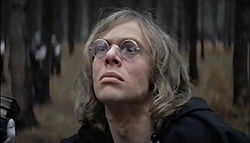
I was more comfortable when you were a dude bringing me flowers.
Rosario-Matilda threatens suicide if Ambrosio refuses to let her stay in the monastery, because all she wants to do is be near him, and it’ll be like they’re just friends and stuff. She’s all set to kill herself with a dagger to Ambrosio’s horror, but a pang of mercy and a glimpse of her boob, her left one, and “oh! that was such a breast!” The boob’s magnificence is then described for a half dozen more sentences.
Well, what’s a guy to do after seeing a boob, but give in and do whatever it commands. Ambrosio convinces himself it’d be okay if Ambrosio stays. He’ll even pluck her a rose to prove himself. Only when he does so he’s bitten by a snake, and poisoned, because subtlety is for suckers. For days he lies near death with Rosario-Matilda tending to him, by playing her harp and reading to him from chivalrous romances.
Miraculously, Ambrosio recovers and decides, “Matilda’s trouble and has to go.”
To which Matilda says, “Well, I’ll be dead in three days, because I sucked the poison out of your hand and it’s in me now. Also, I modeled for that picture of the Virgin Mary you keep under your bed, also, also, its better that I die because I totally want to have sex with you.”
To all of which Ambrosio has no idea what to say except, “Huh? Wha?” and then he touches her boob, the left one, and it’s all over for him.
“He remembered nothing but the pleasure and opportunity.”
…!
May Books
I’m still in thesis-hell, but there’s a light at the end of the tunnel. Once June is finished, I’ll be over and done with my grad program. Hoorah! Anyway, I managed to squeak in some reading time this month, alongside the thesis reading and the books I have to review. When the thesis is done, I will make it a point to read ALL the books. On with it…
The Lost Fleet: Dauntless – Jack Campbell (2006): Despite being incapable of making a conference call, resurrected “hero” Black Jack Geary has the know-how to save the day, all it takes is discipline like people had back in the old days. Military SF in the what-the-world-needs-now-is-a-grandpa subgenre with wooden prose and a plot stolen from Xenophon’s Anabasis. I actually don’t mind this subgenre, but as it was presented here, in as straight-forward a manner as a 2×4 upside the head, no thanks.
Unquenchable Fire – Rachel Pollack (1989): I kind of loved this book. It’s set in the same world as Temporary Agency, which is our own world after a spiritual awakening that makes certain New Age sciences possible. Yet the main character is outside this world as she’s a divorced woman trying to simply cope with being chosen by an awakened being to be the mother of, well, we don’t know, not the messiah, but certainly a prophet who will once again change the world.
After the Apocalypse – Maureen McHugh (2011): Short story collection that mixes the mundane with touches of the speculative. IT techs try to determine if their computer has gained sentience. A convicted killer turns naturalist after the zombie apocalypse. A proud woman with a penchant for survival takes part in a medical experiment. I love McHugh’s stuff and think she’s one of the best SF writers working today, but you sort of have to like your SF with a lighter touch.
Vathek – William Beckford (1786): 18th Century Gothic Orientalism written by decadent libertine hopped up on the Arabian Nights. I’m not sure what to make of it. It’s awful and about horrible people doing horrible things, but it’s also over-the-top and grotesque and as such has its charms. Vathek is a despotic prince who hopes to make a deal with the devil, but is thwarted by the devil and his own mom who’s a powerful sorceress.
April Books

I’m still gill deep in thesis-land and so have been avoiding books. To keep me from falling down novel rabbit holes I reward myself for reading about “Metacognitive Learning Strategies In Second Language Acquisition” by letting myself read a short story or novella every now and then. Here are some high and low lights:
The good….
Guys and Dolls and Other Writings – Damon Runyon
I can’t believe I’ve never read these stories until now. They’re kind of corny mainly because they’ve been riffed on to the point that their originality is buried under decades of imitation. But when you get over the corny, there’s a lot to love.
Stories – Edited by Neil Gaiman and Al Sarrantonio
A fun collection of grim stories. I’m not done with it yet, but so far some highlights have been: “Blood” by Roddy Doyle – A weird horror story about a modern day 40-something Irish banker that suddenly finds himself obsessed with the idea of drinking blood. “Fossil-Figures” by Joyce Carol Oates – Creepy story of the relationship between twin brothers from their birth to their deaths. It’s not a horror story, but it uses a horror story’s tone, and is really quite well done. “The Truth is a Cave in The Black Mountains” by Neil Gaiman, which would be a drive-to-the-story story in less talented hand, but here it’s a story of vengeance set during the era of Border Reivers.
Fantasy – Edited by Sean Wallace and Paul G. Tremblay
Once upon a time Fantasy was a print magazine that became a webzine that became part of another webzine called Lightspeed. This book collects stories from the print era all the way back in 2007. We were all so young then… It’s a good collection too with stories that presage later trends but aren’t harbringers yet, so they’re still weird and crunchy and have odd bits poking out from them. A fun read if you can track it down
And now the not so good…
The Last Defender of Camelot – Roger Zelazny
Zelazny’s a weird author that I know I should like more than I do, but I don’t. What I think the problem is, is that I come to Zelazny too late and all those spots where he’d sit comfortably I filled with other writers. So I read him and think things like, “that was a pretty great story, I’ve seen other people write better.” Maybe it was the collection. This book’s volume X in the collected short fiction of Zelazny, and maybe more completest than a highlight reel. As it was I finished the book thinking how Zelazny’s a great writer of bad stories that I don’t much like.
Cat picture…
 Oh and I guess I kind of lied or forgot or whatever. I did read some longer things, novellas, novelettes, and an actual novel.
Chess Story – Stefan Zweig
Weird novella from 1938 about a chess match onboard an ocean liner between a rustic, crude savant and an obsessive doctor who’s recently escaped from the Nazis. It’s fairly straightforward, but with something ominous underneath it.
Sir Orfeo – JRR Tolkien
It’s weird to think that the medieval European world had no idea what the Iliad was about and had to make do with oral accounts that they reskinned with their own reality, so Achilles is a knight and the Trojan War like the Crusades. Sir Orfeo is a retelling of the myth of Orpheus where Eurydice gets abducted by the King of Fairy and Orfeo’s a king that renounces his crown to become a minstrel. It offers both Mythic McMedieval Feudalism and splendid and profane secrets.
The Cyclops Goblet – John Blackburn
Pulpy thriller about a conman and his wife getting wrapped up in a scheme to steal a hoard of Renaissance gold hidden on a plague-ridden island off the coast of Scotland. Loathsome characters, plenty of double crosses, and a page count that guarantees events move along at a fast clip. It’s a Valancourt reprint. Check it out.
The City and The City – China Mieville
I kept reading this expecting something horrible to happen that never quite did. I appreciated that. This is a great weird thriller that might not be genre but it’s certainly genre adjacent, where the best bits of it read like Alfred Kubin’s The Other Side dragged forward and left gasping for breath in the 21st century. A detective in an Eastern European country tries to solve a murder case that sends him to a different Eastern European country that happens to be his own viewed from a different frame of mind.
Vermilion by Molly Tanzer

The story of pyschopomp Lou Merriwether, a woman able to guide the dead from her world into the next. Half-English and half-Chinese, Lou continues in the trade her father practiced before his untimely death, making her living in the latter decades of an altered 19th century San Francisco. Ghosts and other supernatural monsters exist and threaten the living, and western expansion has stalled due to tribes of sentient bears who swayed the course of the Civil War…
My review of Molly Tanzer’s Weird Western ghost hunter novel Vermilion is over at My Bookish Ways. Dig that cover.
March Books
It’s April Fool’s Day, the day when you find out which of your friends are dull-witted pranksters. Unfortunately, I live in Korea so I’ve had hours of pranks to sort through already, but I’ll lose on the time difference and will still have hours of dullwitted pranks to wade through tomorrow when I wake up. So without much further ado, get offa my lawn… I mean, here’s what I read in March.
Wylder’s Hand – J. Sheridan Le Fanu (1864)
Awful Victorian novel that is sometimes deliciously awful, but in the end I finished it in a mad bout of rage-reading. It consumed much of the month’s leisure reading time. You can read my blather about it here. Or just scroll a bit down the page.
Tea From An Empty Cup – Pat Cadigan (1998)
A later cyberpunk novel that rages fast and furious with crazy ideas. Parts of it were kind of boring, but only because they now accurately describe the world we live in. Other bits were as pointed and insightful as they were back then. Yeah, yeah, the fetishism of Japan was a bit much and who the hell was programming all those virtual realities, but I make allowances for 300 page science fiction novels that deliver on the crazy.
Dream Houses – Genevieve Valentine (2014)
Amadis woke up alone. At least, she thinks she did. Claustrophobic novella set on-board an intergalactic spacecraft with a psychotically needy AI. It’s great and gets dark and then it ends and you’re like, fuck. I recommend it. Also Valentine has a new book out, Persona, which you can read about here.
The Explorer – James Smythe (2013)
My second trapped on a spacecraft and dying a slow death alone book, because why settle for a little claustrophobic paranoia when you can have a lot? Anyway this has all the despair and nihilism of a Peter Watts’ novel except with mopier characters and less cool SFnal stuff to take the edge off the bitterness. The main character’s an astronaut, yet still fucking blogs as his world goes to shit around him.
Fain the Sorcerer – Steven Aylett (2006)
You’re all fans of Aylett’s work already, I presume, so this doesn’t need any description. I just have to nod and be like, “Right?” and you say “Yeah”, and that’s all we have to do? Aylett’s one of those writers that will either have you in stitches or perplexed with confusion as the person beside you roars at a joke you don’t get. This is sort of like a Jack Vance Cugel story with a quick-witted scoundrel as its hero and a hundred brilliant bits of weirdness dropping from every page. Okay, I exaggerate, but if you want a short, entertaining read that’s like a sword & sorcery version of The Mighty Boosh, then track this down.
Vermilion – Molly Tanzer (2015)
A weird western set in an alternate USA where monsters, vampires, and ghosts make life difficult for the living. It’s a bit like Mr. Vampire meets The Magic Wagon except with a cross-dressing Chinese-American woman as its main character. I wrote up a review of it that will likely be online next week. Suffice to say I enjoyed it and you might too. Tanzer wrote one of my favorite books in recent years, A Pretty Mouth, and if you haven’t read that, you should. It’s smart and fun.
February Books
Books read last month. I started more than I finished
Shadows on the Rock – Willa Cather (1931)
Life in late 17th century Quebec as seen through the eyes of an adolescent girl, Cecile. Odd to start the month with this and finish it with Revenants. Of course, there’s nothing supernatural here. Well, sort of, I guess it depends on how you feel about Catholicism. Cecile’s father is an apothecary and attends to the count who oversees the colony. The count is involved in feuds with the two head churchmen in the colony, who in turn feud with each other. Meanwhile Cecile’s father employs a deformed handy-man and has friends among the trappers and itinerants within town. There’s little in the way of overt plot, but I found it a page turner. If there’s any conflict it’s between Cecile’s attachment to the colony versus her father’s attachment to France.
The Witch of Napoli – Michael Schmicker (2015)
A historical novel based on the life of Italian spiritualist Eusapia Palladino. It started off great, and I had hopes it would be up there with John Harwood’s stuff, but in the end it pulled too long on the is it or isn’t it supernatural thread. It finally comes down on the supernatural side, but by then the novel’s over and done with when really in a way it’s just starting.
It would be like ending Scanners right after the guy’s head explodes.
Let Me In – John Ajvide Lindquist (2010)
My usual complaint: I would have liked this more if it were 100 pages shorter. As it was I started off liking it quite a bit, then lost interest as the narrative fragmented into multiple POVs. People tell me the movies did away with a lot of the extraneous stuff.
Revenants – Daniel Mills (2011)
I blathered about this elsewhere. Read it. It’s good.
January Books and General Ramble
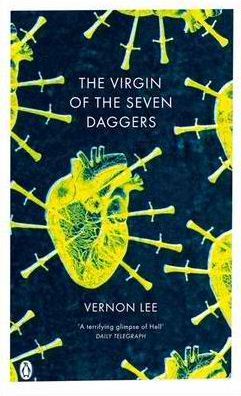 Hello again.
It’s been a bit.
I went back to the USA for my vacation and played this game where whenever one of my friends posted a picture of whatever beach they were on in Thailand, I posted back a picture of an iced-over parking lot and maybe a snowdrift. It kept me warm, as one’s bitterness should. No, I kid. It was a great trip, and much too short.
Anyway, lots of time was spent on planes or in transit to other places, so books and what not got read. I may as well start with that one over there, Vernon Lee’s The Virgin of the Seven Daggers (2008). First off, great cover. When I saw it in the bookshop I knew I had to buy it, although I knew absolutely nothing about the author. It turned out to be a great impulse buy. The stories were pretty much all incredible, a bit weird fantasy mixed with 19th century historic novels and art criticism. So, yeah, if you see a copy on your local bookstore’s remainder table (or just want to do the Project Gutenberg thing), don’t hesitate! but buy the shit straight up!
Bury Me Deep – Megan Abbott (2009)
I loved this book. It’s based on a true crime case from the 1930s when a woman was found in the LA train station carrying around a suitcase containing the dismembered bodies of her two roommates. This book takes that incident and uses it to spill out a story about a young nurse abandoned by her junkie husband in Arizona and the friendship she forges with two other women, both of whom are bit too free and independent by what’s socially acceptable, and the chaos that ensues when the nurse falls for a local criminal/politician. Seriously, if you like Noir this book is pretty wonderful.
Open City – Teju Cole (2011)
A listless and over-educated 20-something male wanders around various cities and has conversations with people while musing on history and memory. You sort of have to stick with it, and even then the reveal might have you throwing the book across the room. I liked it, but I can’t rave about it. Still, it’s the kind of book that sticks with you, not least because it leaves a slightly sour taste in your mouth.
2K to 10K: Writing Faster, Writing Better, and Writing More of What You Love – Rachel Aaron (2012)
Aaron outlines how she’s been able to write 10K a day and crank out novels. What was interesting was that I read this not long after I read this piece by Kazuo Ishiguro about how he wrote The Remains of the Day, and what struck me was how both Aaron and Ishiguro were saying they same thing. The difference being that Aaron has to publish at least one book a year to cling to the claim of being a “professional writer”, while Ishiguro can publish one book every five years and have each be heralded as a literary event.
I then made the mistake of trying to read one of Aaron’s novels, and the less said about the attempt the better.
Lying Awake – Mark Salzman (2000)
I heard about this book from watching one of Robert Sapolsky’s lectures on youtube, and then while spending a couple of days in Province Town (and sweet chef boyardee, do I ever recommend going to Province Town in the middle of January) I stopped by the local bookshop and found it on the “Staff Picks” table and bought it.
The plot’s about a cloistered nun who has some notoriety after writing an account of her visions of God, but who then learns these were likely the result of a brain tumor, and the crisis of faith that then ensues. It’s a real slim book, and Salzman doesn’t linger on things, which is good, because I think the idea would break down if too much weight were put on it. As it is, the book works quite well, and if it sounds at all interesting, then I recommend you track it down.
The Memory of Water – Emmi Itaranta (2014)
A dystopian novel set in Northern Europe after the collapse of civilization and dealing with a world where fresh water is a scarce resource. My reaction to this one was a bit odd. I didn’t much care for the plot or prose style, but I liked the main characters, a pair of friends, and the narrator’s devotion to her job as a Tea Master and how everything she experienced was filtered through that fact. In that way, yeah, I recommend the book. The characters are pretty great, but some of the other bits? They sort of read like a road you’ve already traveled.
The Romance of Tristan and Iseult – M. Joseph Bedier (1900)
I never knew the story of Tristan and Iseult; I simply knew of it, so reading this was a neat experience. Bedier did much of the rendering while others (such as likely colossal asshole Hilaire Belloc) did the translating, and overall it’s a satisfying and exciting read with magic potions, curses, dragons, and knights who don’t have names, just articles in front of titles, like The Morholt. Another bit that sticks out is when King Mark first suspects Iseult of infidelity, he’s all ready to have her executed when a mob of lepers shows up and convinces him that no, killing her would be too good, and she should be given over to the lepers to be “used in common”. Shit like that makes you have to cringe, but if you enjoy the McMedieval Mythic Feudalism give this a read.
Hell, who am I kidding? You probably already have!
December Books
Welcome to 2015, here’s what I read the last month in 2014.
The Alchemist – Paulo Coelho (1988)
A reread for a book club that I’m no longer a member of*. I enjoyed the first half or so of this book, but the latter parts descended into a turgid midden-heap of woo-tinged solipsism especially the points where Santiago must “become the wind”. Also, you have to admit the existential crises that Santiago encountered are all pretty light weight. So find and read the book that adds in some stiffer existential crises and excises out half the woo, before you quit your job and set off to live your dream of being a professional mountain climber.
Lock In – John Scalzi (2014)
John Scalzi’s probably one of the best writers at the moment for taking an SFnal idea, presenting it clearly, and joining it to a simple forward moving plot. In this novel we have a near future America dealing with the aftereffects of a neurological disease that leaves its victims paralyzed, but mentally sound, and the subsequent rise of robotics that allows them to enter into society. There’s a lot of walking around and ‘splaining punctuated by gunfights or attacks to move the plot alone, and I’m not much of a fan of cop shows, which in this case is making a bug out of what’s likely a feature for other people, but an enjoyable read overall.
Elysium – Jennifer Marie Brissett (2014)
An AI seeks to understand itself and the story of how it lost its mate.
Possibly one of the more ambitious debut novels I’ve read, at least in SFF. Elysium proceeds from fragmentation to unity over a constantly shifting pattern of times and places. It avoids confusion by having similar characters and circumstances appear over and over again, so that there’s a layering effect to provide stability for the experience. It’s a bit like Raymond Queneau’s Exercises in Style mixed with a Michael Moorcock Eternal Champion novel. This is the novel that I wish Ancillary Justice was: playful and fast-moving while abrupt and ambitious in its development. There’s a lot to grasp here, and a lot left unexplained, or at least a lot left for the reader to figure out on their own, but the journey is worth it.
Good on Aqueduct Press for publishing this and giving genre a place for more experimental work to find a home.
Jane Eyre – Charlotte Bronte (1857)
What a crazy book! For much of it I had hopes that Jane would take an axe to all the other characters and run off with a pirate, but despite that not happening, the ending was satisfying (yes, I know all about the Jane Slayre book).
Here’s a story: I’ve got this acquaintance that’s in a writing group. One day one of the members, a woman, turned in a story for critique that riffed on something in Jane Eyre. Every other woman at the table got the reference and got the riff right away, while every man at the table was lost and confused, because they had never read Jane Eyre. And so the decision to read it. Now Neil Gaiman’s work now makes sense to me!
But yeah, Jane’s your hapless orphan left to be raised by cruel relatives, who she totally tells off while still 10 years old, and out of revenge they send her to a horrible boarding school where life is strict and cruel, but Jane flourishes and survives to the age of 18 despite the cholera/typhoidfever/tuberculosis epidemics, at which time she sets out to find her place in the world by answering an ad for a governess on Craigslist. Boy, could I relate to all that! Once employed and nurturing a french opera singer’s abandoned child, she meets her employer, Mr. Rochester, who’s cut whole cloth from one of Lord Byron’s old suits, and which means he looks like Gabriel Byrne because I too watched Ken Russel’s Gothic. I won’t spoil the rest of it for you, but if you’ve ever seen Nicholas Cage screaming about how he lost his hand in between making pizzas, well, let’s just say that’s the direction we’re heading in.
Anyways, apologies for the above, that second cup of tea kicked in. I think my point’s that Jane Eyre‘s a gendered book that women read and men don’t, unless forced to for class. Yes, I’m sure you will tell me I’m wrong in the comments.
Oh, and in case you’re wondering, I read 78 books in 2014.
###
* I joined the book club to get recommendations from outside my comfort zone. Unfortunately, the median age of members is 24, and an unread 24 at that. All they recommend are the books they should have read in college. And the fact that I have an opinion about what people should have already read, plus finding a few of the recent regulars annoying as hell, makes me realize the problem’s less them and more me, so, yeah, goodbye book club, you were fun for a bit.
 Yesterweird