Some Recent Things

Hello.
It’s been a bit, and I have every intention of finishing the game write-ups. But not right now. Right now, I’m just pointing you towards some recent things I’ve finished:

Arkham Elementary is a one-page roleplaying game where you play as substitute teachers at a horrible elementary school. It’s a tweak of John Harper’s Lasers & Feelings, except horrible. The children have eldritch powers at their command. You have a classroom.

Lock Mess Mobster: Lock Boss Anguilla is a semi-human hybrid adapted to aquatic life. He has ruthlessly built a loyal following among the scavenger “sludge-larks” who ply the fetid industrial waste canals known as the Mess. While his early history remains shrouded in mystery, Anguilla now captains an old canal dredger from which he influences the surrounding region.
Lock Mess Mobster is a pamphlet adventure for Into the Odd detailing a damp gangster.
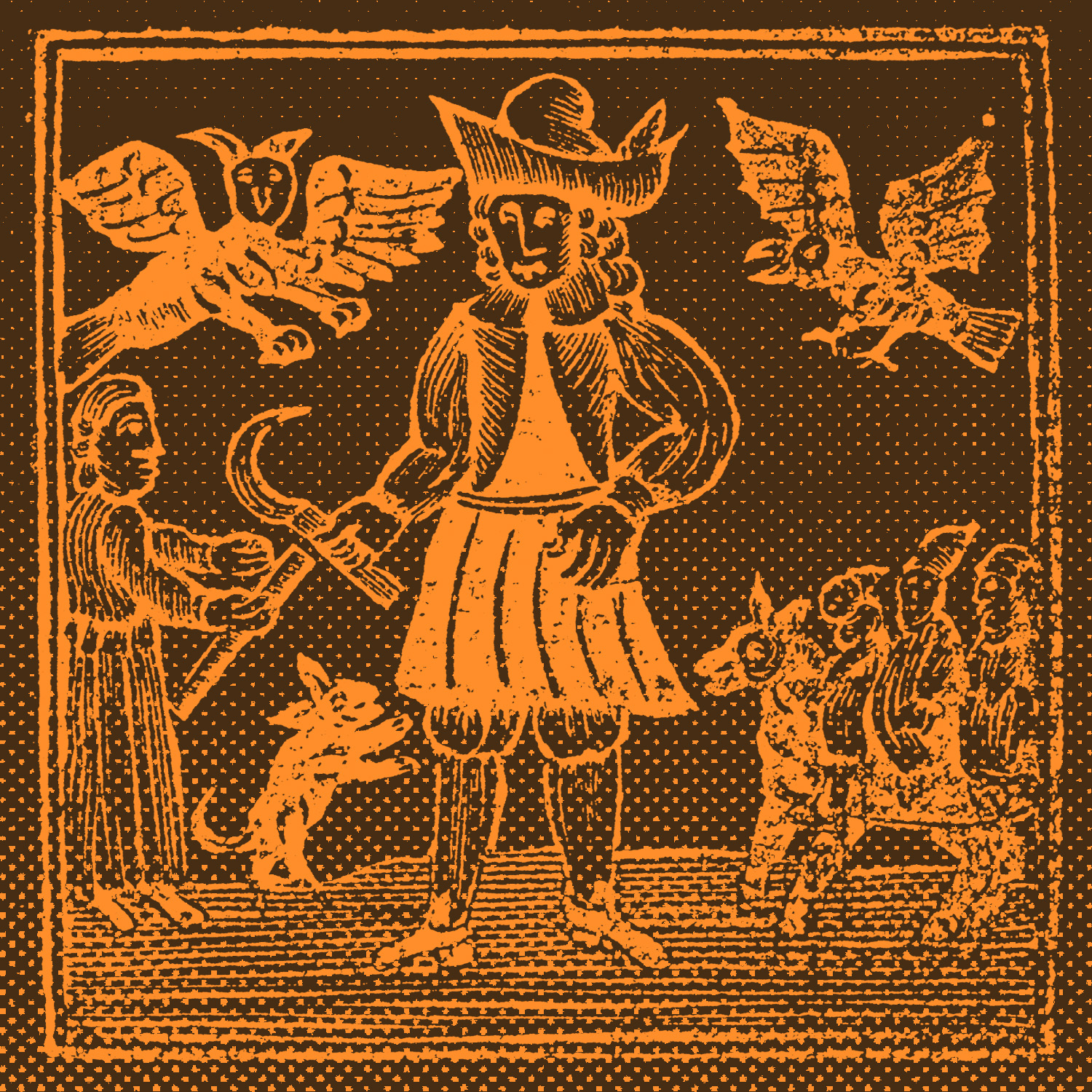
Lastly… witchcraft!
In September, I plan on starting a new Yesterweird read along of my Sylvia Townsend Warner’s Lolly Willowes. That’s going to be done via public posts on my patreon. If that sounds like something you might be interested in, then feel free to follow along. The posts are public, so there’s no billing.
And that’s the end.
Favorite Reads 2023

A baker’s dozen of books I read and liked this past year. The last time I posted a list like this was in 2019.
The Cadaver of Gideon Wyck by Alexander Laing (1934)
A weird crime novel, and I mean both of those in their genre sense. It’s a murder mystery but for an audience that were teens who read Weird Tales. Strange things are a foot around a rural New England medical school. Odd experiments, diabolical research, and a despised professor harboring a dark secret. It’s good stuff with plenty of twists. For fans of mystery, mad science, and weird horror.
The Peripheral by William Gibson (2014)
A young woman in a rural near future USA comes into contact with a piece of technology that allows a signal to pass between her time and another one farther in the future after a series of disasters wiped out much of the human race. At first she thinks it’s just a job, but when she witnesses a crime in the future she’s suddenly caught in a power struggle that bleeds across time lines. This was neat. I liked the way time travel only allowed for signals to pass between eras. This meant people could basically Skype, remote operate machines, and engage in financial shenanigans, but those are more than enough to find allies and enemies in your own timeline. A bit light in the prose, but that’s no terrible crime.
Leech by Hiron Ennes (2022)
Sci-fi horror about a creepy doctor who is a single appendage in a vast parasitic colony organism that takes over human hosts and wears them as puppets. And the narrative voice nails that conceit completely. The plot is very Gormenghast by way of Dune with the doctor coming to treat an isolated monarch and his family as they navigate local political unrest caused by their cruelty. This one has a good chunk of gore and isn’t for the squeamish.
The Mountain in the Sea by Ray Nayler (2022)
A near future SF novel with a split narrative all centered around a group of researchers discovering an intelligent species of octopus off the coast of Vietnam. This has those good speculative touches like addictive AI companions and automated robo-vessels that relentlessly pursue their primary function regardless of the cost. This is a good starting place for anyone wanting to engage with modern day SF.
Beyond the Burn Line by Paul McAuley (2022)
This is an SF novel that starts as a pastoral novel set in a society of intelligent raccoon-like creatures. From there it shifts into an espionage novel about UFOs. Imagine something like the X-Files but set in Tolkien’s Shire. That’s what this is. It’s neat, and the pastoral bits, which are mostly a travelogue, are really enjoyable.
The Phantom of the Opera by Gaston Leroux (1909)
Silly and over-the-top. I can get why the story has persisted for over a century now.
How to Do Nothing by Jenny Odell (2019)
This one is less a how-to unplug and more a history of unplugging. It’s smart, and points to not abandoning the world, but finding space enough to cultivate one’s own attention within the world. It also gives a brief history of social networking systems that I wasn’t been aware of before. Definitely give this a read if you want something stable to hold onto in our late stage capitalist world.
H is for Hawk by Helen Macdonald (2014)
I remain a fan of the British Person Takes a Walk genre and this is a good part that with its descriptions of hawking in fields. It’s also a meditation on loss (Macdonald’s dealing with the death of her father) and an investigation into a literary icon (T.H. White who was also into hawks). As this was a very popular novel a decade ago, it’s likely you can find cheap copies now. It’s good.
The Absolute at Large by Karel Capek (1920)
A scientist makes a miraculous energy making machine that has the byproduct of unleashing divine particles into the world. These have the unfortunate side-effect of increasing fanaticism and sectarian strife. This is very much a light satire, but that it’s written in the early days of atomic research before World War 2, so it’s a bit prescient too.
Gunsights by Elmore Leonard (1979)
A later Elmore Leonard Western from the era when he was mostly writing crime novels. This is really something unexpected. On the surface, it’s about one thing (a range war with former allies now on opposite sides), but under that it’s a satire of something else entirely (the way media as often creates events rather than simply reports them). If you’ve never read a Western and want to start with one that’s a bit savvy and smart, this is the one.
Felicie by Georges Simenon (1942)
I’ve read a few Maigret novels and enjoyed them, but this was the first one where I _got_ what his deal was as a detective. Simenon uses his detective less to solve crimes as explore the psychology of the characters involved in it. So this reads not as an account of a crime and its solution, but as a psychological analysis of in this case the crime’s chief witness.
The Saint of Bright Doors by Vajra Chandrasekara (2023)
Fetter was raised as a cult assassin with magical powers, but now he’s an adult trying to live in the big city and keep mind and body together by attending weekly group therapy sessions and avoiding whatever pogrom the government is currently conducting. It’s hard to describe this book, but it reminded me of Michael Cisco’s The Divinity Student as well as Samuel R. Delany’s novels Dhalgren and Triton, novels about young men arriving in cities that are simultaneously fantastic and mundane. It’s good.
Dance of the Tiger by Bjorn Kursten (1978)
This book rewired my brain a little bit. On the one hand it’s a speculative fictionalized account of the interactions between early humans and Neanderthals. Bits of the book are heavy-handed (the way Neanderthal’s speech is portrayed is so corny… but it works!), but after a while those bits are less jarring and the story that unfolds is fascinating. Both in a mythical/mystical sense and in anthropological sense. It really cemented this idea in my head that art-making, and by extension tool-making, are fundamental to humanity as a species, and if there’s any way back to the Garden of Eden it’s through competently making things with our hands. This is probably going to be one of those books I never shut up about if not stopped.
COMPULSORY GAMES by Robert Aickman
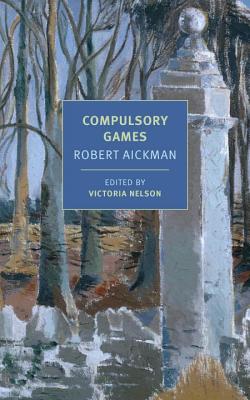
TL;DR: It’s good. If you like weird fiction and want to try Aickman, this is as good as any other place to start.
More details:
This collection brings together previously uncollected works, mostly left over from the Faber & Faber reprints from a few years back. As such they might not be the best stories with which to first encounter Aickman. But as a noted author of weird stories maybe there’s no best way to encounter his work except with some hope that you’re getting one of the good ones. This collection certainly delivers a number of those.
At his best, Aickman sits firmly among post-war suspense writers like Patricia Highsmith or Roald Dahl. You can certainly imagine them as Hitchcock productions. Somewhat cruel and murky, with a current of sex bubbling under the lid, some of the stories also call back to Machen and Blackwood. Those stories present other worlds that intersect with our own and cause all manner of bad times for those people unlucky enough to get caught in them.
Instead of giving detailed accounts of each story, I’ve grouped them according to non-exhaustive nor categorically exclusive vibes.
“Alfred Hitchcock was here”
Compulsory Games
Marriage
Residents Only
Letters to the Postman
“Algernon Blackwood was here”
Hand in Glove
Le Miroir
No Time Is Passing
Raising the Wind
The Strangers
“Death is a Lady (and kind of hot)”
Laura
The Fully-Conducted Tour
“Meh”
Wood
The Coffin House
A Disciple of Plato
Aickman’s also a guy who heard Chekhov’s advice to cut the first three pages from any story and said, “To hell with you, Anton. Those three pages are now five.” He’s not a writer to get to the point any time before he well wants to. He’s a very sorry not sorry sort of writer.
And honestly, I kind of like that.
February 2023 Reads

AUSTIN OSMAN SPARE: THE LIFE AND LEGEND OF LONDON’S LOST ARTIST by Phil Baker
Fun stuff, but 80% of artist biographies are basically “stayed home, drew” so the interesting bits are on the periphery. That periphery here involves occultists, the world wars, the end of one world, the start of a new, and the rise and fall of art movements. Reading about art magazines from the early 1900s is similar to reading about feuds in any zine scene except involving WB Yeats and George Bernard Shaw. And then there are the wizard fights in 1950s London in which everyone is taking some nonsense completely seriously. It’s a fun read even if it’s mostly a downward spiral about people over-thinking having a wank.

TO WRITE AS IF ALREADY DEAD by Kate Zambreno.
An autofiction novel far from my usual wheel house. It’s a novel about not writing a novel, friendships after friendship, and pandemics after pandemics. I liked it but felt like a stranger exploring an unfamiliar genre landscape. Not sure how much of this I could read in a row. Also, modern philosophers should all be forced to wear clown clothes.
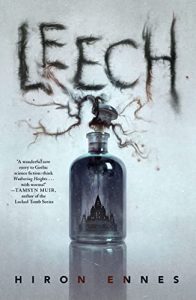
LEECH by Hiron Ennes
This read like Gormenghast/Fifth Head of Cerberus narrated by a surgeon who happens to be John Carpenter’s The Thing. (The world of the story has universal health care but all the doctors are infected hosts for the Thing keeping tabs on the world, which I thought a neat idea.) Some gory body horror scenes as you’d expect. CWs abound: infestation, bodily autonomy, abuse of multiple sorts, a gory birth scene, dogs survive but children don’t. It’s a horror novel. I liked it!

OPERATION SOLSTICE RAIN by Kai Tave (Massif Press)
I remain impressed by the modules made for the Lancer TTRPG. This one is an introductory adventure where the players get caught-up in a diplomatic mission gone bad. I am not much of a fan of military SF, but Lancer could make me one. Not that I would ever run a game, but play? Certainly a definite maybe.
Some Yesterweird Books

I make it a habit to check new uploads to Project Gutenberg.
Some recent highlights:
Freak Trees of the State of New York by Gurth Adelbert Whipple. Gurth Adelbert Whipple is a great name. Here people send Mr. Whipple pictures of freak trees and Mr. Whipple decides the freakiest! “Treebeard, you so nasty!”
Was It a Ghost? The Murders in Bussey’s Wood : An Extraordinary Narrative by Brent. This is about this awful murder case in Boston that features a criminal named “Scratch Gravel”. The Jamaica Plain Historical Society has an informative write up of the case.
Early British Trackways, Moats, Mounds, Camps, and Sites by Alfred Watkins. I love the cover. Leylines come from this book but it’s likely Mr. Watkins would not be happy to know what the New Age Movement has done to his theories,
Meanwhile on the Patreon, I’m doing a read through of JK Huysmans Against the Grain. It’s a novel about a guy who doesn’t leave the house and is great fun. You can join here to follow along. You’ll also get access to the game stuff I make before it shows up on itch and elsewhere. (Or while it’s a WIP that hasn’t come together yet. Looking at you Champion’s Mark, my Orlando Furioso inspired fantasy supplement.)

Later this month I’ll be releasing an adventure inspired by all the UFOs and “spy” balloons the USA has been shooting down lately: Balloon Tomb of the Ancient Aeronaut. It’s designed for Into the Odd and has players exploring an ancient airborne bouncy castle. Join my Patreon and you can grab that now!
Books January 2023
Here’s the stuff I read and liked in January 2023.

Under Hill, By Water by Josh McCrowell
My gaming group’s current game. It’s silly. It’s fun. It suits what my group wants from games at the moment. And the Shire we’ve made has become something of a playground for revolving GMs. This is good. If your game group likes to have a small game on the back burner in case someone needs to take a break this game is perfect for that.
Inspiration for my solo game One Too Many.

The Peripheral by William Gibson
I enjoyed this, but could understand someone putting it down. The plot feels driverless. The idea of it, however, is fascinating. It’s hard to explain what’s going on in it. Basically a version of time travel exists but it only allows signals to pass between eras. This means it’s possible to skype and remote work in different timelines. And then of course there’s a murder.

A Stitch In Time by Andrew J. Robinson
A Star Trek novel about Garak written by the actor who played him. It shares some DNA with John Le Carre’s earlier (more genre) novels. Plotwise it’s pretty jumpy, but, honestly, Garak’s the only Star Trek character where shame and self-loathing are integral to the character and I can relate to that. I hear all this got retconned out of existence by the Picard show, which is too bad. It’s a fun read.

The Last Days of New Paris by China Mieville
A novel set in the 1950s in a Paris where World War Two remains ongoing and surrealism makes literal weapons. This read as a love letter to the Surrealists, but the best bits had more John Blanche (of Games Workshop/Warhammer fame) than Max Ernst.

The Cadaver of Gideon Wyck by Alexander Laing
This was a weird novel. Written and set in the 1930s, it’s very much for readers who read Lovecraft a decade earlier but had then moved on to mysteries. Gideon Wyck is an awful professor at an isolated medical school in rural New England. His experiments are decidedly strange and he earns the animosity of most everyone he meets. Various events unfold and the whole thing walks a fine line between a natural or supernatural explanation. A decent read, but pretty grisly at times in a clinically medical way.
Orlando Furioso, Canto XLV

The penultimate canto… let’s do it!
To start we get some expounding on the nature of fortune and how “Good follows Evil, Evil follows Good, shame ends in glory, glory ends in shame.” Ruggiero has just wrought havoc upon the Greeks. Now he wants to sleep. He arrives at an inn but is recognized. The Greek king has him abducted, and the king’s sister urges him to treat Ruggiero harshly since he killed her son in the battle. In the end Ruggiero gets locked away in some deep dungeon full of snakes, where he’s chained around hands and feet and forced to eat moldy bread.
Back in France, word spreads about Bradamante’s oath to only marry a man who can defeat her in battle. This has made her parents furious. Much moping ensues.
Back in Greece, Prince Leon hears how the knight that defeated the price’s army is being held captive in a dungeon. Leon “loves” this knight because his kink is apparently masochistic self-destruction by proxy. He goes down to the dungeon with his assassin henchmen. They trick the gaoler to open the prisoner’s cell, then the henchman kills the gaoler.

They go into the cell where Ruggiero is on the brink of death. Leon professes his love/admiration for Ruggiero and together all leave the dungeon, Ruggiero pledging himself to assist Leon in any way he would wish. It’s about now that Bradamante’s challenge to any suitor reaches Leon, and he starts hatching a plan.
We can all see where this is going here.
Leon will accept the challenge, then he’ll have Ruggiero fight wearing his armor, then when Ruggiero defeats Bradamante, he’ll say it was himself and marry her.
When Ruggiero hears the plan he gets all torn and twisted. But chivalry is chivalry and his word is his bond and all that. He accepts and they head off for Paris. There’s a good bit here where Ruggiero hammers the edge off his blade so as not to harm Bradamante, while Bradamante sharpens her sword thinking she’s going to have a chance to kill Prince Leon.
The duel begins.
Bradamante’s doing her best, but Ruggiero is like a rock. This goes on all day. Finally the sun goes down, and since Bradamante couldn’t defeat the challenger it’s declared that she lost and was bested. Ruggiero however doesn’t stick around. Once he can he rides straight away returning to Leon. Leon’s delighted. He showers Ruggiero with hugs and kisses. Once that’s done Ruggiero rides off to mope in the nearest dark forest.
Meanwhile Bradamante’s pretty upset. She doesn’t want to marry Leone and is thinking of poisoning him. Fortunately, she has a pal in Marfisa who goes to King Charles and says Bradamante can’t marry Leone because she already married Ruggiero in a ceremony she witnessed. This sends the court into a tizzy. Prince Leone is disappointed but takes things in stride. It’s Aymon, Bradamante’s dad who is a complete ass over this news. How can a Christian marry a Muslim? Etc. Etc. Assholery.
King Charles can’t decide what’s what, so Marfisa steps in again and says how about we have Ruggiero fight Leone and decide it that way. Leon says that’s fine. He thinks he can have his secret knight fight Ruggiero. (Yeah, he doesn’t know the knight’s name only that he is a great warrior.) But when he gets back to his tents, there’s no Ruggiero there and no one can tell him where he’s gone.
One canto left!
CANTO SCORE CARD
Knights: Ruggiero, Ungiardo, Bradamante, Leon the Greek Prince, Marfisa, King Charlemagne
Awful Parents: Constantine the Greek King, Theodora his sister, Aymon, Beatrice
Swords: Balisard
Horses: Frontino
Henchmen: Assassin
Magic Items: Hector’s Armor
Orlando Furioso, Canto XLIV
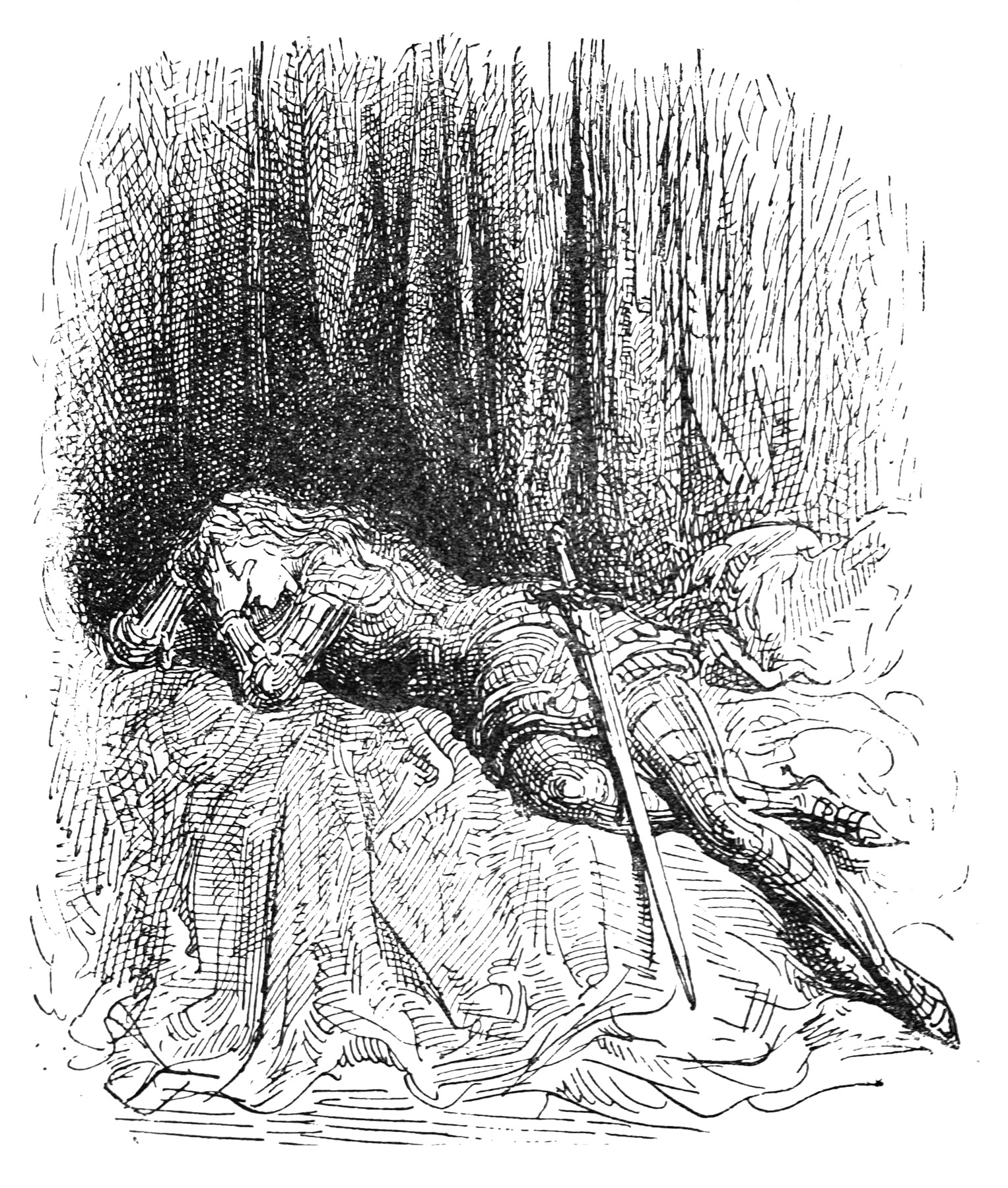
We start with everyone in the hermit’s cell congratulating Ruggiero. When Rinaldo learns Ruggiero’s betrothed to his sister he’s delighted by the news. Unfortunately, Ariosto reveals the fact that their parents already pledged Bradamante’s hand to Leon, the Greek prince of Byzantium. Neither Rinaldo nor Bradamante’s knows about this yet, so Rinaldo has no reason not to be delighted.
I gotta hand it to Ariosto. He’s down to the last three cantos and he’s still going to introduce a love triangle.
Everybody goes back to France except Prester John who goes back to Africa. When he and his army get there all their magic boats and horses turn back into leaves and rocks. Astolfo flies back to France on the hippogriff, but releases it when he arrives there. This was part of his pledge to Saint John back in the Earthly paradise. His horn’s also lost its power. He reaches Marseilles just as everyone else is arriving. Charlemagne greets them all and there’s much rejoicing. The war’s over. The Christians have won. Everything is great, until Rinaldo mentions to his dad how happy he is to have Ruggiero as a brother-in-law. And that’s when the truth is revealed. Ruggiero’s practically a beggar. Bradamante can’t marry him. They’ve arranged her marriage to Prince Leon.
This triggers all sorts of trouble. Bradamante and Ruggiero get mopey and depressed, because of course they do. Rinaldo and Bradamante can’t disobey their parents. Still, Bradamamnte goes to Charlemagne and gets him to agree that no man may marry her unless they defeat her in battle. This angers her parents who drag Bradamamnte off to one of their fortresses. And this sends Ruggiero spiraling, and being the man of violence he is he figures the only way to solve this problem is to go to Greece and kill Prince Leon.
Leon and his dad are at the moment waging war on the Bulgars and doing all right. The Bulgars are nearly crushed, and would have been if not for Ruggiero showing up during the decisive battle. He rallies the Bulgars and sends the Greeks running. Unfortunately he can’t get his hands on either Prince Leon or his dad. But all his violence impresses Prince Leon, and the Prince falls in love with Ruggiero. Now that’s kinky! The Bulgars plan on giving their kingdom to Ruggiero, but he takes off after Leon before they can. They both take shelter in the same city. The ruler of it gets word to King Constantine, saying the mysterious knight who defeated his armies is here. The King wants the knight captured, and so…
Until next canto!
CANTO SCORE CARD
Knights: Ruggiero, Orlando, Astolfo, Oliver, Sobrino, Rinaldo, Marfisa, Bradamante, Prince Leon and his dad King Constantine, King Vatran of the Bulgars, Ungiardo (a vassal of Constantine’s)
Awful Parents: Aymon, Beatrice
Swords: Balisarda
Horses: Frontino
Mages: Holy Hermit
Orlando Furioso, Canto XLIII
This is a long canto mostly about cuckoldry. There’s been a good bit of that so far, but in this canto they dial the cuck to 11. (My apologies to everyone.)
If Orlando Furioso was the most popular novel for everyone in Europe for centuries and the basis of countless paintings, operas, and ideas, then much of Western CultureTM is based on the very cishet male question of “What’s my girl up to when I’m not around?”
“A husband who desires to know
All that his wife has ever done or said
Will from contentment fall to pain and grief
And never henceforth will he find relief”
When last we left Rinaldo was being tested with the cup of cuckoldry.
If he could drink from the cup without it spilling, then he could be certain his wife (Clarice) was faithful to him. But if the cup spilled… well, we all have internet connections don’t we? Rinaldo’s shook and doesn’t know what to do. Does he drink and test the truth, or does he not drink and believe what he wants is the truth? In the end he opts not to drink. His host commends him as that is the wisest choice. The one he wishes he had made.
And so begins a tale.
The knight fell in love with a wizard’s daughter. She never knew a man until she met him. But he had known many women. Still, he received the wizard’s approval and married the daughter. Five years went by in conjugal bliss. Eventually the wizard died, and after that a sorceress in the neighborhood fell in love with him. Her name was Melissa. I assume this is the same Melissa who’s helped Bradamante a few times so far. She seemed fine then, but in this story she’s the villain.
The knight rejects Melissa. So she changes her tactics and starts planting doubts about his wife’s fidelity in his head. She thinks it would be wise for the knight to test the wife by leaving town for a bit. Before he goes Melissa brings out the cup and explains how it operates. Our guy can drink from it fine before he leaves town. The test will be how it works when he comes back. Or so I thought, but instead he leaves, has Melissa change his appearance to that of neighboring cavalier, and then the two return in disguise flashing gold and jewels. In this disguise he badgers his wife and tells her he will give her all this wealth if he could sleep with her just once. She, at last, says yes at which point our guy throws off his disguise. The wife is shamed and the two are furious at each other. When the morning arrives, the wife abandons the castle and goes straight to the neighboring cavalier’s house where she now lives quite happily.
Rinaldo’s not so sympathetic to the knight and his response is an eloquent mix of “Sucks to be you” and “It’s your own damn fault, because even steel and stone can be made to break.” In the morning the sad knight gets his boatmen to row Rinaldo down river to speed him on his journey.
Cue Ariosto going tour guide for a bit. Sermise they passed. Then Figarola and Stellata, etc. There’s also a long bit about Malagigi predicting how one city will be raised to greatness, which is likely a place where Ariosto owned property. Eventually he starts thinking about the cup and whether he was right to not drink from it. The steersman noticed his brooding and asks what’s bothering him. Rinaldo presents his case and asks if he reasoned right. The steersman says he did, because it’s like this other story about a guy who sought to punish his wife for a crime he himself committed.
And so begins another tale.
This one is about a judge named Anselmo, his wife Argla, and a guy named Adonio. Argla loved Anselmo too much and too well, and that made Anselmo suspicious. Meanwhile Adonio was a young cavalier in love with Argla. He spends all his money trying to impress her, fails, goes broke, and has to leave town disguised as a beggar. On his way he manages to rescue a snake from some peasants then continues on his journey, wandering for seven years. After that time he comes back still in love with Argla and more a beggar now then when he left. It’s around now that Anselmo gets called out of town. Before he goes he begs and pleads with Argla to stay faithful to him. He has no reason to expect she will cheat on him, except his one insecurity and a prediction a fortune teller made. Still, the king bids him go, so go he must.
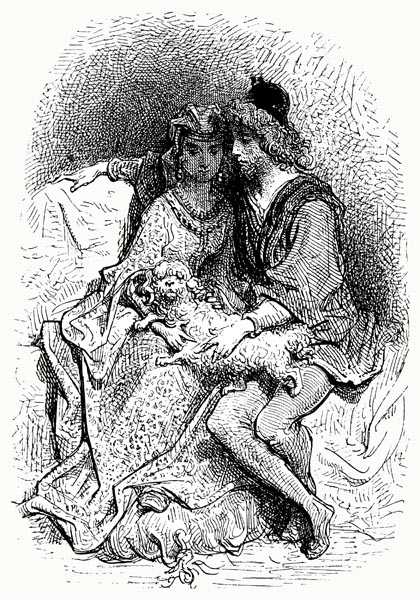
It’s around now that Adonio comes back to town, and as he does he stops by the place where he rescued the snake. Well, of course that snake was a sorceress in disguise and her name’s Manto. She’s going to repay Adonio for his help by getting Argla to fall in love with him. First, she coaches Adonio in all the right ways to behave, then she transforms herself into the cutest little dog. And not just any cute af dog, but a cute af dog that can dance and sheds gold coins and jewels when she’s pet. Thus armed, they go to town and before long Argla’s heard about the dog and asks to buy it. Adonio names his price and Argla accepts and…
“Adonio long enjoyed the fruit he plucked.”
By and by Anselmo returns and his fortune teller tells him how his wife definitely cheated. The news pierces his heart. He comes back and starts in on questioning, but doesn’t get anywhere until Argla falls out with her nurse and the nurse reveals the whole thing. Anselmo goes mad and hires an assassin to kill Argla, but before the assassin can do it Argla vanishes (due to Manto’s magic spell).
Assassination botched, Anselmo really starts fretting. Argla’s going to shack up with someone and he’ll be a laughing stock, or worse this someone will be a panderer and start pimping her out. OH NO! What to do? He sends messengers out searching for her and eventually goes to where the assassin said she disappeared. When he arrives he’s surprised to find a palace there with a hideous “Ethiop” outside. Anselmo asks who owns the place. The Ethiop says he does and would Anselmo like a tour. The place inside is full of gold and jewels and the Ethiop would part with it all if Anselmo would let him sleep with his wife. It takes a few attempts, but of course Anselmo agrees to pimp out his wife (just like he feared someone else would do.) Argla jumps out and is like “You hypocrite!” The Ethiop and palace vanish. The two make-up and decide to never talk about these events again. I don’t remember what happened to Adonio, but I suspect he got to keep plucking.
Tale done, Rinaldo and the steersman have a laugh. Then it’s back to Ariosto tour guide. Romagna, Filo, Ravenna, until at last Rinaldo reaches the island just as Orlando kills Gradasso and Agramante. They get Oliver out from under his horse, gather the bodies, and go back to Biserta.
Astolfo and Sansonetto break the news of Brandimarte’s death to Fiordiligi. She reacts as you expects she would by going completely ape-shit. Wailing. Gnashing teeth. Pulling out her own hair. They lock her up in her room.
There’s then a lot about Brandimarte’s funeral. Everyone cries. Orlando. Fiordiligi. Some guy named Bardino I first thought was a horse.
After the funeral Fiordiligi moves into the tomb and all the knights leave her there. They go to seek a doctor for Oliver. A sailor tells them about an island with a holy hermit on there and says that if anyone can heal Oliver it would be that guy, so that’s where they go. Of course this is the place where Ruggiero is and the hermit the same one who baptized him. There’s a reunion. The hermit heals Oliver. Sobrino, who’s just been hanging out with these guys who all recently tried to kill him, sees the miracle and converts to Catholicism right then and there. They then go to greet Ruggiero and learn what news he brings.
CANTO SCORE CARD
Knights: Rinaldo, Sad Cuckold Cup knight, Adonio, Anselmo, Orlando, Oliver, Astolfo, Sansonetto, Sobrino, Ruggiero
Damsels: Clarice? Unnamed woman in 1st story, Argla, Fiordiligi
Mages: Melissa, Malagigi, Manto, Holy Hermit
Magic Items: The Cuckold’s Cup
Orlando Furioso, XLII

We start in slow motion as Orlando watches Brandimarte fall. Fury once more returns to him and he stalks over to King Agramante and removes the king’s head before Gradasso can react.
Next it’s Gradasso’s turn and soon he’s dead. Sobrino this whole time bleeding out on the ground. Then Orlando goes to Brandimarte whose head is half split. His last word is “Fiordiligi” and then he’s dead. Orlando frees Oliver from beneath the horse and they return to their tents, carrying Sobrino along with them.
There’s a funny aside about a guy named Fulgoso who questions the accuracy of Ariosto’s story. A dude flew to the moon, bruv, and you’re hung up on whether Lampedusa was large enough to hold a fight between six knights?
That done Orlando looks out and sees a boat approaching. But before Ariosto tells us who that is, it’s off to Bradamante, who’s back to being all emo again.
I tell you. These two,
Bradamante and Ruggiero?
Complete trainwreck people.
Sure, they’re deeply in love, but the second they’re apart it’s like they’re expecting the worst of the other and ready to commit suicide. Bradamante is back to thinking Ruggiero hates her. She mopes to Melissa. She mopes to Marfisa. It’s Marfisa that tells her to get a grip. Ruggiero’s an honorable man. Etc. Etc. Bradamante is calmed… for now.
But what happens next is a complete side track. Ariosto switches to Rinaldo, who’s been chasing Angelica since the start of this book. He’s all messed up about her and sends people out to find where’s she gone. Eventually, Rinaldo seeks out Malagigi and that one uses his magic to discover how Angelica slept with Medoro and left with him for Asia. He tells all this to Rinaldo who does what all sullen men do when unlucky in love. They seek out someone to do violence upon. Rinaldo sets off east saying he wants to get his horse Baiardo back. He sets off and promptly encounters a monster.
This monster is a monstrous female figure covered in lidless eyes, ears, and snakes. This monster gets Rinaldo in her clutches and won’t let go, even when he tries to run away. He thinks all is lost, but before right before the end another knight rides up. He drives the snake away with his flaming mace. Then he takes Rinaldo to a pool where the waters will quench his thirst and free him from his obsession for Angelica. When Rinaldo asks the knight’s name, the knight says his name is Scorn, and like that he disappears.
I guess this whole interlude was an allegory about unworthy women should be scorned or something. Actually, this whole Rinaldo bit now and in the next canto is heavy with Kubler-Ross stages of grief for relationships allegories.
Rinaldo wonders what that was all about, but he’s glad to hate Angelica now and no longer love her. He continues on. Somewhere in Switzerland he hears how there’s to be a duel between Agramante and Orlando, and so he decides to make for that. Soon after he encounters another knight who offers to put Rinaldo up for the night.
It’s then that the men start talking about matrimony. We learn that Rinaldo has a wife. Night comes. Rinaldo and his host sit beside a great fountain where statues of women are kept on pedestals. This fountain gets described in intricate detail. All the statues give Ariosto a chance to commend the virtues of his female contemporaries. The host asks if Rinaldo wants to make a wager. Wager? Yes, wager. Does he think his wife is virtuous?
You see the host says he has a cup that spills before you can drink it if your wife is cheating on you.
What do you say Rinaldo? Care to see if you can drink from it?
CANTO SCORE CARD
Knights: Orlando, Brandimarte, King Agramante, Oliver, Sobrino, Gradasso, Marfisa, Rinaldo, King Charlemagne,
Swords: Durindana, Balisarda
Mages: Melissa, Malagigi
Damsels: Clarice (Rinaldo’s wife), Angelica (they’ve been slut-shaming her fierce, but she and Medoro got out of this the happiest)
Magic Items: Flaming Mace of Scorn, Cuckold’s Cup,
Monsters: The Monstrous Female With a Thousand Lidless Eyes, Scorn (looks like a knight)
 Yesterweird