BW BC 13: And Now the Strangeness Starts

Hello, welcome back, I’m glad you could make it.
Three more stories this week: one a flash-length excerpt from a longer story, the other two your standard slightly shorter than average short stories. Isak Dinesen/Karen Blixen gives us our flash length story, an excerpt from ”Peter and Rosa”. After that is a bit of decadent literature from Junichiro Tanizaki called “Tattoo”, and a humorous story from Flann O’Brien called “John Duffy’s Brother”.
From “Peter and Rosa” by Isak Dinesen
Did you know that when Isak Dinesen sent the manuscript for her collector “Winter’s Tales” to her publisher it was right at the start of World War 2, and she had no way of knowing if it was received or published until after the war when former soldiers wrote to tell her how much they loved her book? While that story is wild on multiple accounts, I like to imagine what kind of guys these soldiers were who read Dinesen during the war.
An old friend of mine described Dinesen as a writer who readers always feel like they alone have discovered, and I think there’s something to that. When one of her stories clicks, that feeling of some truth being revealed to you and you alone is overwhelming. You might have to read a few of her stories for that to happen, but when it does… mmm, chef’s kiss.
Sadly, the excerpt Manguel includes here from “Peter and Rosa” is not enough to generate that feeling. If anything it gives only the barest hint with its short tale of a ship captain, his ship, and his wife’s jealousy that has all the qualities one recognizes from fairy tales.
All I can say is find yourself a Dinesen collection. She’s well worth the read.
“Tattoo” by Junichiro Tanizaki
I have to imagine that when Edgar Allan Poe’s work was translated into Japanese, they arrived alongside Oscar Wilde’s and Charles Baudelaire’s, making like this stew of decadent weirdness that the edgelordier sections of early 20th century Japanese writers must have loved. This story is direct from that main vein about one Seikichi, a sadistic tattoo artist, being gifted with a teenage girl to decorate as he pleases in the days before she is to start her training as an elite courtesan.
The ick-factor is strong here.
Seikichi starts the session by showing the girl his collection of erotic torture etchings. This terrify-titillates her, leading to an all-night tattoo session that leaves both exhausted. In the morning the artist knows he has reached his peak, but is more alarmed at the change in the girl. She has been transformed from the shy girl into a cruel woman. And as the sun rises, its light appears to set fire to the new tattoo.
And what is the tattoo of? A spider.
That’s it. The end. No moral. No comeuppance. No attack by the suddenly living spider, just a whole heap of decadence with a few extremely vivid images. Which is in no way a bad thing, but maybe not everyone’s cup of tea.
“John Duffy’s Brother” by Flann O’Brien
This is a story about a man who wakes up one day and thinks he is a train. He goes to work and does his job, and says things like he’s a train, then he goes home to lunch and realizes that he is in fact not a train. He’s then mortified by his morning’s behavior, but no one there ever mentions it. In fact they hardly noticed. Beyond a newfound particular-ness with sticking to a timetable, the man hadn’t really changed all that much. But still, those hours when John Duffy’s brother thought himself train would go on to haunt him for the rest of his life.
Initially, this story didn’t make much of an impression, but now a few days later I see it’s quite funny. Like what if Gregor Samsa did wake up one morning as a giant cockroach but nobody cared or noticed? That would be funny.
Next week… more transformations! Or, at least one transformation because it looks like a long story.
Until then, stay safe!
BW BC 12: Days of Future Present

And we’re back with three short stories this week. The first one was my favorite of the bunch.
“Split Second” Daphne Du Maurier
Mrs. Ellis is a fussy widow. She likes everything to be in its proper place and stresses a lot about her adolescent daughter who’s away at school. While taking a post-lunch stroll, a delivery van narrowly misses Mrs. Ellis, and things turn strange after that. As she attempts to make sense of the new world she finds herself in, we, the readers, get a deep dive into a story of paranoia and fear.
Is Mrs. Ellis insane? Has she been an unreliable narrator this whole time?
Why are all the details she gives to prove her identity partially right but partially wrong?
Du Maurier adds layer upon layer of details, and this is very much one of those claustrophobic stories where you wonder whether you could prove your own identity if everyone around you denied you were who you said you were. Not my favorite style of story to be sure, but Du Maurier makes it real and the slow progression from detail to detail makes the escalating tension masterfully done. It’s good, but maybe not for everyone. Du Maurier’s worth tracking down, but she’s a writer that you can’t rush and she’ll take as long as she needs to tell her story.
“August 25, 1983” Jorge Borges
A young man named Jorge Borges visits an old man named Jorge Borges, but they are both the same man and each claims to be dreaming the other. How does this work? Who knows! It’s a Jorge Borges story with a lot of talk of doubles, mirrors, suicide, and who can tell what is real and what is truth and yadda yadda. The whole thing has a masturbatory air. There’s better Borges to read.
“How Wang-Fo Was Saved” by Marguerite Yourcenar
Marguerite Yourcenar was the first woman to be admitted into the French Academy. Her novel about Hadrian was a big deal when it came out, as it was an exploration of post-war Europe through characters from Antiquity. As a fan of Graves’s I, Claudius I hope to track it down some day. “How Wang-Fo Was Saved” is her rendition of a classical Chinese tale. Or at least so Manguel says. I have my doubts. My take is that Yourcenar used Orientalism to write fantasy that bordered on the Conte cruel.
Wang-Fo is an itinerant painter and little more than a beggar. Ling is his apprentice and deeply devoted to his master. But before they met Ling was a privileged aristocrat with a beautiful wife and a vast fortune. His life changed abruptly the moment he met Wang-Fo in a tea house and the old man described the world in a way that opened Ling’s eyes to wonder.
However, not everyone is pleased with Wang Fo. In particular the Emperor is more than a little pissed at him. You see all through the emperor’s youth he was kept in seclusion with nothing but Wang Fo’s paintings for company. The Emperor became so enamored with these paintings that when he eventually left seclusion everything in the actual world proved to be a disappointment. Now he hates Wang-Fo. So when Wang-Fo shows up in the city the Emperor promptly has him and Ling arrested.
The Emperor’s arranged a whole sort of punishment for Wang Fo that involves blinding the old man once he finishes an uncompleted painting from his youth. Ling protests and gets killed for his troubles.
Without any other choice, Wang Fo starts on his work, but here a strange thing happens. He paints an ocean and a boat appears on that ocean. In fact the room is now full of water. Inside the boat is Ling and he has come to rescue Wang Fo and take him away into his painting, which he proceeds to do. The End. It’s not a bad story, but Orientalist af.
Next week… more unless there’s less.
BW BC 11: The Misremembered Facts in the Case of M. Valdemar

Only one story this week because the Du Maurier was longer than expected. That’s okay because I’m slightly ahead of schedule so can slacken the pace a bit. That means we only have Edgar Allan Poe’s “The Facts in the Case of M. Valdemar”.
This is actually one of my favorite Poe stories, but after this reread I have to admit very little of what remembered happening in this story actually happens in this story. And much of the cool shit I like about it is actually either made up whole cloth by my imagination or was from some movie version I saw somewhere.
So, let’s begin with the basic facts about “The Facts in the Case of M. Valdemar”.
Valdemar is an invalid dying of tuberculosis. The narrator, a hypnotist, has convinced M. Valdemar to be hypnotized right at the point of death. There are a lot of descriptions of the sick room, done in that fever pitch purple prose Poe does well and which appeals to morbid teens of varying stripes. The plan goes off without a hitch, M. Valdemar dies, but his mind remains alive due to the hypnosis. There’s a creepy long passage about how M. Valdemar’s tongue lolls out of his mouth and speaks with a monstrous voice that comes from somewhere deep in the throat. It’s grisly. And the hypnotist keeps him in this state for seven months until he decides to see if it’s possible to wake Valdemar and return him to life. This does not succeed and as Valdemar’s tongue bursts with the word “Dead! Dead!” the body dissolves into a liquid mass of loathsome putridity. The End.
Now things I remember that aren’t in the story: the hypnotist has a motive for doing this beyond idle curiosity. He wants to know what happens after death, and his goal is to use the mesmerized Valdemar as a medium to explore the afterlife. Every day the hypnotist asks the corpse questions hoping to discover if the soul was immortal, and everyday the corpse replied that there was nothing, only void. The hypnotist refuses to accept this and continues to question Valdemar for seven months before the authorities force an end the experiment, at which point cue the putridity.
And none of that’s in the story. It might be in the Roger Corman version, but I don’t think it is. That version just has Basil Rathbone using hypnosis to get at Vincent Price-Valdemar’s wife and VPV rising from the death trance before Rathbone can seal the deal.
Maybe, I should write down my version.
Do you all have any story you misremember despite enjoying?
BW BC 10: To Sleep, Perchance to Dream

This week’s stories continue the thread from last week. As in Maugham’s “Lord Mountdrago” we have dreams, dreamers, and doubles. We also get another classic from the Arabian Nights.
We start with Giovanni Papini’s “The Sick Gentleman’s Last Visit”. Papini was an Italian writer active during the early half of the 20th century. As such he oscillated between reactionary and revolutionary politics, coming to rest on Catholic Conservatism and in particular Fascism. So that’s that. Jorge Borges called him “undeservedly forgotten”. Jorge Borges’s politics would likely disappoint me too.
In “The Sick Man’s Last Visit” we have another story about a troubled man coming to a stranger in the hopes the stranger can solve the man’s troubles. The Sick Man’s problem is that he’s realized that he’s not alive, but in fact being dreamt by someone else, and he’s desperate to find this individual and wake them up. Things get murky because as the Sick Man explains his troubles you kind of aren’t sure if he’s being dreamt by a human or some immortal being. And the story never resolves that question. Personally I’m fine with that. I like those stories that are just some character recounting some weirdness they saw and saying “Ain’t that some crazy shit?” before walking out the door. Your mileage may vary.
Next story, “Insomnia” by Cuban writer Virgilio Pinera, is a flash length horror story about a man who can’t sleep. After consulting with experts, and attempting all sorts of remedies without success, the man buys a gun and blows his brains out. This kills him, but it doesn’t put him to sleep. Insomnia is most persistent that way.
The other flash length story in this bunch is simply called “A Dream” and it’s from the Arabian Nights. This is another classic where a man dreams that there’s a great treasure in a house in Cairo and sets about traveling there. After many adventures he reaches Cairo and finds the house, but before he can go there, he gets caught in some mischief and arrested by the police. After a beating the police ask him why he was at the house in the first place. When he recounts his dream the chief of police laughs at him and says, “I too dreamt of a great treasure in a certain place, but I’m not a moron who listens to dreams”. Of course the certain place the police chief mentions is known by the first man and is in fact his house back home. He returns home, finds the treasure there as the police chief’s dream foretold, and lives happily ever after.
Last, we have “The Storm” by Jules Verne.
Confession time: this was my actual first Verne. So color me surprised by this story, which I take as being atypical for Verne as it’s more a weird story than a science fiction story.
Here we have a Doctor Trifulgas, who’s your awful miserly doctor. He’s inside while a storm rages outside, and so when a waif comes to his door to ask the doctor to come visit her dad who’s lying on his deathbed, the doctor says no because the man’s poor and the family can’t possibly pay him. After the waif comes the man’s wife, then his mother. Each time they offer more money to Doctor Trifulgas until finally he sees the trip out there as a bargain, and so he goes off out into the storm. The path’s horrible, rain slick and barren. The man’s mother disappears, and the doctor’s left with nothing but a dog to guide his way. He reaches the house, finally, but he doesn’t find the sick man in the bed he was told to suspect. Instead, he finds himself lying there, and things proceed to their inevitable bewildering conclusion from there.
This one surprised me. It was a lot more atmospheric than I expected. If life were longer
I would probably try to read more Verne.
Next week, Edgar Allan Poe and Daphne Du Maurier!
BW BC 09: Death is Your Friend So Get Comfortable With Them

What Ho, Black Water fans!
We have two stories this week, well actually, we have three stories, but the second one’s not really worth talking about much. So let’s talk about that one first!
Jean Cocteau’s “Death and the Gardener” is a flash length retelling of that story where a guy sees Death, and Death sees him, and the guy leaves town, only for Death to say to some other guy, “Funny seeing that guy here, because I have a meeting with him tonight in [whatever town the guy fled too].” It’s not a bad story, but once you know the twist there’s not much else going on with it. The good bit about this story is in the pre-story blurb where our editor Manguel gives us this quote from Cocteau:
“We need Death to be a friend. It is best to have a friend as traveling companion when you have so far to go together.”
Now to the heftier stories.
In 1975 the Times of London hosted a ghost story contest with Kingsley Amis, Patricia Highsmith (!), and Christopher Lee as the judges(!!). Our story “A Scent of Mimosa” by Francis King won second place. And while it’s a bit conventional in plot, it’s fun in its characterizations as it involves writers, literary prizes, and award ceremonies.
We follow Lenore who’s recently won the Katherine Mansfield prize. She’s in France to receive the prize, traveling with a trio of judges, who are all cringe-worthy literary types. Would you like to hang out with the snob, the surly one, or the one who’s always finding reasons to touch you? Congratulations! You don’t have to choose because you’re stuck in a car with all three! As the ceremonies proceed, Lenore finds her life echoing Mansfield’s (the tuberculosis parts) and finds herself drawn to a strange man she encounters while listening to the speeches. The two connect, and Lenore’s fascinated by him, but somehow he’s never around whenever she wants to find him. Of course, he’s a ghost (Mansfield’s brother who died during World War I), but it’s cool because he says he’ll see her soon and Lenore realizes she’s okay with that. Hence the Cocteau story and quote that follows right after.
Our third story is Somerset Maugham’s “Lord Mountdrago”. It’s about a Doctor Audlin who uses his powers of being very boring to become a therapist. You see he’s so boring he can hypnotize people by the power of his monotone voice alone. One day a new client shows up, our titular Lord Mountdrago, and he’s a conservative politician in parliament and a horrible snob. His trouble is that he keeps having dreams where he keeps running afoul of rival politician, a Welsh Labour MP named Owen Griffith. He fears he will go mad if these dreams aren’t resolved, but when Doctor Audlin suggests a simple cure, Lord Mountdrago refuses to do it, as it requires too great a sacrifice to his pride. And of course that choice ends in disaster.
Like the Francis King story, this one provides some rich characterization. The dreams where Griffith taunts Lord Mountdrago are funny because they’re banal junk described by a person who believes himself superior to such dreams. And the feud between the two men is less ideological than something out of an elementary school classroom. Maugham goes down deep into the particulars to suggest the universal. It’s an enjoyable ride, so vivid in its depiction that even ultra-boring Doctor Audlin gets a rich interior life. Although, by story’s end he’s had a shock that forces him to question everything he thought he knew about the world.
No joke. These are some good stories. And so far this anthology is one that I’m happy to have managed to track down.
Next week… a literal Fash, a little flash, and Jules Verne!
May we all be here to read it.
BW BC 08: Haunted Before the Fact

We have two classic stories of the ghost’s appearance heralds an approaching death sort: Charles Dickens’s “The Signalman” and Pedro Antonia de Alarcon’s “The Tall Woman”. Both also employ the tried and true “let me tell you a story” and the “f*** you and your explanations” techniques.
“The Signalman”… wandering narrator wanders to some remote spot and sees a lonesome signalman beside the train tracks. At first the Signalman is spooked by the sight of the narrator, but after some time he calms down and the two start a conversation.
Dickens in the early portion really digs into the atmosphere and paints the landscape around the tracks in hellish shades. You’d think you were walking into Dante’s Inferno and not some lonesome railway cutting in the English countryside beside a tunnel. Then when the Signalman starts to explain why he was so startled by the narrator we get his story about the strange apparitions he’s seen at the mouth of the tunnel, the appearance of which have always heralded some train-related death. Now a third apparition has appeared, and the Signalman’s in a bind because he knows a third death approaches, but can’t warn anyone without them thinking he’s mad. The narrator urges him to go see a doctor, and the Signalman agrees to do this, except fate intervenes and things reach their inevitable conclusion.
“The Tall Woman”… English readers might not be familiar with de Alarcon. I wasn’t. And Manguel in his introductory blurb doesn’t really sell him as a writer to track down, saying he’s most famous for writing the book someone else made a famous opera from. Elsewhere online, however, someone has called “The Tall Woman” the quintessential Spanish ghost story. I don’t quite know what to make of that, but as a story goes it’s creepy.
A bunch of guys go on a picnic. One of them tells a story about a deceased friend who told him a story about how he (the now dead guy) lived in terror all his life of meeting a woman alone at night. He knows the fear is illogical, but can’t help feeling it, and some strange things have happened that to his mind make the fear justified. You see on certain occasions, usually when he’s in some bad straits, he’s encountered this woman who has stalked him through the streets. The woman as described is something straight out of Goya’s Black Paintings: a gigantic toothless crone dressed in the ill-fitting costume of a much younger woman. It’s not so much a ghost as some demonic entity. Each time the man encounters her some tragedy befalls him, and he feels justifiable fear that she will appear again.
Of course she does, and once again the inevitable happens.
De Alarcon goes deep into classic creepypasta territory. We are in “there’s a knife wielding maniac right behind you, so close their hair is practically touching your collar, but they won’t kill you unless you turn around” territory. What’s spookier is the fact that the guy is haunted without cause. There’s no curse or past crime that he must atone for; there’s just this thing he’s been told to fear. The specter’s a sort of meme that can only haunt people who know about it. And now that the story has been told to an audience, the same creature will now haunt them too.
Creepy.
On a side note, what do you think would be the quintessential English-language ghost story? Not simply folklore ghost story, but written and published ghost story that everyone either knows or should know?
Leave your answers in the comments below.
BWBC 07: The Supernatural Commonplace

Three short, grisly stories from Black Water this week and I’m starting to feel like this anthology is the mix-tape Alberto Manguel made to impress Jorge Borges.
The first story, “An Injustice Revealed” by Anonymous, comes from 6th century China and I feel that Manguel really missed an opportunity to talk about P’u Songling here. For anyone that doesn’t know, P’u Songling was an 18th century collector of strange tales from China and those stories, like this one, have a tone that’s simultaneously desolate churchyard and cosmopolitan city (with a good bit of the bawdy and scatological thrown in). The weirdness comes across in how commonplace the supernatural seems. “An Injustice Revealed” is typical of the style and shifts from the previous stories in the anthology by the fact that the ghost here is treated like any other welcome visitor.
Ye Ning-Fei, a government inspector, has come to the province to uncover the local Governor’s corruption. Ye’s friend, Wang Li, was the previous inspector to the province and died while investigating the same Governor. One night as Ye sits going over the books Wang appears and asks Ye to do him a favor. Basically, a bureaucratic snafu has caused his soul to get separated from his corpse and now he can’t pay the spirit-money necessary to cross from one spirit-province to the other. Would Ye be so good as to burn some spirit money for him so he can pay the tolls? Ye agrees, but wants to hear more about the afterlife. Wang tells him about his trial in the Court of Hell and the mistake that saw his soul locked up there. This mistake points to the Governor’s corruption and from it Ye gets the name of a person wronged by the Governor. But it doesn’t matter much because the Governor dies and goes to Hell, which Wang knew all about because he heard the details of the case while trapped down there.
It’s a good story, but reads more like a treatment than an actual story. Again, if you want to read more stuff like it I recommend you track down a P’u Songling collection. It’s like a collection of News of the Weird that’s a thousand years old.
“A Little Place Off the Edgeware Road” by Graham Greene continues this mix of the supernatural and the commonplace. In a throw back to an earlier story we get treated to another dilapidated movie house and the sad clientele drawn to such places. Only Craven, the story’s main character, is no Pablo Gonzales hoping to find love. Instead, Craven is your typical young male depressive out wandering in the rain beneath the burden of their own intrusive thoughts. To take his mind off his particular fixation, which involves graves and the fact that “under the ground the world was littered with masses of dead flesh ready to rise again”, Craven decides to stop by a rundown theater and watch a movie. Midway through a man sits down beside him, and as murder gets done on screen this man starts whispering to Craven how different actual murder is from the one depicted. At a few points this man even takes Craven’s hand and occasionally coughs on him. All told Craven’s utterly repulsed by the guy. When the movie ends the man leaves as the house lights come up but he doesn’t get away before Craven sees he’s covered in blood. Being a law-abiding sort Craven calls the cops, saying he’s found a wanted murderer. But the cops say it’s not the murderer that’s missing, but the victim’s corpse. At that moment Craven catches sight of himself reflected in the phone booth’s window and his face is covered in blood as if it had been sprayed with a fine mist. With this revelation he promptly has a nervous breakdown. The End.
The MR James piece is from “A School Story” and it’s a snippet of a conversation between two horror story connoisseurs one-upping each other with scary stories. Coming where it does, I can’t help but see it as a critique on Manguel’s project as a whole, warning us that the wondrous can become dull when we indulge in it too often.
Next week, a Signalman and a Tall Woman.
BWBC 06: The Good Bit
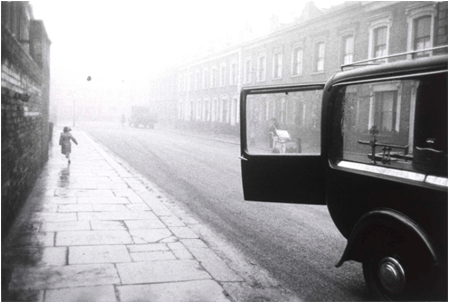
Two short ones this week: LP Hartley’s “A Visit from Down Under” and Saki’s “Laura”. They’re good, but also both very much the kind of story you see in anthologies of the Classic British Ghost Story sort.
Hartley is probably most famous as the guy who said a thing, which in this case is the quote “The past is a foreign country; they do things differently there.” See? You have heard of him before! “A Visit From Down Under” starts on a rainy London bus with a strange man all bundled up and sitting on the upper deck in the rain. He’s very peculiar. In particular he is cold to the touch. The ticket collector wants nothing to do with him and only reluctantly goes to tell him when they have reached his stop. Only when he goes to tell the man, the ticket collector discovers that the man has disappeared. FLASHBACK to five hours earlier and a Mr. Rumbold has arrived at his hotel (which is on the street where the strange passenger wanted to stop) after being away so long in Australia. He sets about drinking and making himself comfortable, exchanging some bantering talk with one of the hotel servants about murder. Then he dozes off while listening to a children’s show on the radio. The show takes on ominous overtones becoming increasingly more creepy the longer it goes on, until finally it triggers a panic attack in Rumbold who flees to his room. Later the strange passenger from the opening scene arrives and soon enough Mr. Rumbold is murdered with no trace left but for an icicle melting on the mantle piece.
All told this story exists entirely on the surface with inference made to Rumbold’s crimes. but nothing explicit is revealed. While the end is pretty basic with some wronged ghost coming back to have revenge on the person responsible for their death, the execution is quite good. The bit with the children’s radio show is great, genuinely creepy, as Rumbold can’t keep himself from getting caught up and eventually menaced by its whimsy. Kids’ shows are creepy! Track this story down and read it for that scene alone.
If Hartley’s story was all exteriority without much in the way of introspection, Saki’s “Laura” goes even further. Here the scenes are nearly all dialogue with people saying things that push the story along. We have Laura, a dying woman, Amanda, her friend, and Egbert, Amanda’s husband. Laura jokes about how after her death she’ll return as an otter or some creature, and to be frank she’d looking forward to it, especially if she can be an otter that kills all of Egbert’s chickens. When this comes to pass, Amanda tries to save the otter, but Egbert hunts it down. This results in Amanda having an episode, so Egbert takes her to Egypt to recover, where he is plagued again by another of Laura’s incarnations, and now Amanda is seriously ill. The End.
It’s light all the way through, maybe too much so, as I doubt I’ll remember it a month from now. Yet… well, I have to admire a story that’s all polished surface and light as cotton candy. The skill and craftsmanship on display in such a story are appealing no matter how light they seem. And it’s PG Wodehouse and Oscar Wilde territory, except with higher polish. So don’t be surprised if someday I own one of his story collections.
Next week… Anonymous and Graham Greene!
BWBC 05: A Thousand Words Tell a Picture
Welcome to portrait country.
Not physical portraits as in the Dorian Gray sense (although one does show up in our second story “Enoch Soames”), but the prose sort. First in the short ghost story “Importance” by Manuel Mujica Lainez, about a Mrs. Hermosilla Del Fresno, a self-important woman whose soul after her death lingers on for eternity among her possessions, and second in Max Beerbohm’s longer story about time travel, deals with the devil, and “Enoch Soames”, its titular self-important writer of dubious quality.
I’ve little to say about “Importance”. It’s a good story, concisely told and with a barb to it. Mrs. Hermosilla Del Fresno is a very important widow, nearly the most important widow in her city. The one blemish in her pedigree is that she comes from a less than spectacular family. All of whom she cut out of her life as she rose in society. Then, as these things happen, she woke up one morning only to find herself dead. At first she assumed it was only a matter of time before the angels appeared to take her on to her celestial reward, but as time goes by, and her dreaded relations reappear, she realizes that no angels are coming for her, and this is to be her eternity, her soul trapped in her bedroom, ever aware of how her family degrades her memory.
It’s a good solid shot of smugness followed by impotent rage towards God and man.
What’s not to like?
I hadn’t heard of Lainez until now and it appears his books were never much translated into English. The two that were, Bomarzo about an immortal Renaissance duke and The Wandering Unicorn a tale about the fairy Melusine set against the back drop of the Crusades, sound right up my alley and will likely warrant some tracking down or interlibrary loan next time I’m in the USA.
Now back to the Black Water and “Enoch Soames”…
I don’t know if Max Beerbohm is much remembered these days. He’s certainly someone that shows up a lot in any book about early 20th century English Literature, but more as a scenester than an actual writer. The sort who draws funny pictures of literati and has those pictures and his bon mots published in the smart set papers. Beerbohm’s funny, and perceptive, but a bit arch and smugly long winded in that British high society sort of way. If he were alive today, he’d very likely have a very popular podcast or even late night talk show.
“Enoch Soames” starts as a cutting satire of a certain type of wannabe writer. Soames is the arrogant dabbler who lurks at the margins of the literary scene whose overwhelming sense of self-importance is so distant from his actual ability and output to make him a farcical character. He apes the decadent style while also dismissing it and everything else that crosses his field of vision while working intently on some niche work he proclaims to be nothing shor of groundbreaking. When it’s published it has the title “Fungoids” and no more than three people buy it.
Beerbohm recounts meeting Soames on multiple occasions and finds him morbidly fascinating. As things progress, Soames worries more and more about his legacy and whether people will realize his genius after his death. He’s nearing a fever pitch when the devil steps in (or speaks up since he’s sitting next to Soames and Beerbohm in a crowded café) and offers to transport Soames exactly one hundred years into the future in exchange for his soul. Soames makes the deal and from that point on things go very badly for Enoch Soames.
First he’s not remembered as a significant writer at all. Second, he’s not even real but an imaginary character most famous as the subject of Max Beerbohm’s short story “Enoch Soames”. This leaves him crushed and deflated, so that when he returns to his own present day he’s unable to resist when the devil comes calling for him. The devil here is the theatrical sort dressed in pure Mephistopheles. Beerbohm describes him as looking like the sort of criminal that lingers around train stations in the hopes of stealing some high-class lady’s jewelry case.
As a rather Soamesian sort myself, the story did make me cringe. Beerbohm’s best remembered as a caricaturist after all. The portrait is perfect and Soames has a vividness despite his being described as “dim”. Trust me, if you have ever at all been near any sort of scene then you have met guys like Enoch Soames with their unwarranted high opinions of themselves. That Beerbohm paints his picture and then erases it in the same story is a clever act.
Next week. . . more writers I’ve only heard about but never read!
BWBC 04: Mundane Miracles, Mundane Horrors

In an English cottage two old women sit and drink tea. Outside, the modernizing world makes its noisome rumbles and smoke. Inside, the women eat small sandwiches, sip tea, and gossip about the lives they’ve led. One, the sick one, begins to tell a story. It is not a love story but it is a story about love and devotion and a deserted house where something called a “token” lives. If you go to the house and stand outside the door the token will listen and let you take on someone else’s troubles for your own. The woman went there for love, so she might take on all the pain destined to come to her man. It didn’t matter that she could never be with that man. She was his and that was all that mattered. Now, the cancer on her leg grows, and the story ends when the nurse arrives and complains about old ladies and their gossip.
That’s the outline of Rudyard Kipling’s “The Wish House”. A story I like more as an idea than in its written form. It’s all told in a very roundabout way, and by the time the actual Wish House appears it’s easy to have gotten distracted by the why’s why and who’s who in the story. But retelling the story above, the idea becomes visible again and I’m once more interested in the “token”.
Other sites will go into the Christian symbolism Kipling employs in the story. The sick woman’s name is Grace. GRACE! Get it? But all that’s pretty scant sauce on an idea I wish had more exploration.
Now on to a story about a suburban father who fears for his son and what he’ll learn about life down at “The Playground.” This is a Ray Bradbury story, so it’s ripe with what now reads as corny Twilight Zone weirdness, but that’s only because Ray Bradbury was as good as he was and made his legacy ubiquitous.
This is an anti-nostalgia story with an adult remembering their childhood as an era of brutality and powerlessness. The father views the playground in question as a demonic place where children are introduced to the world’s cruelties and it’s now his responsibility to protect his child from those same cruelties. That the playground has the supernatural power to spare the son by sacrificing the father (Get it!?!) pushes this into the fantastic.
“The Playground” has some great descriptive passages in it as Bradbury renders hop-scotch outlines, slides, and swing-sets through a lens that would do Hieronymus Bosch proud. Also when set right after the Kipling story the whole notion of taking on another’s troubles as one’s own becomes much more sinister. Kipling’s a believer in his story, while Bradbury is an agnostic at best. Sure, the playground has a manager and the light is on all the time in their office, but no one’s ever in there and the manager’s never been seen.
I feel like I should read more Ray Bradbury. At the same time I feel like I’ve already read too much Ray Bradbury. Yet, I haven’t really read all that much Ray Bradbury. It’s just that decades of entertainment have absorbed so much Ray Bradbury that we’ve all read Ray Bradbury without having read Ray Bradbury at all.
Next week some more spooky shit!
 Yesterweird