
Best of Beneath Ceaseless Skies, Year 4
My story “Shadows Under Hexmouth Street” is in this year’s Best of Beneath Ceaseless Skies. You can read more about the anthology here, including where you can buy it for the e-reader of your choice. I’m pretty stoked to be sharing space with Chris Willrich, Kat Howard, Tom Crosshill, and Yoon Ha Lee.
Give it a shot, and maybe you’ll push the download count up into the triple digits.
The Books Will Find You
I remember reading the opening of this weird SFF book back in high school where a guy’s kidnapped from the present and imprisoned in the future for a crime no one will tell him about. I never finished it. The thing I remember is the guy being interrogated at a table that had a holographic hand hovering above it. Anyway I set the book down or lost it or whatever, and probably couldn’t have told you who had written it – until today when I started reading Indoctrinaire by Christopher Priest. That’s the book. I’m not sure how it found me here in South Korea.
Patricia Anthony (1947 – 2013)
Patricia Anthony died last month, and for whatever reason the word has only been released now.
Anthony published a number of SF books throughout the 90s that read like grimmer versions of Philip K. Dick novels: deceptively easy to read, but grueling in style or subject matter. For an example of one of these check out Brother Termite. She later drifted away from SF in disappointment and took to writing screenplays. Supposedly there are a few unpublished novels that may or may not see the light of day.
One of my favorite reads from recent years was Anthony’s Flanders, a World War 1 magic realist novel that it’s a bit like Goodbye to All That mixed with the Last Temptation of Christ. That’s actually a rather dumb description, but the book was a delight to read. Both funny and horrifying.
“I was having a good sit-down myself, not the yellow squirt I get when the water’s bad, nor the dark goat-turd pebbles I get when the food’s not plentiful enough. No, this was a great, glorious golden cigar of a turd that felt fine and upstanding coming out, a British sort of turd. Major Dunn would have pinned a medal on it.”
Yeah, it’s a quote about poop. So what? It occurs in the middle of a book featuring trench warfare. When it happens the main character has seen some bad shit (pun intended), and the fact that he can still be pleased and make a joke about crapping hits you like a punch in the gut. You’re laughing, but there’s something more going on. You actually feel happy for the guy.
It’s a shame she’s gone.
Do Not Deny the Eye
 I gotta listen to this guy more often.
August Books 2013
It was staycation. Here are the books I read on the couch.
1. Infidel (The Bel Dame Apocrypha #2) – Kameron Hurley
The Bel Dame Apocrypha has been my favorite SFF series from recent years. The books are an amazing blend of assassins, shape shifters, pistol-packing magicians, and giant insects on some sad sack, craptastic, hellscape planet. They have great world building and a great cast of characters, and I say both those things as someone who hates in-depth world building and large casts of characters.
2. The Record of a Quaker Conscience – Cyrus Pringle
Pringle was a Quaker and objected to the Civil War on religious grounds, refusing to pay anyone to be his substitute upon being drafted. He refused to fight and was sent to prison on one of the islands in Massachusetts Bay. Later he got moved down to Virginia where he ended being tortured. His case and that of his companions would reach Lincoln and he would excuse them from service. Later, Pringle would go on to become a renowned botanist making expeditions into the American South-West. The book is available via Project Gutenberg and you can read about Pringle on wikipedia.
3. Sword of Fire and Sea (Chaos Knight Book #1) – Erin Hoffman
An enjoyable summertime read that reminded me a lot of the enjoyable summertime reads of my youth. It’s secondary world fantasy with elemental magic, gryphons, and stalwart sea captains. Also Hoffman can summarize action so you don’t have to be led about by the hand.
4. Poets in a Landscape – Gilbert Highet
A series of biographies of Roman poets mixed with an Italian travel guide circa 1957. Highet’s a classicist of the urbane over-educated type, but he has a passionate love of his subject, an inviting style, and the ability to share why he feels so passionate about his subject matter. Plus, he gives the occasional “fuck yeah, books!” battle cry that I love. An example:
“History is a strange experience. The world is quite small now; but history is large and deep. Sometimes you can go much farther by sitting in your own home and reading a book of history, than by getting onto a ship or an airplane and traveling a thousand miles. When you go to Mexico City through space, you find it a sort of cross between modern Madrid and modern Chicago, with additions of its own; but if you go to Mexico City through history, back only 500 years, you will find it as distant as though it were on another planet”
“These are not books, lumps of lifeless paper, but minds alive on the shelves. From each of them goes out its own voice, as inaudible as the streams of sound conveyed by electric waves beyond the range of our hearing; and just as the touch of button on our stereo will fill the room with music, so by opening one of these volumes, one can call into range a voice far distant in time and space, and hear it speaking, mind to mind, heart to heart.”
5. A Pretty Mouth – Molly Tanzer
A collection of horror stories documenting the history of the decadent Calipash family. It can be read as a novel or historical inquiry, and while the stories might begin as pastiche, they rise above their source materials by subverting and playing irreverently with them. I definitely recommend it. It reminded me of Caitlin Keirnan’s Dandridge Cycle of stories.
6. Desert Solitaire: A Season in the Wilderness – Edward Abbey
Great nature writing by a combative anarchist misanthrope, Abbey mixes an outdoorsman’s contradictory elitism (more people need to see nature – tourists ruin nature) with a poet’s eye, while reveling in the simple necessities of being a living and highly fallible creature on this ball of dirt we call home.
7. Memory – Linda Nagata
I totally enjoyed this book. It’s set in a world that might be a computer simulation, but also might not be since it’s set far enough in the future that the words they use to describe their existence might not completely match our definition for those words. It’s an adventure story about a young woman searching for her brother in a world haunted by a strange mist that reshapes the land each and every night.
Laze Hero
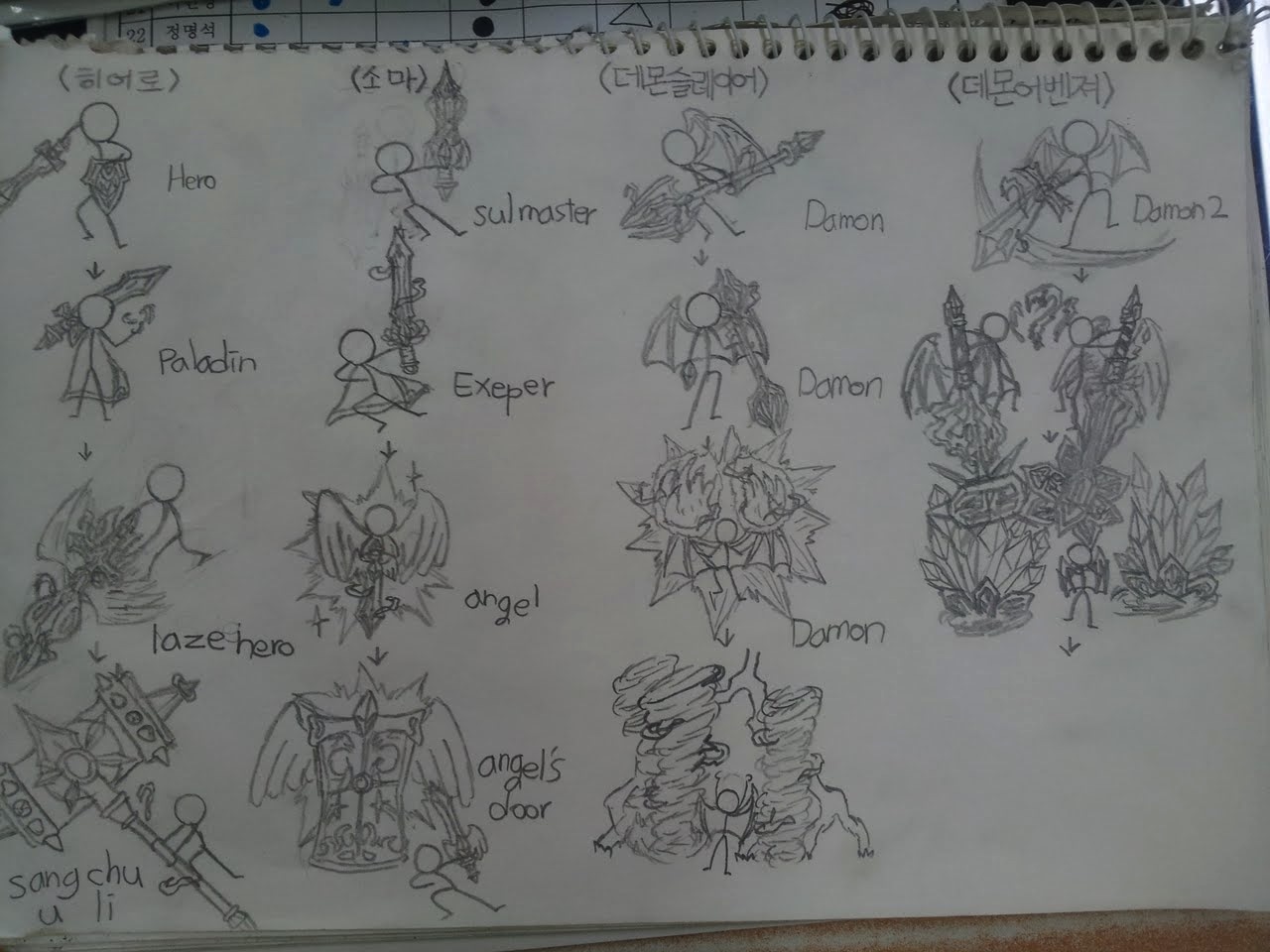 I don’t know what game my students are playing while I’m trying to teach them the past conditional tense. But whatever it is, I want to play it.
The NASA Voyager Recordings
Music and bands are the dullest conversation topics 99% of the time with that 1% for actual musicians and people engaged in courtship seduction rituals. These conversations tend to quickly veer into the realm of status posturing and one-upmanship.
“Oh yeah, well have you heard of this stoner-core, emo, noise, dark ambient, anti-rock, Bolivian band?”
Blah. Who the fuck needs it?
But that said, I feel the irresistible need to share my latest musical obsession with you all: the NASA Voyager recordings. Five hours of pings, whirls, whoops and whistles mixed with persistent hums and the occasional shrill squawk, much of it stemming from non-audio data such as radio waves trapped in a planet’s atmosphere and particles bouncing off of a magnetosphere. Not to mention plasma and other junk distorted by pressures beyond imaging. The audio is actually just a way to make the data comprehensible, much like the colors on most space photography doesn’t exist unless you start fiddling with the data and making radio waves and the like visible.
Anyway, I recommend this stuff and say give it a listen.
And remember the best thing about ambient music, is that even when you turn it off, you’re still listening to ambient music.
Project GutenBLARG!
 Every now and then I think of spending a whole year reading nothing but books on Project Gutenberg. I’m unsure if this would be a great idea or a terrible one. To this end I will download heaps of books and put them on my kindle. This is what happened yesterday, and while I don’t know if I’ll spend a whole year reading Gutenderp it’s likely a lot more forgettable Victoriana and Alexandre Dumas will enter onto my to be read pile.
The picture is from Pappy’s Golden Age Comics Blog. I have dozens of screenshots taken from there. Unfortunately I can’t always remember the artists, so I’m not comfortable posting them. This picture is from this anti-Communist comic. After Comrade Colonel Sanders says this about the old books he burns the Bible.
Nero’s Megadungeon
I finished Gilbert Highet’s Poets in a Landscape. It was pretty great. I recommend it.
It’s the type of book you can read a chapter of and then put aside for weeks or months and then pick up again when you’re on the way to the can or wherever, read another chapter, and continue on this way until the book’s done. It’s a collection of biographies, so it never feels like you missed anything.
Here’s a bit about Nero’s swinging megadungeon:
“What they saw as a labyrinth of rooms within a mound of earth, with tunnels and cells buried deep in darkness and trees growing high above its topmost story, had originally been a large and sumptuous mansion on the street level, open to the air and sky all around, and that it had simply been buried by age, disaster, neglect, and oblivion. They looked at the richly decorated halls, far beneath the level of what they knew as Rome; they saw the elegant and comparatively fresh decorations, satyrs and garlands and wreathed columns, sacrificial emblems and trumpeting tritons; they decided that such fantasies were appropriate for the subterranean orgies of a bad emperor, and that, just as Tiberius had gone to the topmost summit of Capri to indulge his nameless vices, so, Nero, to hide his delights from the eye of heaven, must have buried himself in a subterranean cave, a grotto, secret but brightly lit and brightly decorated.”
Lastly, in all the books I’ve read about Rome’s history (this is three books) there’s always mention of how in the Middle Ages Rome consisted of mostly fortified noble houses from which the nobility would fight one another in the ruins. AND THAT’S IT, like one little footnote. I want to read a book all about that. Seriously. If there was an Osprey Book, Gangs of Medieval Rome, I would eat that shit up.
In other news, Pelican died. I was sad. Now I have to play a paladin. It sucks.
And, Elmore Leonard died, which also sucks. I’ve only read one book by him, though I have a few of his Westerns here on my shelf. His books are one of the half dozen or so ubiquitous ones you find in expat used book store coffee shops.
 Yesterweird