Favorite Reads March 2018
Here we go with what I liked and loved in the way of books for the month of March.

Lotus Blue by Cat Sparks: This is a fun, picaresque science fiction novel. Star and her sister Nene are orphans living in a wagon caravan that travels between the far flung outposts of a blighted post-apocalyptic landscape. Star has hopes of ditching the caravan as soon as they reach the next big settlement, but events interfere with her plans and soon she’s traveling across the Obsidian Sea to do battle with a recently awakened war machine. The thing I liked most about this was that the world feels populated by all these characters and the plot’s not so much what they want, but how they react to this bigger event outside themselves.
So you have caravan scavengers, sheltered collapsing technological societies, half-dead super soldiers, and decadent merchants all put in motion and trying to make sense of this one war machine returning to life.

Child of Fortune by Norman Spinrad: There’s this old RPG called Fading Suns that I never played but devoured every book I could find for it. It’s basically an intergalactic medieval society and while I’m not a 100% sure I would like to play it, as a setting I love it. Anyway, Child of Fortune is sort of like that. I love the setting, but not sure I completely love the execution. In more than a few ways I wish someone else had taken whatever notes Spinrad had for the setting and written their own novel for this.
On the other hand, I did really, really like this. It’s basically people in rockets traveling the universe looking for drugs, and that’s a sub-genre I can get behind.
So, in the far future people have figured out faster than light travel (via orgasms natch, because this book’s very much in the Hugh Hefner school of SF) and it’s become a rite of passage for youngish people to enjoy a wanderjahr after their main education is over but before they commit to whatever their adult work may be. Moussa Shasta LastnameIcan’tremember is a young woman who sets out on her own wanderjahr and in true classic bildungsroman sense grows from being a callous youth into a full-fledged adult. Along the way she joins a youth gang, the Gypsy Jokers, seduces their leader, Pater Pan, and barely escapes a planet made out of drugs, the Bloomenveldt, before she discovers the true purpose of her life as a ruespeiler.
Part of this book had me rolling my eyes, and part of me adored it. I suspect if I had read this book between the ages of 16 and 23, I would have loved it.

Silent Hall by N.S. Dolkart: I described this as a smarter Dragonlance novel and the more time that passes from when I read it, the more I am impressed by how smart it is. Now, don’t get me wrong. It’s still very much Dragonlance, with a Breakfast Club‘s worth of unlikely heroes brought together to complete quests for a wizard, BUT within that framework Dolkart has fun and subverts with the conventions by bringing some ugly reality to the tropes. The character injured early in the quest is permanently disabled by it, the character trained as a warrior is unnerved by killing, and the character “chosen” by a god is completely twisted by the event that he second guesses everything he encounters as being a further sign from his god. Not to mention the character raised by wolves who has a decidedly cavalier attitude towards sex and menstruation that fuels at least a few chapters worth of subplot. And none of which takes into account the dragons, the elves, the wizards, and the quests. Overall, if you have fond memories of David Eddings, Terry Brooks, and Weiss and Hickman, but wish they were a little bit more socially engaged and relevant, you might be surprised by how much you like Silent Hall.
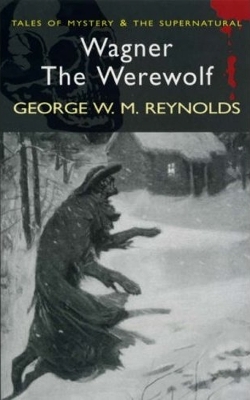
Wagner the Werewolf by George W.M. Reynolds: I can’t even. Literally, I can’t. This book… this book has plot enough for maybe four or five other books.
To say this book is a mess is to insult both it and messes. To say it’s some of the worst prose I ever read with some of the most breakneck thrilling plot I’ve ever encountered is another matter. Both those things are true. This book was both a delight and a chore to read. All of which I feel is spot on for something that’s an actual, honest to god, Penny Dreadful. There are evil nuns, bandits, pirates, werewolves, demons, assassins, nobles, the Inquisition, and progressive Victorian views of the Other that are still racist, but slightly more palatable than their contemporaries. While I do think The Monk is a better book, Wagner is dizzyingly enjoyable as long as you don’t get hung up on the actual words and just keep turning pages.
“A Ghost Can Only Take” at Reckoning

My rambling gonzo* epic-mundane** essay “A Ghost Can Only Take” about walking the liminal zone inside an industrial city, ghosts, history, and landscape memory has been published over at Reckoning Magazine. While you’re there you should check out the rest of the magazine. There’s lots of good weird stuff in there.
One thing I wish to highlight about that essay is how much it’s unfinished as it can’t be finished, as it’s about where I live and the present moment in all it’s fluid, ever-changing glory.
Let me give you two examples. First, since I wrote that piece there’s been an earthquake on the north side of town that left a few hundred people homeless. Second, if Trump’s steel tariffs go through they’ll heavily impact where I live and work since the steel company in town is one of the leading steel companies in the world. If they start feeling the squeeze the whole city will. And that’s leaving aside any and all nonsense about a possible war on the peninsula.
Anyway, please give it a read if you’re inclined, or scroll through and look at all the pictures. (And if you like the pictures, there are plenty more where they came from.)
* What the editor called it.
** What I called it.
Favorite Reads February 2018
Here are my three favorite reads from last month.
 Ka: Dar Oakley in the Ruin of Ymr by John Crowley: Easiest way to describe this is it’s like Watership Down except only the really trippy bits and about crows instead of rabbits. But it’s more than that. It’s a series of linked stories centered on the interaction of Dar Oakley an immortal crow and various humans – a bronze age shaman, an Irish monk, a Native American storyteller, a spiritualist medium in the 1870s, and a near future professor. But it’s more than that too. It’s about language, memories, names, love, and death.
 The Bards of Bone Plain by Patricia McKillip: I think the cover oversells the magic in this book and doesn’t depict the rather mundane majority of it, but so it goes. Phelan’s a teacher at the local bard college working on a dissertation about the legendary bard Nairn when strange things start to happen to him and his friends, all of which are tied to the riddle contest Nairn lost in the remote past. McKillip’s fantasy is more Ren Faire than Renaissance, but she uses that to her advantage. The fun for me was that she’s writing a story centered more or less in one location (a literal college town), and in a world that’s menacing but not cruel. (Also, am I wrong to see nods to William Kennedy’s Billy Phelan’s Greatest Game in this? Both novels are about guys named Phelan who have dads who are drunks.)
 Against Nature by Joris-Karl Huysmans: 1890s French novel about the ailing, misanthropic aristocrat Des Esseintes who decides to move to an isolated villa where he can indulge his taste for luxury without any interruptions. What follows then are chapter long musings on art, literature, nightmares, and diet as Des Esseintes roams about his home decorating and organizing his library. It’s a bit of an absurd book, and I don’t know how much of that’s intentional. Des Esseintes is a pretty awful human being, but sometimes comically so. I went back and forth between reading this as a black comedy and a horror novel. I also wanted to scream “Get a f—ing job!” at Des Esseintes. It almost made me happy that the Great War came along.
Moon Roses

I think these were on display to celebrate the Lunar New Year (Seollal) last week.
Things Published in 2017

Here are things I had published in 2017. Give them a read or listen if you have the inclination. I’m quite proud of them.
A Late Quintessence: a story about censorship, alchemy, and the regenerative power of ideas from the perspective of a villain coming to realize too late that he was on the wrong side of history. May it come to pass. (Link / Audio)
Behind the Sun: this is a faux travelogue about a weird civilization that exists in the center of our hollow earth. Witness the strange past-times of the inhabitants! Realize that struggle and communal effort have the power to rehabilitate us all! (Link)
This coming year should see a few more things published. Stay tuned!
Favorite Reads January 2018, and more

Before I get into a rundown of the books I wanted to acknowledge the passing of one of the greats, Ursula K. Le Guin. I fell in love with The Wizard of Earthsea as a kid, and later when I was in my 20s and doing a lot of thrift and second hand book store prowling I knew anything I found by her would be a treat. At some point I had the chance to see her speak and it was great. She was fierce and funny and kind in all the best ways.
Now, about the books… you see I went back to the USA in December and that meant a lot of time on planes and in airports and jet-lag making me to keep all sorts of odd hours. In other words I read a ton over the past two months, but as not to bore you all (my two readers) I’ll keep my reviews to a sentence or two.
So sit back and relax as I blather.

The Magic Toyshop by Angela Carter: A Gothic novel set in 1960s London about a teenage girl sent to live with her creepy toy-maker uncle after the death of her parents. The first of the books I read that featured incest as not an awful thing.
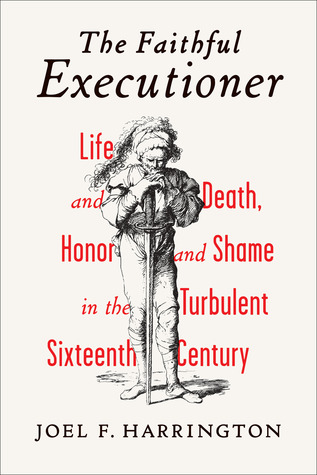
The Faithful Executioner, Life and Death, Honor and Shame, in the Turbulent Sixteenth Century by Joel F. Harrington: A fascinating read about the life and times of one Franz Schmidt, an executioner in 16th century Nuremberg, using Schmidt’s own journal as its source. A must read for history and true crime fans.
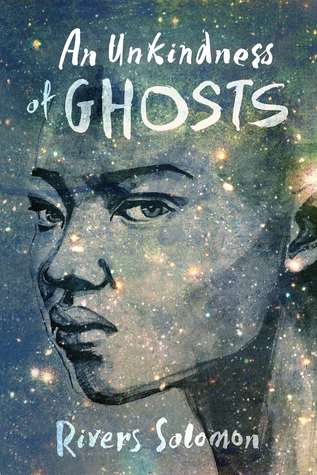
An Unkindness of Ghosts by Rivers Solomon: A woman seeks to solve the mystery of her mother’s death on board an intergalactic generation ship that’s managed to replicate an approximation of the slave society of the American South. A rough read at times, but worth it.

A Place of Greater Safety by Hilary Mantel: All the movers and shakers in the French Revolution knew each other from middle school and carried the hurts and rivalries from those days into the revolution, except for Danton. The sadness of this book is not simply the tragedy of the Terror but that it’s not hard to see your high school self in the various characters.

Head Lopper, The Island or A Plague of Beasts by Andrew Maclean with Mike Spicer: Head Lopper’s a barbarian swordsman who carries around a cackling hag’s head for reasons. Fun and weird.

The Giant, O’Brien by Hilary Mantel: Set in London during the 1780s, this is a tragedy about the conflict between the folk wisdom of the Irish giant O’Brien and the cold scientific materialism of Scottish Surgeon John Hunter. It’s a short, savage book, and a quicker read than A Place of Greater Safety.
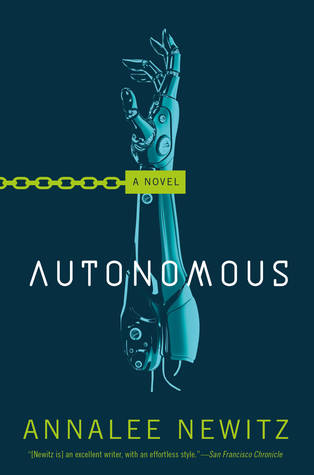
Autonomous by Annalee Newitz: Pirates and robots in the later half of the 22nd century. This was a great book to be stuck with on a trans-Pacific flight.

Collected Folk Tales by Alan Garner: Garner’s goal with this was to write a collection of folk tales that read less like anthropology and more as oral accounts you would hear spoken by family or friends. In that he largely succeeds.

Under the Pendulum Sun by Jeanette Ng: The truth about Fairy land is that there is no truth, and the search for answers is less about the answers and more about the search. A great read, despite the inevitable incest.

Solution Three by Naomi Mitchison: A utopian novel set in a future where all the best gay pot smoking college professors have taken over and a poor heterosexual couple hopes to find a bigger apartment. Fortunately everyone learns the real enemy is greed.
Man on Pipe

2018 is the year I go back to posting quotidian pictures. Sorry, not sorry.
Favorite Reads of 2017
A dozen of my favorite reads from the past year in no particular order. Not all books were published in 2017. In fact, most weren’t.
Day of the Arrow By Philip Loraine: Folk horror among the 1950s jet set. If you like William Sloane and Shirley Jackson this might be for you.
The Internet of Garbage by Sarah Jeong: A brief history of the internet’s development, online harassment, and how we got from there to here. The internet is garbage.
Woe to Live On by Daniel Woodrell: If Huck Finn meets A Clockwork Orange sounds like a thing you’d like, then read this.
Laura by Vera Caspary: 1950s murder mystery that’s near to perfect if you overlook the single page near the end where the heroine goes on a racist tirade.
Gilded Needles by Michael McDowell: A criminal dynasty squares off against a moralistic judge’s family in 1880s New York City, but the fun comes from McDowell skewering Victorian morality.
Ombria in Shadow by Patricia McKillip: The book you bounce off the head of those people who go on about “realism” in fantasy novels.
All Systems Red by Martha Wells: A pitch-perfect SF adventure novella. Smart and fun with a character exchange that still makes me laugh to this day.
The Twenty Days of Turin by Giorgio De Maria: Italian journalist investigates mysterious library and learns that supernatural forces beyond time will use terrible magic for ultimately petty purposes.
The Stars are Legion by Kameron Hurley: Grotty biogunk SF at its best.
The Fortress at the End of Time by JM McDermott: An introspective SF novella in the vein of CANTICLE FOR LEIBOWITZ with an enjoyably frustrating main character.
Under the Pendulum Sun by Jeannette Ng: Stanislaw Lem meets George MacDonald meets VC Andrews meets Sylvia Townsend Warner. If having your expectations swung back and forth sounds like fun give this a go.
The Only Ones by Carola Dibbell: Post-apocalyptic but optimistic novel that shows that the dad in The Road had it easy because he never had to worry about getting his kid into a good school.
Favorite Reads: November 2017
Good books, but do they stick the landings?
First, the books that do.

News of the World by Paulette Jiles: Captain Jefferson Kidd is an old widower and war veteran making his living by traveling through Texas from town to town and reading the news to paying audiences. On his latest trip he gets hired to return a ten-year old girl taking captive by Kiowa tribes people four years before to her relatives in San Antonio. What follows is a very sweet and beautiful western novel that’s part adventure and part elegy to landscape and the interplay between the wilderness and civilization. A great read.

Reynard the Fox: A New Translation by Unknown, translated by James Simpson: If you’re reading this blog I’m pretty sure you’re familiar with the Reynard character. If not, he’s the protagonist/antagonist in a series of medieval tales where he outwits his many enemies in the Lion’s court, by his quick-wit and murderous cunning. I wasn’t quite ready for how horrible and violent these stories were, but I guess they reflect an era where casual violence was a staple norm. Imagine Sam Peckinpah’s version of Disney’s Robin Hood.

Day of the Arrow by Philip Loraine: James Lindsay’s a young painter living in Paris. His former lover Francoise is now married to his one-time friend, the aristocratic Philippe de Faucon, Marquis de Bellac. When Francoise turns up seeking Lindsay’s help she brings a strange story in regarding Philippe’s sudden personality shift. He’s become cold towards her and fixated on his impending death. Francoise wants Lindsay to come to Bellac and investigate. What Lindsay uncovers is a Folk Horror plot that reads like a mix of William Sloane and Shirley Jackson. Definitely track this down.
Now the books that are good but wobble for various reasons at the end.

Dear Cyborgs by Eugene Lim: This is a fragmentary novel that starts with two Asian-American kids growing up in the Mid-West bond over reading comics. From there it spins sharply into an assortment of superheroes discussing resistance and political action in the modern world, and goes on to careen between the two. I was rooting for this book and had no problem with the jarring leaps, but I fear at the end the threads spun too far and needed a miracle to bring them back. A fun trip even if it makes me wonder how do smart people do anything without analyzing it endlessly?
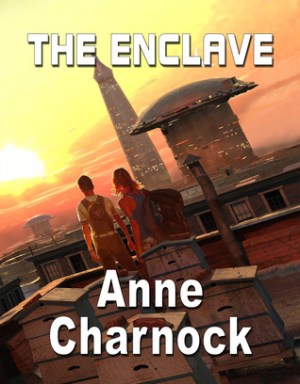
The Enclave by Anne Charnock: This is very slice of life in some post-collapse but not complete collapse future about Caleb, a young refugee, and the life he leads in England working for a recycling gang. and the people he meets as he travels across Europe to England. While it doesn’t just end, it doesn’t also conclude so I wonder if there’s a sequel to it in the works. From further reading it looks to take place in a larger world, and maybe the other novels set there would fill in the gaps here. Also with a name like Caleb though I have to wonder where he came from originally. He says Spain, but Caleb?

The Murders of Molly Southbourne by Tade Thompson: Molly grows up on an isolated farm with her parents and quickly learns the rules she needs to survive. Whenever Molly bleeds a new Molly is born and intent upon killing her. Needless to say this makes Molly a rather odd person to be around. What I loved in this is that there’s something of Victor Frankenstein to Molly Southbourne as she grows and studies her situation. A cold intelligence involved in a gory investigation. While the ride was great, it may well have ended with a To Be Continued. But I’ll definitely read the next installment.
 Yesterweird