The Monk, An Irreverent Synopsis

My posts about Matthew Lewis’s The Monk remain some of the most popular I’ve written. I can only imagine people are using them to pass tests in classes instead of reading the book itself. Which I am fine with.
It’s a 400+ pages Gothic novel; my series of posts was only about 6000 words.
This past year for Christmas I collected all the posts, cleaned them up, and put them in a booklet that I gave to my patrons as a holiday gift.
“like a poisonous mulled wine, delightful” – a patron
Anyway, the same booklet is now available for everyone to download. It’s digest-sized and fits well on the back of the toilet. No longer will you have to read a set of blogposts on your phone! All you need to do is go here.
And if you want to become a patron, you can do that by going here. I only say you get nothing because I’m afraid of disappointing people by making promises I can’t keep. But, really? Every month you get something.
Orlando Furioso, Canto IV

I made the comment on twitter that I am glad I skipped the introduction because I fear it would’ve tried to make me think this was a book to be taken seriously. A Dante’s The Divine Comedy, instead of what it actually is: a 16th century run of Avengers comics. The whole thing reads like Ariosto took all the legends and epics he knew and mashed them into one continuity Crisis on Infinite Earths style. And I’m here for it.
Plus it’s really good bedtime reading.
Last canto we ended with Bradamante meeting Brunello. Surprisingly in this Canto we stay with them. The crashing that ended Canto III turns out to be the necromancer flying by on his winged horse.
“Sometimes high up among the stars he flies
At other times close to the ground he’ll skim,
And any lovely woman whom he spies
He snatches up and carries off with him.”
Bradamante and Brunello agree to join forces and travel together to the necromancer’s castle. Both have their own reasons to want Ruggiero freed. Surprising me again, nothing happens to them on the road and after about three dozen lines of hill and dale climbing descriptions, the pair come to in sight of the necromancer’s castle. Promptly, Bradamante attacks and defeats Brunello, stealing the magic ring he carries. However, contrary to the enchantress’s advice Bradamante doesn’t kill Brunello but leaves him tied to a tree. She then goes on to the necromancer’s castle and blows her horn in challenge.
“Not long the man of sorcery delayed
When he had heard the challenge of the horn.
On his winged horse, towards the warrior Maid,
Whom he believes to be a man, he’s borne.
A word here about our necromancer: it’s hard not to read him in science-fictional terms as someone from an advanced tech civilization living on a primitive world. He has a winged “horse” that makes a loud booming roar when it flies, access to magic items (a shield that shoots a stunning light and a book he uses to conjure weapons), and he lives in a towering castle made of steel. I’ve read Gene Wolfe. I’ve played Numenera. I recognize this guy.
“His shield in a vermilion cloth was draped.
In his right hand he held an open book,
Whence marvelous phenomena he shaped:
A lance which hurtled through the air and took
His adversary by surprise, who gaped
At nothingness, with an astonished look;
Or with a dagger or a club he smote
From far away, by a control remote.”
By a control remote. . .
You can’t fool me Ariosto! This ain’t no wizard. This is a traveler from the far future fighting with a stun ray and nanite swarm. There’s also something, something about his horse.
Bradamante and the necromancer fight, and the necromancer enjoys himself, drawing the duel out to get his cruel kicks. Bradamante however feigns being worse off than she is, and when she swoons before the stun ray she does so while completely unscathed. But the necromancer doesn’t know this and goes to claim his prize when Bradamante leaps upon him and strikes the magic book from his hand. She quickly subdues him and claims his gear as her own, then gets ready to chop off his head only to realize he’s a withered old man. He’s like kill me already, and she’s like no. You need to tell me why you’re kidnapping knights. And he’s like I kidnapped the knights to keep Ruggiero company. And Bradamante’s like why are you keeping Ruggiero captive? And the guy is like because if Ruggiero becomes a Christian he’ll die. He also says his name’s Atlante. Bradamante commands him to open his prisons and PLONK, out come a host of knights and their horses.
There’s Gradasso, Sacripante, Prasildo, and Iroldo, all people I assume had their own comic books in the 16th century. At last, there’s Ruggiero. And there’s much gladness when he sees Bradamante – but Atlante escapes and takes his steel castle with him. The winged horse however stays behind and all the knights try to catch it. It flies in little hops, first here, then there, all the while it’s being controlled by an invisible Atlante. At last the horse lands in front of Ruggiero, and he climbs astride it. At which point, Atlante launches the horse straight into the sky. Atlante hasn’t given up on his mission yet.
And then Ariosto does a scene change…
When last we left Rinaldo he was on a boat making for England and the waves were high and all looked lost, but it actually wasn’t that bad. They land and Ariosto’s Britain is a chivalric hellscape of Arthuriana where the never ending clash of arms echoes through the forests. All of which sounds great to Rinaldo who sets off at once to seek adventure. Staying one night at a monastery he learns how the local king has condemned his daughter to death because she slept with her boyfriend, and Rinaldo is like you’re king’s an ass. He then gives some sex positivity discourse on how it’s no big deal that a damsel gave her lover solace in her bed. Long story short, Rinaldo sets out to rescue the princess. And promptly assists another damsel in distress being attacked by ruffians.
How did she end up here? Well, that’s what Canto V will attempt to make clear.
Until next time! May your sword stay sharp!
Orlando Furioso, Canto III

Hey,
Did you know that Ariosto was sponsored by the D’Este family?
Do you know who the ancestors of the D’Este family were?
Turns out they were Bradamante, that lady knight of great virtue, and Ruggierro, that guy knight of great virtue. But wait you say, aren’t they on opposite sides of this war between Christian and Saracen? Why yes, that’s true. They are on opposite sides of the war, but they have destinies, and one of them is to get married, found the D’Este family, more to Ferrara, and make it the best place on Earth to live, or at least so says Ludovico Aristo, native of Ferrara and proud supporter of the D’Este family.
And that’s this canto.
Pinabel suspects Bradamante is still alive and decides he should vacate the premises. He does so, but not before stealing Bradamante’s horse. Bradamante survives her fall and discovers a door in the cave. This door leads to a bigger, better cave of finely crafted columns. In the center is an altar with a lamp burning on it, and the sight of this makes Bradamante kneel and pray. A sorceress appears and starts talking. The sorceress knows many things. For one she knew she and Bradamante were destined to meet. She also knows the cave was built by Merlin and serves as his tomb, since it was here that the Lady of the Lake betrayed him (???), and it’s here in this cave that his spirit will forever dwell until Judgment Day. She says Merlin’s spirit still talks and that’s why she was here, to get some magical advice. Merlin’s spirit then appears to say hey, and the sorceress offers to conjure a vision of all Bradamante’s heirs.
Here are the wiki pages for the House of Este and the Dukes of Ferrara. If they lived before the 16th century Ariosto mentions them. It’s like that bit in the Iliad where Homer lists all the boats and who was on which so his audience can be like “That guy came from my hometown!” Except it’s more ass-kissy.
D’Este propaganda concluded, the sorceress escorts Bradamante out of the mountains towards the Castle of Steel (where Ruggierro is imprisoned). The way is hard and to pass the time the sorceress tells Bradamante how to defeat the necromancer who lives in the castle. This is the knight on the flying horse from Canto II who has that shield that knocks people out with laser beams or something. However, there is a ring and it can defeat the necromancer. This ring protects the wearer from enchantment and all evil spells.
And where is this ring? It’s currently in the possession of an awful man named Brunello.
Brunello (as we’d know from the first Orlando book that we didn’t read) is a master thief employed by Agrimante the King of Africa. Brunello is also a dwarf and very ugly. Agrimante wants Ruggierro freed because he’s the greatest knight in the African army. To that end he gave Brunello the magic ring and the mission to bring back Ruggierro. Now what Bradamante needs to do is meet Brunello at a nearby lodging, keep him away from her wallet, and join him in this mission, then, according to the enchantress, when they reach the castle Bradamante should kill Brunello and steal the ring. Sounds like a plan, so the two women part company. Bradamante rushes on to the hostel and meets Brunello. The two don’t trust each other and it looks like they won’t join forces at which point a mighty uproar smites the ear. Its cause?
Maybe Aristo will tell us in the next canto.
Or maybe we’ll be off to some other knight having a bad time of it.
I look forward to finding out.
Into the Odd: Actual Play
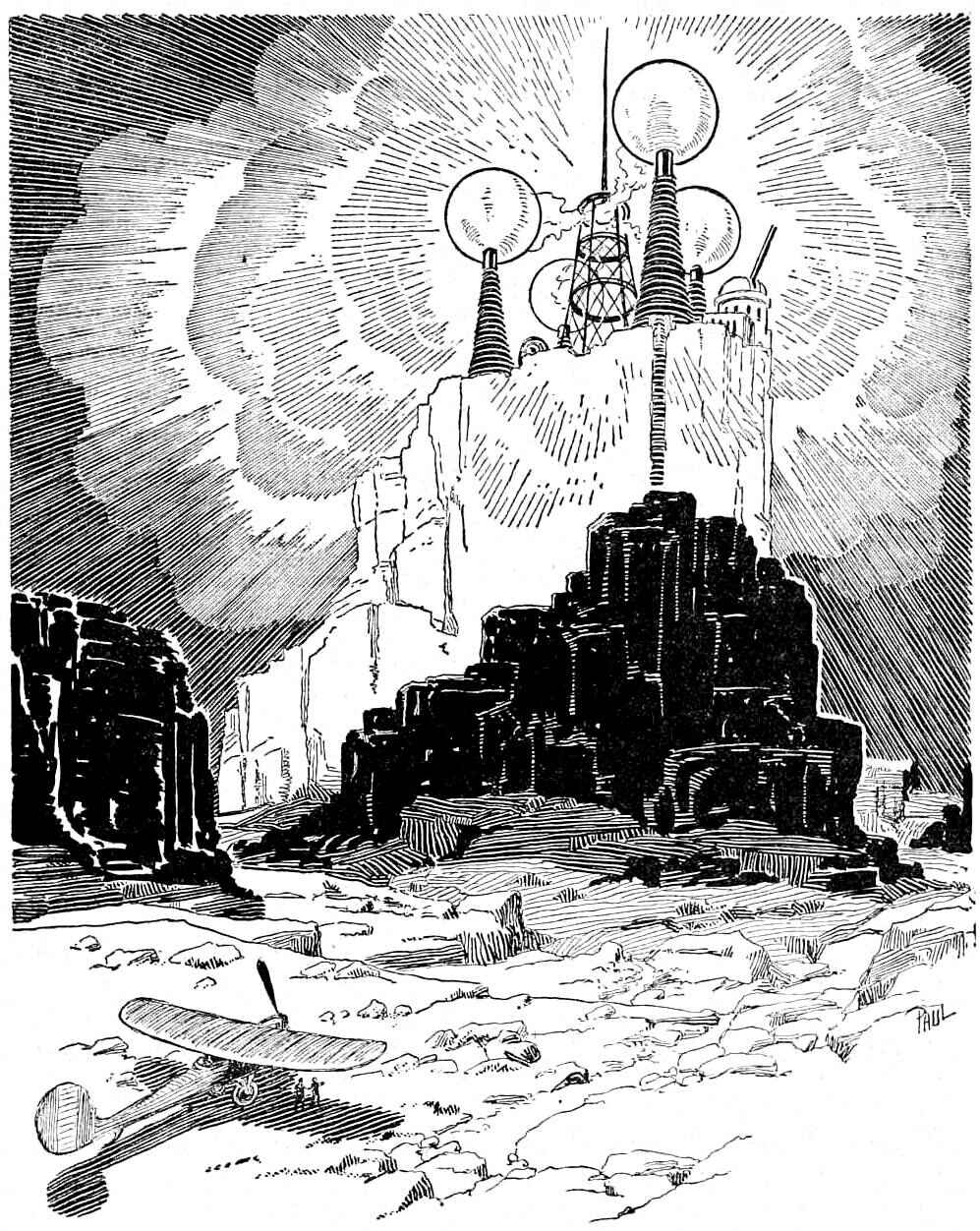
I recently ran a game of Into the Odd using the scrypthouse write-up from my Mysthead 3 ‘zine (itch.io page here). It was fun. The players were repairman sent to determine why a local scrypthouse had gone silent.
Using the pathetic fallacy generator from the ‘zine, I rolled up a house that craved silence and dampened sounds. For the cause of the trouble I decided the local corps members had come into contact with a void wraith and been taken over by a bad signal. I also stuck a roaming void miasma around the station’s roof and a juvenile pig herder having an altercation with a rival adventurer nearby.
The players arrived. When they got within sight of the house they promptly heard shouting, gun shots, and the squeals of pigs. Approaching with caution, they came upon a scene of dead pigs, angry pigs, a shouting swineherd, and an old man in heavy armor standing atop a rock reloading his rifle. So the players split up. One approached the swineherd, the other approached the old man. Sadly, the pigs caught the latter repairman’s scent and attacked.
Chaos ensued. The repairmen drove the pigs away and took the swineherd hostage. The child proved belligerent and eventually escaped. The old man introduced himself and gave some backstory. He came here to meet a friend. The station’s locked. The pigs are weird. Yadda. Yadda. Time to go in.
One repairman starts work on unlocking the door while the other does a sweep of the building’s perimeter. He doesn’t get far before the miasma attacks those at the front of the house. Fortunately, they managed to get the door unlocked and get inside. Things get worse from there.
The interior’s a mess. The corps technicians are all signal-zombies. Exploration happens. One repairman gets infected with a lexical fungus (mildly amusing, but dropped after a few minutes). They reach the brazen head and find it disconnected. Before they can check it out the old man’s friend walks in and kills the old man with a belch of void static. Cut off from the front door the repairmen have no choice but to flee deeper into the station. They manage to reach the basement and activate the back-up brazen head. It gives them some suggestions, but really the repairmen are as freaked out by it as all the signal-zombie weirdness upstairs. Or downstairs now. The void wraith’s found its way into the basement.
More cat-and-mousing ensues. The repairmen manage to get back upstairs. One’s now for high-tailing it out of the station while the other wants to destroy the void-wraith. High-tailer reluctantly agrees to assist. The void-wraith shows up and the plan’s to lure it into a room full of gizmos and zap it. This works, but doesn’t kill it. High-tailer runs for the door, while the other grabs the old man’s gun.
*click*
The old man hadn’t a chance to reload the gun before getting killed. The void-wraith kills the repairman. High-tailer returns and kills the void-wraith. The corps techs return to their sense. The void miasma disappears. The surviving repairman gathers up the dead.
OVERALL
I liked it. It felt like running B/X D&D without the baggage. Combat took me a bit to get used to. And the lexical fungus proved more a spark for a few table laughs than a solid game mechanic. Now I’m thinking how to run ItO as as a Numenera-esque settlement-building game. My take is that the system’s aesthetic is fueled as much by its illustrations as by its mechanics, and it doesn’t have to be some flavor of Edwardian Paranoia.
Orlando Furioso, Canto II
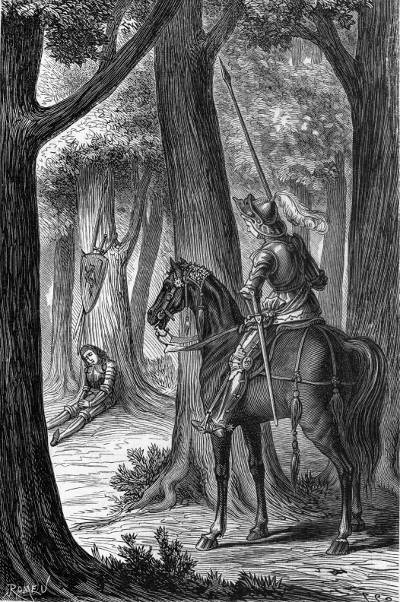
Second installment and I am noticing a pattern. Introduce knight. Make the knight fight. Put knight in hole. Introduce another knight or switch to one you already had in a hole. Rinse and repeat. It’s a neat formula. I can see why the book’s been so popular.
This chapter has a lot of that. It also has wizards, sprites, dwarfs, and a winged horse. A veritable monster manual of stuff.
So strap on your sword belts and let’s go!
Rinaldo and Sacripante are getting ready to duel. The cause? Angelica (and the fact that Sacripante is on Rinaldo’s horse):
“Let us then have recourse
To combat, to decide which of us is
More worthy of the lady and the horse.”
Lady? Horse? Same same.
So the two knights hurl themselves at each other. Rinaldo on the ground, Sacripante on a horse. Except it’s Rinaldo’s horse, Baiardo, and refuses to harm its master. Sacripante dismounts and now they hurl themselves at each other with all their fury. There’s lots of clashing. Rinaldo’s sword is named Fusberta. Sacripnate’s shield gets smashed and his arm broken. Angelica sees Rinaldo is about to win and does what she does best: hightail it out of there as fast as she can and make straight for the forest. In there because the wilderness is a wild place where anything can happen, she promptly finds a hermit who turns out to be a wizard and kindly deposed to her.
“As soon as the fair damsel he had seen
Approaching him, though weaker than of yore,
That organ, by such tender beauty spurred,
With warmth of feeling and compassion stirred.”
(Ariosto’s talking about the hermit wizard’s heart you pervos.)
The wizard throws his lot in with Angelica and goes with her to the nearest port. He also conjures up a sprite to go distract the still fighting Rinaldo and Sacripante. The sprite takes on human form and tells the knights that they have no reason to fight since Angelica’s gone to Paris with Orlando. If they hurry though it’s possible they could catch them. The knights feel like fools and quit the field. Rinaldo reclaiming Baiardo the Horse and we get a bit then about how great Baiardo is. Smart too. Except not this time. Baiardo falls for the sprite’s trick as well. When they get to Paris, they find no Angelica there only King Charlemagne and he’s preparing for siege. Rinaldo’s quickly ordered off to England on a diplomatic mission. Rinaldo set off and puts to sea where a storm promptly starts, and as the waves mount and threaten to sink the ship Ariosto says “Enough of this guy, let’s talk about that lady knight Bradamante.”

Bradamante is Rinaldo’s sister and equal in power, courage, and virtue. I don’t know the name of her sword or horse… yet. She’s in love with and loved by Ruggiero one of the greatest knights in the African army. I suspect we will see more of him later when someone else gets put in a hole. As it is Bradamante finds another knight looking doleful. She asks what’s wrong and the knight tells a tale of how he and his girl were riding along when a knight on a winged horse flew down and stole his girl. He tried to fight the guy, but he was too fast. Now the knight’s girl is locked up in yonder castle and there’s no way to save her. Already the knight told some other knights (Gradasso and Ruggiero) and their dwarf buddy (name as yet unknown) about the flying menace (name also unknown at the moment) and those guys said they would take care of things, but sadly the flying knight kicked their asses (he has a shield that shoots energy beams by the way) and kidnapped them too. Woe. Woe. Boo hoo.
Being a hero Bradamante’s ready to set off and fight this flying menace. The knight agrees to be her guide. But wait! What’s this the knight is not who he claims! He is Pinabel the Maganzan and he doesn’t have good intentions.
“Named Pinabel, of all true knights the foe.
Born a Maganzan, he obeyed no laws
Of chivalry, and of that breed accurst
In acts of treachery he was the worst.”
The two set forth towards the castle, but on the way the envoy from the first canto shows up and tells Bradamante that she’s needed in Marseilles. Pinabel seethes, and Ariosto explains how there’s hatred between the two families. He gets so vexed that they soon get lost in a wood. There after some maneuvering Pinabel spots a ravine and decides it’s as good a place as any to do away with Bradamante. He tells her a story about a damsel trapped in the hole and convinces Bradamante to climb down there. Except when she does, he cuts the tree branch they’re using and lets her drop.
“And how she later fared I’ll later say”
Next week… new knights? New horses?
Orlando Furioso, Canto I

Welcome to this year’s self-imposed task!
Feel free to occupy yourselves as you see fit!
As mentioned before, this year I’ve decided to read Orlando Furioso, the 16th century over-the-top chivalric romance by Ludovico Ariosto.
Who’s that?
Dante lived from the 13th to 14th century. Chaucer in the 14th century. Ariosto lived from the 15th to 16th century. He was a contemporary with Erasmus, Martin Luther, and Machiavelli. So that’s a thing to remember: While princes learned to murder and terrorize, and Catholics and Protestants murdered each other, they all relaxed and entertained themselves with chivalric ideals and heroic deeds. The poem was his gift to his patrons, the ruling D’Este family of the city Ferrara. But you can read all about that on Wikipedia.
So what is Orlando Furioso?
It’s a mess. It’s a book about knights fighting each other with dozens of named characters who ride dozens of named horses and carry dozens of named swords.
Your typical fantasy novel then.
It’s also the sequel to a book I haven’t read called Orlando Innamorato by another guy, so it starts right in the middle of the action with people running around already hating each other.
Of ladies, cavaliers, of love and war,
Of courtesies and of brave deeds I sing…
In times of high endeavour when the Moor
Had crossed the sea from Africa to bring
Great harm to France, when Agramante swore
In wrath, being now the youthful Moorish king,
To avenge Troiano, who was lately slain,
Upon the Roman emperor Charlemagne.
That’s the big picture, but behind it is Orlando, the greatest knight in Christendom, being in love with Angelica, the pagan princess. She hates him and fled to Cathay where she married the king, Ruggiero. This made Orlando mad (hence the Furioso) and he has abandoned Charlemagne’s cause to pillage the land. Another knight, Rinaldo, then fell in love with Angelica. And to keep everyone in his army, Charlemagne had Angelica captured and imprisoned, figuring to award her as a prize after the battle. Except the Saracens (fugg, am I going to have to write this word all year?) win the day and Angelica seizes her chance and escapes.
She, who was promised as a victor’s bride,
Into the saddle leapt and straight away,
Choosing her moment well, set out to ride.
While everyone is a dick, she must rely on cunning to get away from all the knights that would capture her. And have no doubt most of these knights are eager to assault her.
These guys go on and on about purity and the beauty of virgins, but are quick to get to the assaulting when they see any woman. Angelica realizes she needs a protector and finds a Saracen knight she recognizes, Sarcripante (and yes he’s in love with her too), and decides to manipulate him.
How, by her charm, her servant she can make him,
And then, ungrateful, afterwards forsake him.
Unfortunately, Sacripante figures he needs to strike now and take the opportunity to commit the “sweet assault,” but before he can do the deed he hears the drumbeat of horse’s hooves and knows another knight is nearby. More eager to make war than “love” he rides off to find the knight. This knight is dressed in snow white armor and seems to be a formidably built man. Soon the two take to jousting and Ariosto brings the action.
The mountain trembles, as the knights engage,
From its green base to the bare peak it rears.
And well it is the haubreks stand the test,
Else would each lance be driven through each breast.
Both horses fall, but the white knight’s rises again. Sacripante, pinned beneath his dead horse, watches as the white knight rides away. He climbs free, unwounded, save for his pride. Angelica saw the whole thing and he’s ashamed. An envoy rides by and Sacripante asks who was that white knight, to which the envoy says it was Bradamante, as beautiful as she is brave.
To be unseated by a woman!?!

Sacripante’s shame intensifies. Angelica and he ride away, his ardor much cooled. After a bit they find a war horse roaming free. Angelica recognizes it as Baiardo, Rinaldo’s horse, and hops into the saddle. Then she spies Rinaldo. And he espies her, and of course he’s in love with her and she hates him, but there she is on his horse with some knight.
And that’s where it ends.
Next time, Sacripante and Rinaldo start with the “come at me bro”.
* For the sake of proper record keeping all the quotes come from the Penguins Classic edition translated by Barbara Reynolds. And the illustrations come from the Spanish edition over on Project Gutenberg.
Recent Games I’ve Played

I’ve been playing some games. Here’s what I thought about them:
Worlds Without Number: I wasn’t a fan despite my love for Stars Without Number. We made characters and I ran a few combats. Overall, I found it too crunchy. I think Kevin Crawford is designing a very different game than one I want to play. For one, I’m drifting away from games with detailed skill lists. I’d rather it was all summed up in a word or two background/archetype. Still, the chassis fascinates me, and as always the world-building tables are brilliant.
Scum & Villainy: Space games are hard. Everyone has different expectations of how science-y they should be. Are we playing Star Wars, Star Trek, Alien, Dune, or what? Is there FTL? Is there FTL coms? Can I download a city map to my communicator? Etc Despite all that playing Scum & Villainy has been fun. That said FitD games aggravate my adversarial player vs GM tendency that make me an obnoxious player. I want to plan the heist away from the GM’s eyes so they can’t prepare or counter for it, which has likely made our GM frustrated (sorry). Also, FitD games use too complex terminology (position, effect, quality) that get in the way of the game. Maybe this is the result of Roll20’s pop-up window getting buried under tabs and popped out crew ship character sheets, but figuring out position always slows momentum.
The Quiet Year: We used it to develop the backstory for a horrible place in our Scum & Villainy game. Great to play in tandem with another game to flesh out some backstory as well as on its own.
Into the Odd: I ran a game using Mysthead 3. I liked it and will probably write it up in more detail. It was fun and light-weight enough that I felt like I could easily bolt more complexity to it without a problem. And contrary to the advice its designer gives elsewhere I’m fine doing stat tests to avoid outcomes. My biggest concern is what’s the typical campaign’s longevity? Could a game that meets weekly for a year be built around a single group of characters or is this better for one shots? At some point I will likely make my own bespoke setting for it.
Bedlam Hall: A PbtA game where you are the servants to a family of awful aristocrats. Great fun for a one shot or short campaign, but run it too long and you have to wonder why your servant hasn’t quit yet. Which can be its own fun. In our game the goal ended up being to survive long enough to hand in your resignation. A great game for that gamer who wishes Paranoia had a Jeeves and Wooster supplement.
Delve: a solo dwarf-hold building game. I focused more on the map-making bits than the combat/resource management game. My goal was to make something to use in a Play-by-Post game I hope to run later this year. More about that if it ever materializes and proves interesting. This game gave me a good setting and an interesting story, which was exactly what I wanted from it.
Game Stuff
I updated my itch.io page with all the game materials I’ve made to date. They are all pay what you want. Most materials use Necrotic Gnome’s Old School Essentials as their ruleset, but they could be tweaked for any tabletop fantasy game.
Mysthead 1: Mysthead is a grab bag ‘zine of stuff used at my table and not. 12 pages, includes details of the Mysthead region with adventure seeds, the Beachcomber class for Old School Essentials, and a D20 table of strange things washed up on the beach.
Mysthead 2: 12 pages, details Mysthead’s goblins and elves with adventure seeds, plus tables for mnemonic relics, whispering skulls, fae/goblin political structures, and underdark rumors. Also includes the Rumormonger Spider, a playable class for Old School Essentials.
Wolves of the Gnarlwood: a 3 page system-less wilderness adventure
(You can also find the classes as separate PDFs along with one for the Unright Goat.)
Check them all out here.
Scrypt: A Lexical Fungus
It’s been a bit. I’ve been lazy. I’ve also been working on another issue of Mysthead. I might also have started to post some game stuff to itch.io. Mostly bespoke classes for Old School Essentials and an adventure.
One thing I want to add to my game table are condition cards that impact roleplay as opposed to mechanics. One inspiration was the card game The Grizzled, but I’m sure it’s been used elsewhere. So I took that idea and mushed it with the notion of what if languages could be infected with astral lichens and, lo, scrypt was born!
…
Scrypt is a living language despite being millennia old.
A remnant of the wars between the proto-gods, scrypt thrives like a linguistic lichen within the fertile soil of other languages. When one reads scrypt the words remain inside the mind. This can allow an untrained person to cast spells. However, it may also allow suggestions, enchantments, and worse to take root in the minds of the unwary. More importantly, scrypt attracts aetheric parasites when not maintained properly. Using scrypt is not to be done lightly.
Beware of scrypt-skull!
After every use of a scrypt-carrying scroll, the user must make a WILL save. If they fail, consult the table below. Effects last D4 hours.
(Give a reward, XP, fortune point, whatever, to players who make a valiant effort.)
- Jobberknowl: All nouns must be reversed when spoken, ie “knife” becomes “efink”.
- Dretched: Replace the first syllable of polysyllabic word with the prefix “dretch-”
- Coranto: Speaker must knock twice at the start and end of every sentence.
- Imbrangle: The speaker must start every sentence with “Imbrangletanglemangle…”
- Zelant: The speaker must include at least one blasphemous phrase in every sentence.
- Nullfidious: The speaker can only answer questions in the negative, although they believe they are answering accurately.
- Grudgins: All nouns are replaced with names of prepared foods like “pickled herrings” or “sliced ham”.
- Javeljaum: Classic spoonerisms, swap the prominent sounds of close words.
- Igniferent: The speaker must discuss the flammability of every noun they mention when speaking.
- Stelltwire: Speaker must replace spoken nouns with words that rhyme with the intended words.
- Colsleck: Speaker inverts the syllables of words when speaking.
- Chrysopo: Speaker appends the syllable -opo to every syllable they speak.
- Cinqpace: All numbers are increased by one, ie “Anyone for tennis?” becomes “Anytwo five elevenis?”
- Xeriff: The speaker gains a fluent knowledge to a centuries outdated legal code and references it constantly.
- Saltimbanco: The speaker turns every conversation into a sales pitch for Saltimbanco, an invigorating health elixir.
- Katexoken: The speaker will only speak if addressed as royalty.
- Dogbolt: Speaker must add -og- before each vowel in a syllable.
- Nist: The speaker can not remember the exact name for any item or person.
- Haqueton: Speaker drops the first letter of every word.
- Yblent: Speaker must shift vowels one place to the right (“a” becomes “e”) while speaking.
And that’s that. My goal is to get the rest of the zine done before December, which I am on track to do. That’ll be over on my Patreon when it goes live. There’s a poll there now to determine next year’s old weird book to read.
Red Spectres 11: Man, Rat Swap Souls! Murder Ensues!
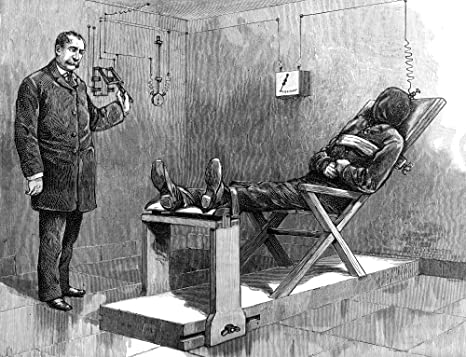
Hello,
Here we are with the last story.
It’s been a fun trip. And the last story is a classic of the weird tales type. Not quite soul juicing, but its next door neighbor: soul-swapping.
“Professor Knop’s Experiment” by Pavel Perov (1924)
George Gibbs is a criminal awaiting execution for murder in Sing-Sing. He’s approached by one Professor Knop who asks if Gibbs would like to take part in an experiment. What kind of experiment? The soul-swapping kind! And so Professor Knop gives a very long involved bit of technobabble on polarized soul particles and swapping them between bodies, and how he’s only done it to animals and wants to test it on humans now. Gibbs figures he has nothing to lose and agrees to take part in the experiment. His one cause of concern is the fact that the Professor intends to swap his soul with that of a crazed rat. “Don’t worry,” Knop says. “I’ve done it to the rat a dozen times before.”
And so, the stage is set for our inevitable conclusion.
Gibbs’s soul gets swapped into the rat. The rat’s gets swapped into his body. Knop is delighted, and all for a moment looks like it’s going well. Except for the simple mistake that Knop forgot to tie Gibbs’s body down. The rat wakes inside the man and proceeds to beat the professor to death. The cops bust in then, see the raging Gibbs, and proceed to shoot him to death. Of course, the rat with Gibbs inside it tries to stop the cops and gets shot to death too. And there you go.
The End.
Some of you might remember the first soul-juicing story I wrote about here, Greye La Spina’s “The Remorse of Professor Panebianco.” This story is very much like that, if maybe with a veiled critique of the Revolution. You think you can make unintelligent beasts into men with the flip of a switch? Perov’s story would’ve sat well alongside a lot of those early Weird Tales stories. And who knows maybe some work by him did. The brief author biography in Red Spectres says he left Russia in 1910 and lived much of his life in the USA. I’d certainly enjoy reading more by him.
And so we’ve reached the end of Red Spectres: Russian Gothic Tales from the Twentieth Century. It’s definitely a fun collection and worth tracking down. As for what’s next I don’t know. There will still be patreon updates, along with the occasional post on this site. Those will likely be RPG related. As for next year? Well, that’s next year.
I hope you have enjoyed some of these posts. If you can, please consider supporting me on patreon. You’ll receive PDFs of Mysthead, my RPG fanzine, and other goodies as I make them.
As always, stay well.
 Yesterweird