The Glamour
 I picked this up during a book-buying binge last summer. The only other book I’d read by Christopher Priest was The Prestige. I enjoyed that enough to give this a try.
The Glamour is a suspense novel that borders on the fantastic about a love triangle between people with the ability to make themselves invisible. It reminded me some of Patricia Highsmith’s Those Who Walk Away and some of Fritz Leiber’s The Sinful Ones. Nothing much happens for the first 100 pages, but I found myself swept along and reading anyway. The middle section, narrated by Sue, the woman torn between two men with varying degrees of “invisibility”, was the highlight where she talks about “the glamour”, the ability to become unnoticeable, and their subculture in modern day London.
Of course, “the glamour” also operates as a metaphor for certain social anxieties. Some might prefer it to be either one or the other – metaphor or speculative element, but magic powers as a metaphor for a universally observable social experience fits well with all the unreliable narrators, doubling, and pomo identity hijinks Priest employs in his novels. If that metaphor in the end makes me regard social experiences differently, then I’d say it’s successful.
To Priest’s credit he stays balanced on the border long enough to explore interesting ideas and resists the desire to provide simple solutions to them.
One Book Four Covers


Here’s an assortment of covers from the book I recently finished. I get a kick out of seeing how each would have shaped my expectations.
I read the second one from the left. It’s not a bad cover. Somewhat classy. The first one brings to mind a 1950s young adult novel — not a bad thing and I like the artwork. The third one looks like an off-market, but probably decent D&D supplement (maybe a Harn module). And the last one is kind of all over the place like the artist proposed three covers and the publisher decided to go with all of them. None of them make you really want to read the book, nor do they make the characters look appealing. Well, maybe the fourth one does or at least it comes the closest. The rest, eh, not so much. Which is a shame, because it’s a pretty damn good book if you like your vikings mixed in with Dumas-style adventurous swashbuckling.
Do the Pulps Still Matter?
I love the tradition but hate our adherence to them.
I love that authors have been working with the fantastic for so long that there are literally hundreds of years of material from around the world to get lost in. I love that every week I can potentially encounter a new author’s work. But I hate our desire to delineate genres and name epochs.
I hate tradition. I hate the collector scum, mylar bagging bull shit. (“Well, blah blah, American SF really starts with Hugo Gernsback.”) I’d rather no one walled the genres apart from each other. I’d rather find my own Golden Age than be stuck with someone else’s.
The Golden Age is the books you read when you were ten. The classics are any author writing before you were born. The walls can’t erode fast enough — and the more the pulp squad circles their wagons and closes their ranks around their andropause and incunabula the more I say good riddance.
Fandom doesn’t matter. The community doesn’t matter. Books matter. Reading matters. I fear we often forget this.
One could look at fandom as junkies on one side (“GRRM, I need my fix!”) and fetishists on the other. (“Oh my god! Sniff this book’s binding!”) What some marketing department decides to name Steampunk or what some editor calls the “new” Sword & Sorcery (when really it’s just recent sword and sorcery) or what some grad student writes about the “sense of wonder” doesn’t matter. They’re either tour guides or real estate agents who’ve positioned themselves between a reader and a book. At best they are useful in small doses.
This might be why I raise my eyebrows whenever I hear an SF writer say: “I love science fiction”. It smells too much of an abusive relationship loaded with codependency. I love to read, and I love books, and most of the books I love happen to be genre books, but I don’t love the genres.
The squishier and spongier they get, the happier I am.
From Olaf Stapledon’s The Last and First Men
Olaf on Americans:
“In the Far West, the United States of America openly claimed to be custodians of the whole planet. Universally feared and envied, universally respected for their enterprise, yet for their complacency very widely despised, the Americans were rapidly changing the whole character of man’s existence.
What wonder then that America even while she was despised, irresistibly molded the whole human race. This, perhaps, would not have mattered, had America been able to give of her very rare best. But inevitably only her worst could be propagated. Only the most vulgar traits of that potentially great people could get through into the minds of foreigners by means of these crude instruments. And so, by the flood of poisons issuing from this people’s baser members, the whole world, and with it the nobler parts of America herself, were irrevocably corrupted.”
…
“These best were after all a minority in a huge wilderness of opinionated self-deceivers, in whom surprisingly an outworn religious dogma was championed with the intolerant optimism of youth. For this was essentially a race of bright, but arrested, adolescents.”
Favorite Reads 2011
It’s December. You can expect some year end posts. Here’s my list of 10 favorite reads from this past year.
1. The King Must Die by Mary Renault: A historical novel set in ancient Greece retelling the early life of Theseus up to his killing the minotaur and returning to Athens. It walks a fine line between the real and the fantastic because while nothing “magical” happens, the characters believe their world is magical.
2. God’s War by Kameron Hurley: Probably the most recently published book on this list. Some people have a problem with science fantasy. I don’t. This read like a hybrid of China Mieville and Anne McCaffrey. If that doesn’t sound great then I don’t even want to hear it. In a way it recalled the 1970s when genre lines weren’t so fiercely defined. I’ll probably read the sequel Infidel when I’m home next month.
3. The Last Days by Brian Evenson: An absurdly violent detective novel about a cop infiltrating a cult of extreme self-mutilators. This is one of those books that grabs you by the collar and doesn’t let go. Not for the squeamish.
4. Warlock by Oakley Hall: A western with an introduction by Thomas Pynchon. Hall is one of those “writer’s writers”, I think. He never was popular but he worked in popular genres. (I’ll also track down his Ambrose Bierce detective novels when Stateside.) This reminded me some of Deadwood, but it probed more into the American habit of making heroes of violent men.
5. I Was Looking For A Street by Charles Willeford: Willeford’s memoir of being a freight riding runaway during the Depression. Parts are heart-breaking, but other parts show a compassion for humanity in all our absurdity.
6. Freaks’ Amour by Tom De Haven: Another disturbing and violent book. It read like Sid & Nancy meets Tod Brownings’ Freaks or Philip K. Dick meets punk rock. Take your pick. Mutant entertainers try to survive in a world that despises them. The book’s a weird relic of the 1970s and the Cold War, but oddly relevant. The most likable character is a drug-dealer who sells mutant goldfish eggs.
7. The Friends of Eddie Coyle by George Higgins: I blathered about this one before.
8. Flanders by Patricia Anthony: A magic realist novel set in the trenches of World War One? Maybe. The Last Temptation of Christ meets Goodbye To All That? An American sniper in World War One slowly begins to crack due to combat stress and the homicidal tendencies of his fellow soldiers. While in No Man’s Land he begins to see visions of the dead and those about to die.
9. The Double Shadow by Frederick Turner: A lost classic of the New Wave? It’s a shame Turner didn’t write more SF. He might have won a name for himself as a peer of M. John Harrison, Samuel R. Delany, and Gene Wolfe. (Though he did go on to a career as a poet and teacher.) On a terraformed Mars the scions of two royal families engage in a status war fought with aesthetics and style. Even if the book was meant as a critique of an emergent culture of narcissism, it still works as an SF novel. Definitely worth tracking down.
10. Memoirs of a Spacewoman by Naomi Mitchison: The Spacewoman in question is a communications officer / ambassador / diplomat in a future utopian society. There’s little in the way of plot and “thrills”, but a lot of wonder as she recounts her experiences from a life time of alien contact.
Sometimes One Even Does It By Oneself
“During their leisure time you will see them promenading on the streets and boulevards. One of them takes his friend, male or female, by the hand and they set out on a stroll, going back and forth with purposefulness as if they had a goal in mind, but their only intention is talk and relaxation. Sometimes one even does it by oneself. They say it is useful for reflection, for revealing hidden thoughts, and for discovering new ways of doing things; and I tried it and it was true.”
– Disorienting Encounters: Travels of a Moroccan Scholar in France in 1845 – 1846. The Voyage of Muhammad As-Saffar
Thursday Update
It’s day two of cold grayness and pissing rain. Hell of a time to find out my shoes aren’t waterproof. On the positive side the cold will hopefully kill off the mosquitoes.
Stuff? It’s cold. It’s gray. School hasn’t turned on the heat. I’m typing this while wearing fingerless gloves. The windows in the hallway leak so puddles form on the floor. I wonder if they’ll ice over in the winter time.
My coteacher and I have largely stemmed the tide of rebellion and only have one class that makes teaching horrible. They wouldn’t be so bad if it weren’t for three or four turds. They’re the shitheels of the school and pretty much everyone will be happy when they’re gone. On the other side of the coin, four of the best students from one of my other classes are all transferring to another school at the end of the week. (Their parents are playing the game where they have their kids switch elementary schools in the last month of 6th grade so they, the kids, don’t have the shitty school on their “permanent records”.) So it goes.
Other stuff? My wife and I went away last weekend to Gyeongju. Yeah. It’s historic. Yeah, tombs and the Silla dynasty and all that shit. Whatever. It’s a cheap quick bus ride and we wanted to eat at one of our favorite restaurants. (They have the best pajun. It’s like an omelet made love to a scallion pancake.) We then stayed in a motel room that had a bath tub larger than our bathroom. So, hurray for laziness and warm water. The internet connection was shit though.
Other, other stuff? Shit. What do you want from me? Here you go. Pick and choose whatever interests you:
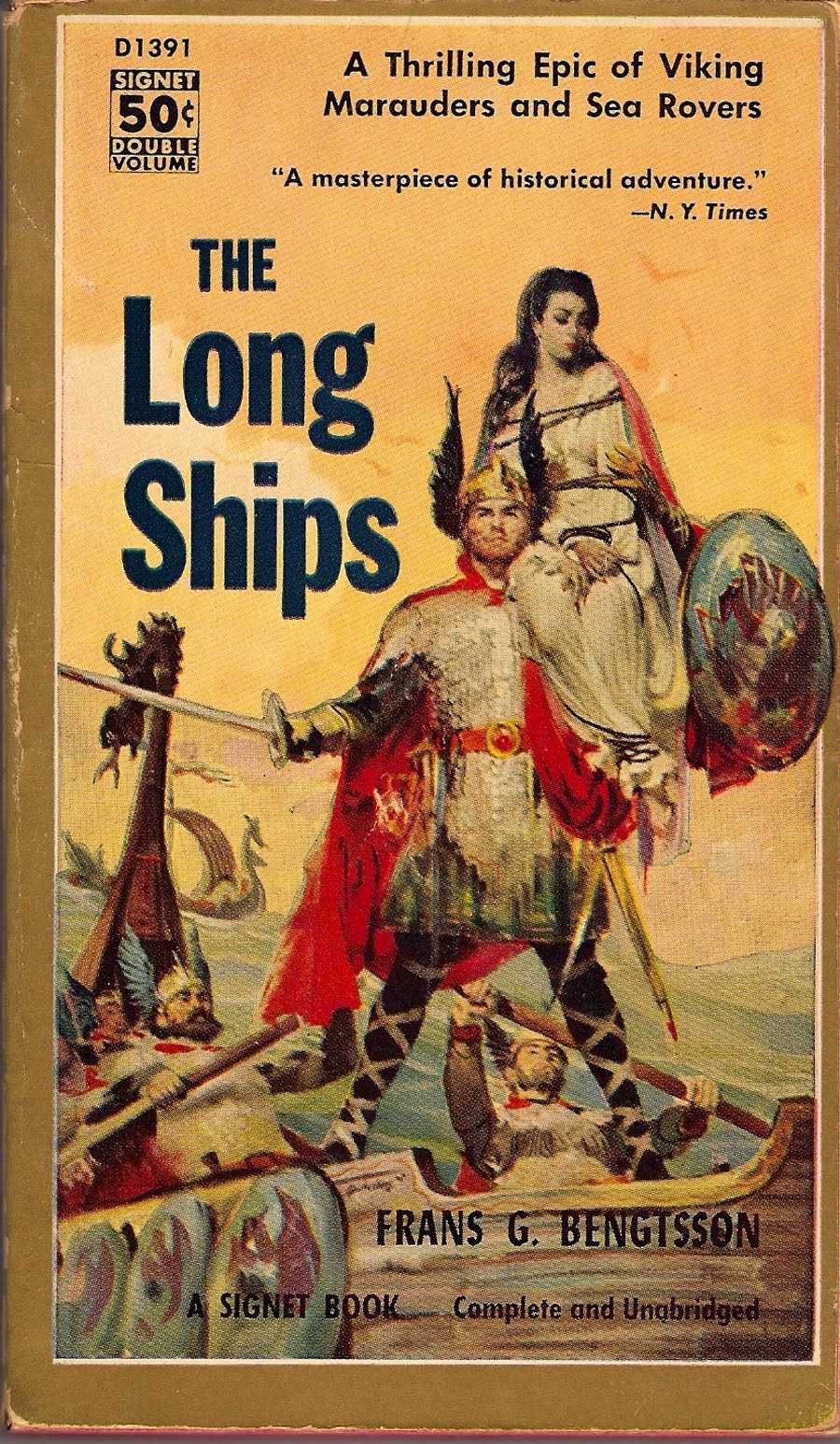
I read Tete-Michel Kpomassie’s An African In Greenland. It’s a fascinating read. As a kid in Togo he was attacked by a snake and while convalescing he read a book about the Inuit in Greenland and so going to Greenland became an obsession with him. Eventually he worked his way out of Africa and across Europe until finally he arrived in Greenland and traveled there. It’s great. Kpomassie is a charming author. He also reminded me a bit of Wilfred Thesiger who wrote Arabian Sands. Two very different individuals who both became obsessed with a place (in Thesiger’s case the Arabian Empty Quarter) and traveled there. Definitely give it a try. Now I’m reading The Long Ships by Frans Gunnar Bengtsson. As you can see I’m pretty much hooked on the whole NYRB catalog.
Earlier this week we played a game in class and during the game some of my students wanted me to help them cheat. Of course I did the exact opposite and went out of my way to hinder them, which made two of them so mad they needed to look up the word conscience just so they could say I didn’t have one. That was fun.
Apropos of nothing I wonder if it’s possible to measure the correlation between one’s developing an interest in classical literature (the Greeks and Romans) and one’s ultimate conversion to the conservative Catholicism of the Chesteron/Lewis type (that is, equal parts cleverness, bluster, and a prissy elitist humbuggedness).
Did I mention it was cold? Yeah. OK.
What about my goatee? Did you realize for the whole month of November this blog has been written by my Evil Spock twin Justout? Did you notice the difference? He types with two totally different fingers! For what it’s worth I like my crop of facial hair (it gives my face something to do) even if it’s a major no-no here in Korea, because it’s associated with drunkeness and being dirty (which is funny because the men on their money have facial hair). I suspect that’s one of those things Korean men have indoctrinated into them while they’re in the military. One thing I started to feel is that the longer I live here in Korea the more my presence will become a middle finger displayed towards the overculture. Not sure that’s a good thing.
But maybe that’s fatigue talking, because I did that thing last night where you fall asleep right after dinner and wake up around midnight and can’t fall back asleep, so you sit up drinking coffee and eating oranges until 4AM when you finally fall asleep and have terrible dreams for the next three hours before your alarm wakes you up. Yeah, that’s never fun.
Lunch time!
Arthur Machen’s “The White People”

While drinking my beer in an empty bar this weekend I read Arthur Machen’s “The White People”. That’s a creepy book. CREEPY. Once you get past the standard Machen frame of two Victorian weirdoes talking about “evil” and get into the found manuscript, the story gets weird.
Very, very weird.
That part, The Green Book, is written by a girl remembering her encounter with “the White People”. (And yes, haha, I get it, funny funny, but even that joke might make for an interesting postcolonial story riffing on this story.) Who or what the White People are is left confused. Maybe they’re fairies, maybe they’re Roman statues hidden away in the English woods, or maybe they’re her nurse and others using/abusing the girl. You don’t know, and the girl isn’t specific. But something happened, and, what’s more unsettling, the girl is in collusion with it. She’s not a passive victim, nor a dupe, but a willing victim, working with these unknown forces, and you’re swept along by her rambling, run-on narrative, and lost within it.
All these are most secret secrets, and I am glad when I remember what they are, and how many wonderful languages I know, but there are some things that I call the secrets of the secrets of the secrets that I dare not think of unless I am quite alone, and then I shut my eyes, and put my hands over them and whisper the word, and the Alala comes. I only do this at night in my room or in certain woods that I know, but I must not describe them, as they are secret woods. Then there are the ceremonies, which are all of them important, but some are more delightful than others–
It’s a disturbing little story no matter how you read it. You can see it as mundane sinister (the nurse “corrupting” the girl) or as supernatural sinister. Either way it’s well worth a Halloween read.
In the Shadow of Genre
I was sitting in a bar tonight reading Mary Renault’s novel, The King Must Die. It’s a pretty fun book, and while it’s a mundane, magic-free novel about Ancient Greece, its characters clearly believe they inhabit a “magical” world animated by gods and spirits. Theseus and his fellows believe in the whole Greek pantheon with greater conviction than one normally encounters in contemporary mainstream fantasy.
It got me thinking. A lot of fantasy seems to take its cues from the pulps. But I wonder if there’s a shadow history of epic fantasy that thrived in historical fiction and sidestepped the pulps.
Off the top of my head I’d place Renault, Mitchison, Flaubert, Dumas, Sabatini, Graves, and even Bashevis Singer (his novel King of the Fields in particular) in this shadow history. It’d certainly be a more amorphous tradition, one with more narrative complexity and more “Grandmothers and Godmothers” in it. It would likely lack a fandom trading the original magazines in mylar baggies. Maybe it’s the simplicity the pulps offered—the hero battling his way through insurmountable odds for a bit of wealth and/or maiden skin, all that sense of wonder and escapist derring-do, but I really wonder if this is just a narrative we’ve all been fed and swallowed. A heap of lies that says THIS IS THE GENRE’S HISTORY when really the genre’s true history is a lot more crusty and weird.
 Yesterweird