4 Books and a Stuffed Gorilla

1. The Greek Myths Vol. 1 by Robert Graves
From a scholarship standpoint I hear this is a bit ofan unsightly conglomeration of fornicating individuals notable for its awkwardness (a clusterfuck), but damn this book has life in it. Graves is shoe-horning all the myths into his grand unified theory of mythology as laid out in The White Goddess, but he believes it and allows the mythology to inform his own work, so in a way they are accurate in the sense of mythology being a living thing that people can still embrace as meaningful in their lives, and not something dead and confined to the dust. Great stuff in here.
2. Vile Bodies by Evelyn Waugh
A bit of a masterpiece for its style and oblique plotting alone, even if its characters and situations often irritated me. In a way it reminded me of Nathaniel West’s The Day of the Locust. Similar jazz-age setting and critique ending in chaos, though Waugh is a more adept stylist using vignettes of varying “thickness” to develop his story. The reader at the end is left feeling the emotions Waugh’s characters are incapable of.
3. The Edogawa Rampo Reader by Edogawa Rampo
A decent collection though not as good as Japanese Tales of Mystery and Imagination. The highlight story was “The Air Raid Shelter” about a pyromaniac during the firebombing of Tokyo. It delivered the oddly captivating creepy. But the essays at the back are great.
4. Girl in Landscape by Jonathan Lethem
Aesthetic YA science fiction, is that a thing? If so that’s what this is. If not, well, that’s what it is still. It’s set in the future on another planet, but that’s more window dressing on the narrative than a thing you get details about, and science fiction in the way JG Ballard is science fiction. Teenager Pella Marsh and her family leave a dystopian future Brooklyn for a frontier life on the Planet of Archbuilders. John Ford’s The Searchers ensues except mashed somewhat with the spirit of Philip K. Dick’s Martian Time Slip.
The Wild Party by Joseph Moncure March
“The Lost Classic”
“The book that made me want to be a writer.” – William S. Burroughs
The Wild Party is a notorious (banned in Boston) narrative poem written in the mid-1920s and published in 1928 about a pair of hard living theater types, Queenie and Burrs. One day they decide to throw a party for their equally hard living friends. People get drunk. People get fucked. People cry. People fight. One guy gets shot. The cops bust up the place. The party ends. It’s a quick read with a large cast of characters. Some of whom you might even recognize as yourself or your own friends.
“The rest were simply repetitions
of the more notorious. Slim editions:
Less practiced; less hardened:
Less vicious; less strong:
Just a nice crowd trying to get along.”
One Book Four Covers: The White Castle by Orhan Pamuk



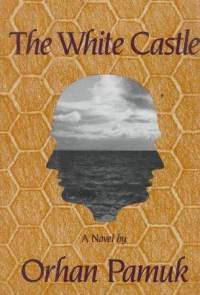
A young Italian scholar captured by pirates finds himself the slave of a Turkish scholar. The two share more than a passing resemblance to each other, and this makes their relationship complex as each adapts and alters their own and the other’s identity. A short Borgesian novel ripe with potential allegory, which is great by me, my only wish is that for once someone would write a pomo novel with a reliable narrator.
Now on to the covers…
I love that they’re all so different. I read number one on the left. It looks like one of those Edward Gorey book covers from the 1950s. Number two mixes in some weird steampunky gears. That’s cool. The third is reappropriated Renaissance artwork. It’s there, it doesn’t suggest anything except the period. Number four is mysterious, if a bit dull, but it does hint at the issue of duality in the same way number two suggests identity. Just who is that behind the gears?
Three Reasons Why People Should be Reading Steve Aylett
1. A shop with its own weather, the Thousand Spiders was a place of gut-turning symmetries and the slap of palpable etheric manipulation. In fact it was impossible to tell whether you really wanted to buy what you bought there.
2. In the past everyone had feared Dumbar because his head was actually a chrysalis for another animal. In recent times his face had been almost transparent and they could see something bustle and shift behind it. Finally he’d stopped short in the middle of a conversation and opened his mouth, from which a bunch of fiddling spider legs fanned. Everything else followed and he was speechless and shaking, the only one without a scream to offer as the dog-sized bug quivered into a corner and stayed there to dry off.
3. ‘Oh I heard the voice of God once,’ Edgy told him. ‘Yeah, I was at a buffet, you know? And I was going for the chicken, and this voice from above said, “Take the ham.” So that’s what I did.’
‘Take the ham? And that’s the only time God ever chose to give you advice?’
‘Correct. I can only conclude that in every other area of my life I’ve been right on the money.’
– All from Only An Alligator by Steve Aylett
Murderwort
“Professor Mannhardt relates a strange legend current in Mecklenburg to the effect that in a certain secluded and barren spot, where a murder had been committed, there grows up every day at noon a peculiarly-shaped thistle, unlike any other of its kind. On inspection there are to be seen human arms, hands, and heads, and as soon as twelve heads have appeared, the weird plant vanishes. It is further added that on one occasion a shepherd happened to pass the mysterious spot where the thistle was growing, when instantly his arms were paralysed and his staff became tinder.”
From “The Folk-Lore of Plants“, by T. F. Thiselton-Dyer
The Joke by Milan Kundera
This one got passed to me by someone in Korea. My wife is a fan of Kundera. Or was, before I ruined her taste with comic books and Fritz Leiber.
The Joke details several “jokes”, none of which are the haha kind. The first one is a postcard written by Ludvik Jahn when he was a student that caused him to be sentenced to the coal mines. This event propels the plot in so much as the plot is about Ludvik’s quest for revenge fifteen years later. In the ways his plan gets fulfilled and in the ways others react to it provides the rest of the “jokes”.
“When it is postponed, vengeance is transformed into something deceptive, into a personal religion, into a myth that recedes day by day from the people involved, who remain the same in the myth though in reality (the walkway is in constant motion) they long ago became different people: today another Jahn stands before another Zemanek, and the blow that I still owe him can be neither revived nor reconstructed, it is definitely lost.”
Ludvik’s a rather unpleasant and bitter guy, but in him we can see a thwarted hero. His path suggests an anti-bildungsroman where the youth does not mature by overcoming adversity but instead grows cynical when he encounters the injustices of the world. For awhile I was at a bit of a remove while reading it, waiting for it to transcend its “Soviet-style bureaucracies are never good” message. But by its end The Joke is less about any particular course of action or desire the characters have and more about the way history (and historic events) undermines all our expectations — and discovering redemption despite this. It’s a great book as long as you don’t mind your existentialism mixed with a blend of male chauvinism.
Warchild by Rick Bowes
 All right, this book is one of those I wish I had read as a fifteen year old. At fifteen I would have gobbled this up as I did Moorcock’s Eternal Champion. A Mohawk-sporting, telepathic juvenile delinquent hops through time and dimensions to raise an army to do battle with mind parasites?
Yes. Sign me up.
Now sometimes this is a mixed bag. Often encountering something that speaks to our teen-self only increases our awareness of time’s passing, and you either succumb to wistful nostalgia or get grumpy because you got older. Other times by some quirk in the work or possibly within ourselves, the magic’s still there waiting for us to open the pages and discover it. Warchild was one of those other times.
If you have SFnal fifteen year olds in your life, find them a copy of this book and give it to them.
More From Disorienting Encounters
“There is no better way of obtaining useful information than by mixing with people. According to a wise saying of the ancients: “The eye never tires from seeing, nor the ear from hearing.”
Therefore, I decided with the help of God to blacken these pages with what I saw and heard during this voyage, be it clear or obscure. For I am but a woodgatherer of the night, the one who lags behind, a horse who is out of the race.”
– Disorienting Encounters: Travels of a Moroccan Scholar in France in 1845 – 1846. The Voyage of Muhammad As-Saffar
One Book Four Covers
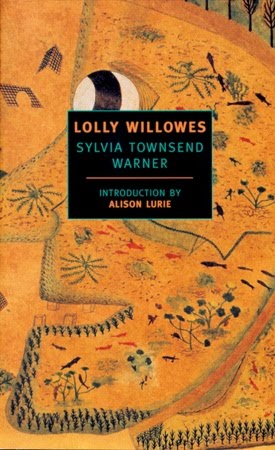

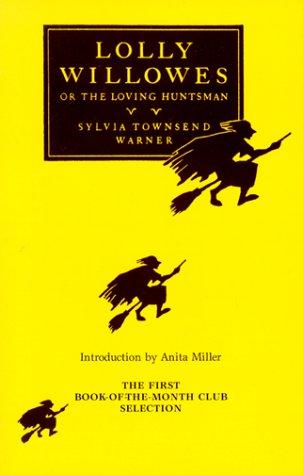

It’s time for another edition of one book, four covers. This time Lolly Willowes.
Once again I read the NYRB edition. That’s the one all the way over on the left. I think it’s a bit lousy–misleading and unappealing. It calls to mind folk artwork and certainly doesn’t tell you what the book’s likely to be about. The second one… umm.. yeah… First I guess it was published during the 60s/70s Gothic boom where a cover required an old house, a young woman, and some stuffy disapproving mysterious dudes. I’m surprised she’s not wearing a nightgown. Second, the ad-copy:
A charming woman–a midnight meeting–the scent of witchcraft “remarkable… pungent and satisfying”.
From now on I am going to say “remarkable… pungent and satisfying” whenever I smell anything.
The third cover is great. It screams THIS BOOK IS ABOUT WITCHES DEAL WITH IT! while also suggesting a playful irreverence. The fourth cover is a bit too much. Again it’s misleading and takes itself too seriously. It’s much too dark and brooding. As with the second cover it plays up the Old House aspect of the story, which is really a negligible part of the whole story.
Lolly Willowes by Sylvia Townsend Warner

Here’s the first read for 2012: Sylvia Townsend Warner’s Lolly Willowes. Yup, it’s another New York Review Book and it hasn’t shaken my conviction that all of their books are great. Warner combines the perceptiveness of Jane Austen with the supernatural touch of Shirley Jackson.
Laura “Lolly” Willowes is a single woman in the early 20th century, and the novel concerns her spiritual renewal late in life (well after she has been consigned to the role of spinster aunt by her family) when she becomes a witch of the Margaret Murray type. It’s a slow but fascinating novel, off-kilter in its meandering, but focused in its observations even though the plot really never strays too far from “spinster aunt sells her soul to the devil and lives happily ever after”.
By its end the ground is so well laid that when Warner kicks off the braces and lets fly with some social critique it’s honed to needle sharp perfection.
“’They say: ‘Dear Lolly! What shall we give her for her birthday this year? Perhaps a hot-water bottle. Or what about a nice black lace scarf? Or a new workbox? Her old one is nearly worn out.’ But you say: ‘Come here, my bird! I will give you the dangerous black night to stretch your wings in, and poisonous berries to feed on, and a nest of bones and thorns, perched high up in danger where no one can climb to it.’ That’s why we become witches: to show our scorn of pretending life’s a safe business, to satisfy our passion for adventure.”
Also as a slight aside since I read a lot of weird late Victorian horror fiction, this book’s the perfect antidote to the veiled puritanism in Machen’s work. His women characters are so often “corrupted”, either inherently or by circumstance, that it’s fun to read Lolly Willowes and have that paradigm thrown on its ear. The bachelor nephew, Titus, who would be the hero in a Machen novel, here gets consigned to the role of villain and fool, and the “corruption” Lolly experiences is her hard-earned right to live as she pleases and be respected for it. Bravo for her!
A last point, save the introduction until after you finish the book since it’s one of those that lays out the entire story and, you know, SPOILERS.
 Yesterweird